



Multnomah County Sheriff’s Office Search and Rescue — a volunteer organization in Oregon — maintains around 100 active members at a time, according to their website.
Senior Liam Kean and junior Calvin Yalon are two of those members.
Though there are adult advisors and coordinators, search and rescue is an organization largely led and run by youth members. The program, working directly with the Multnomah County Sheriff’s Office, is fully volunteer-based and dispatches teams to find and rescue lost or injured people and aid in criminal investigations by searching for clues.
“We serve the community,” Kean said. “We respond to people who are in need.”
Each beginning their freshman year, Kean and Yalon joined the program by applying, which included a form to fill out followed by an interview. Kean noted that the key part of every application is the interview.
“You really get accepted based on interviews,” he said. “We evaluate you based on how you respond in the interview.”
After getting accepted, a year of training is required for all volunteers. This consists of weekly meetings on Wednesdays and one overnight in the woods every month where they apply what they learned in each meeting. Kean mentioned how the program is well-equipped for these trips.
“We basically have a mobile city that we can move,” he said. “We cook our own food out there, we do everything.”
After the year of training, volunteers may apply to be team leaders, which Kean and Yalon both did. The four teams are Alpha, Bravo, Charlie, and Delta, according to Yalon.
He applied to be an assistant team leader his sophomore year, and got the position for the Bravo team. This means instead of just being a member, he now has extra leadership responsibilities, he said.
“I was kind of lucky, a lot of the officers and stuff were graduating my year, so there was a lot of open spots,” Yalon said.
Both Kean and Yalon began search and rescue for similar reasons — it interested them and they wanted to learn more. Kean heard about it from a friend of his mom.
“I was like ‘This looks super fun,’” he said. “I applied, did my interview, got in, and started training.”
Yalon, after hearing stories from Kean, turned to Google to learn more about search and rescue and was intrigued by what he found.
“I really love search and rescue,” he said. “I wanted to be more a part of what goes on behind the scenes.”
That turned out to be an achievable goal.
For all volunteers, immediately following the training year, the searching begins.
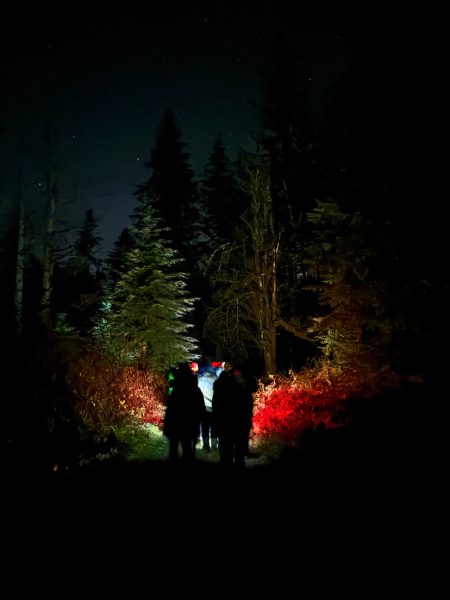
“Once you finish your year of training you’re on call,” Yalon said. “Basically at any time, whenever we get a dispatch or something, you’re called to go out into the field.”
Kean explained that volunteers are required to respond to 20% of callouts, though Yalon noted that the youth-led aspect of the program allows for flexibility, so he has never felt too overwhelmed.
“It’s not demanding to the point where I feel like I have to choose between search and rescue or my other commitments,” he said. “Since it’s a youth group, everyone kind of gets that it’s really hard to carve out time.”
Being a team leader is something to be taken very seriously, according to Kean.
As team and assistant team leaders, respectively, Kean and Yalon are in charge of managing their assigned volunteers and teaching them how to safely complete search and rescue tasks. They lead activities during Wednesday meetings and are the most experienced when training out in the field.
“Your team always comes first from a leadership standpoint,” Kean said. “You don’t even come before your team.”
In addition to this, Kean highlighted how important it is for the leaders to be prepared when trying to teach others.
“Teaching people is less about them understanding and almost more about you understanding,” he said. “You have to have an extremely high level of proficiency in whatever you’re teaching and a super high level of comfort in what you’re talking about.”
Through search and rescue, Kean and Yalon said they have made many new connections with people they would not otherwise have found. Kean highlighted two people he got to know through the program, one friend he used to bond with during midnight runs but who is now away in the Army, and another, Liam Foren, who is currently Kean’s closest friend in search and rescue.
“I’ve seen him grow up,” he said. “Watching him mature and become the guy he is now is cool.”
Within the program, someone Yalon looks up to is the president of his section, a junior in high school.
“To be able to take on that responsibility, I don’t think I could be managing everything that she does with finals and school,” he said. “She does it really well.”
Someone Kean looks up to within the program is the program’s lieutenant colonel. Kean described how with him “everything’s positive,” even when working in tense situations or late shifts. He is also always willing to teach if someone is interested in what he does, Kean said.
“He manages himself so well that he’s able to take care of and help other people whenever they need it,” Kean said. “I aspire to reach that point.”
Both Kean and Yalon noted how unique of an experience search and rescue is. As high school students, opportunities such as the ones they have encountered are not common, Yalon said.
“To be responsible for someone’s life and be able to lead so many other people, there’s not a lot of other places that do that, especially as a kid,” Yalon said.
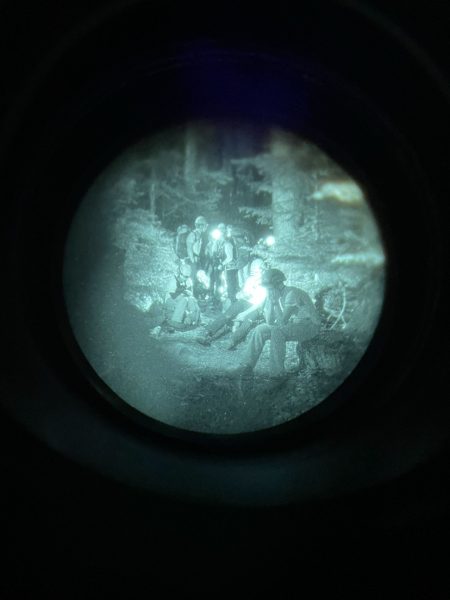
Kean described his favorite experience so far in search and rescue as getting to work with the National Guard. He was able to observe how they work as well as get to practice directing their helicopters on where to land. Yalon said his favorite experience came while rescuing a man who got lost while hiking.
“To hold his hand and help him down the trail just felt so cool,” he said.
Despite these experiences, search and rescue does not come without hardships, according to Kean and Yalon.
“I’ve definitely learned my limits,” Yalon said. “You’re pushing yourself as hard as you can to find a person, and a lot of the times you find a point where you’re breaking, so it’s definitely helped me learn and understand myself as a person and how I work under pressure.”
Kean said that search and rescue can change lives, especially since it is generally high school students participating.
“You don’t see things the same,” he said, noting that “little things,” such as how you look or what people think of you, no longer matter once you have been through strenuous call-outs. But he also thinks these experiences can teach teenagers more about themselves.
“You mature from it,” he said. “You have a higher level of empathy for other people.”
Overall, Kean and Yalon both encouraged anyone interested in search and rescue to give it a try.
“If you enjoy doing hard work … then do it,” Kean said. “It’s so worth it.”
Though Kean is not planning to pursue search and rescue as a career, he will continue to stay involved for now. Yalon hopes to keep doing it at least through his senior year.
“It’s just such a powerful thing,” he said. “What we do, there’s no other experience like it.”










Jack London • Feb 4, 2026 at 11:32 pm
Such an awesome story with two awesome people!
Chris Babinec • Jan 29, 2026 at 8:13 am
What a thoughtful and thorough spotlight on a life saving, humanity honoring program. Calvin and Liam so beautifully articulate the personal and professional aspects of this necessary and important work. The humility, confidence, and deep connection to others that they learn shines through. I especially appreciate their willingness to so easily credit to others and speak so openly and earnestly about their experiences. I hope this article inspires others to get involved in their communities through S&R or other community organizations.