


-
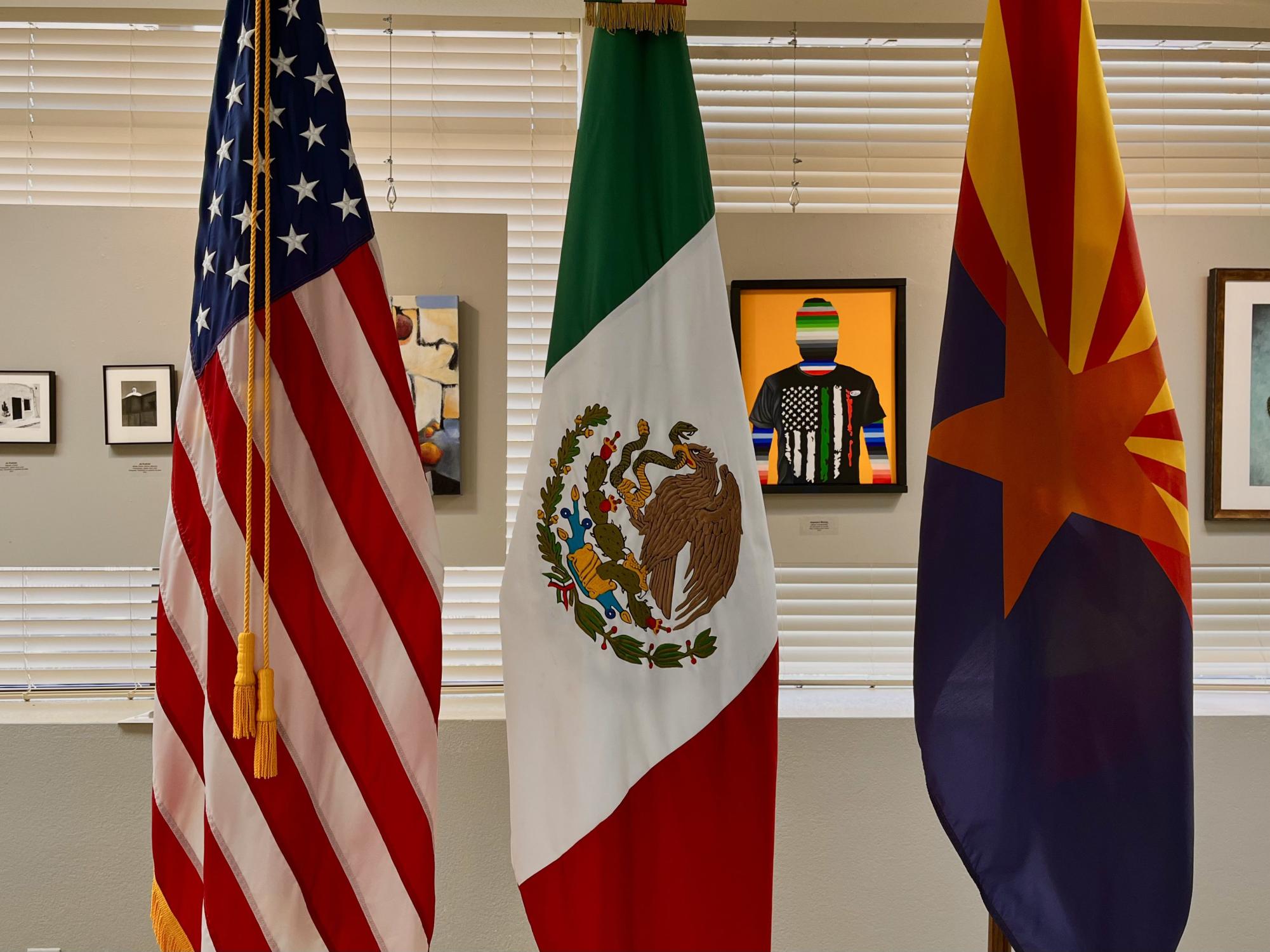
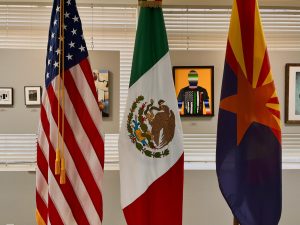
The flags of the United States of America, Mexico, and Arizona stand together in the waiting room of the Mexican Consulate.
-
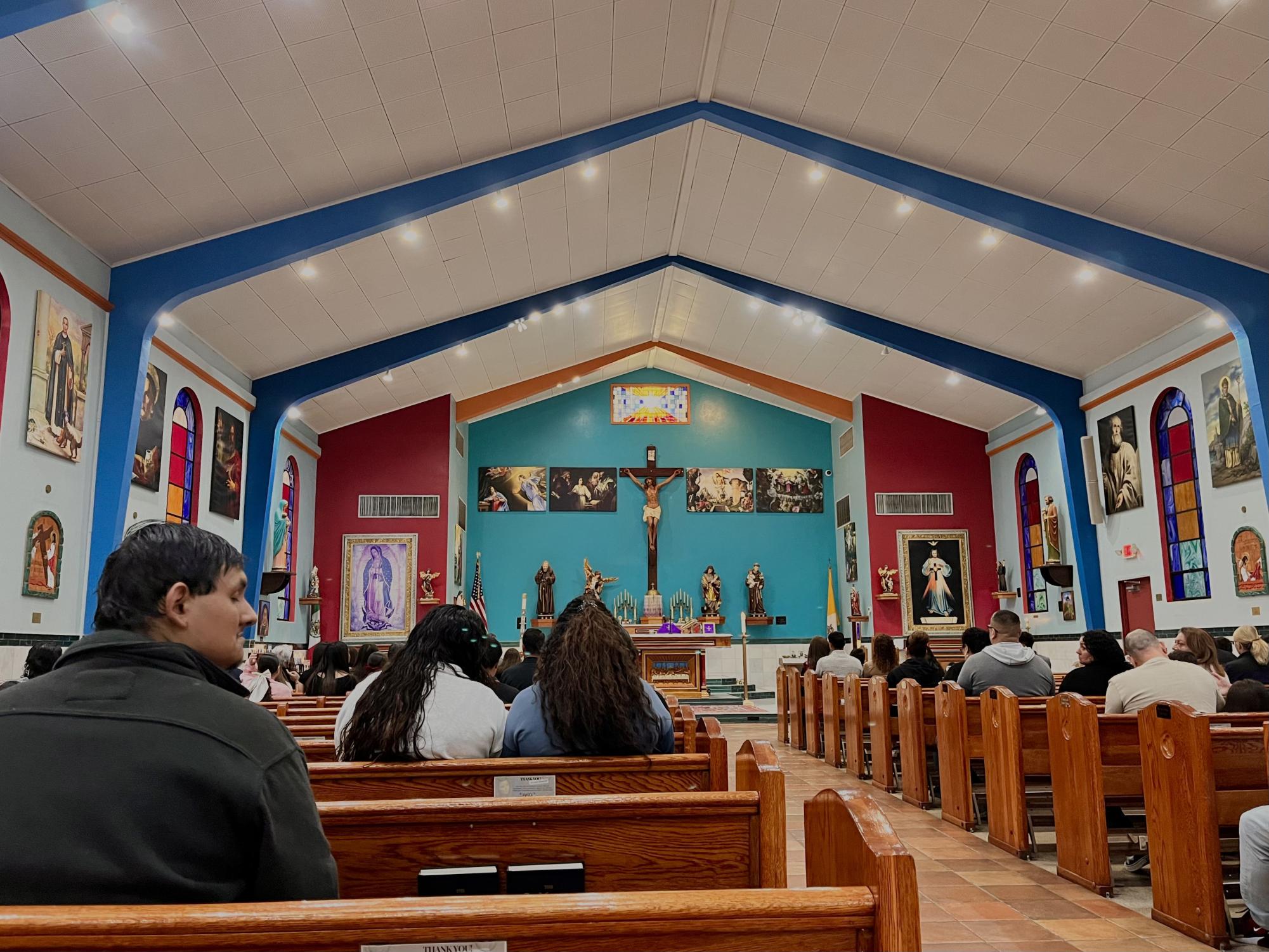
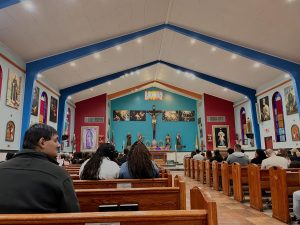
On the first night, La Salle students attended a bilingual Mass service at a nearby Catholic church. The pastor’s homily focused on Jesus’ period of abstinence in the desert and called for compassion for our brothers and sisters currently traversing the desert.
-
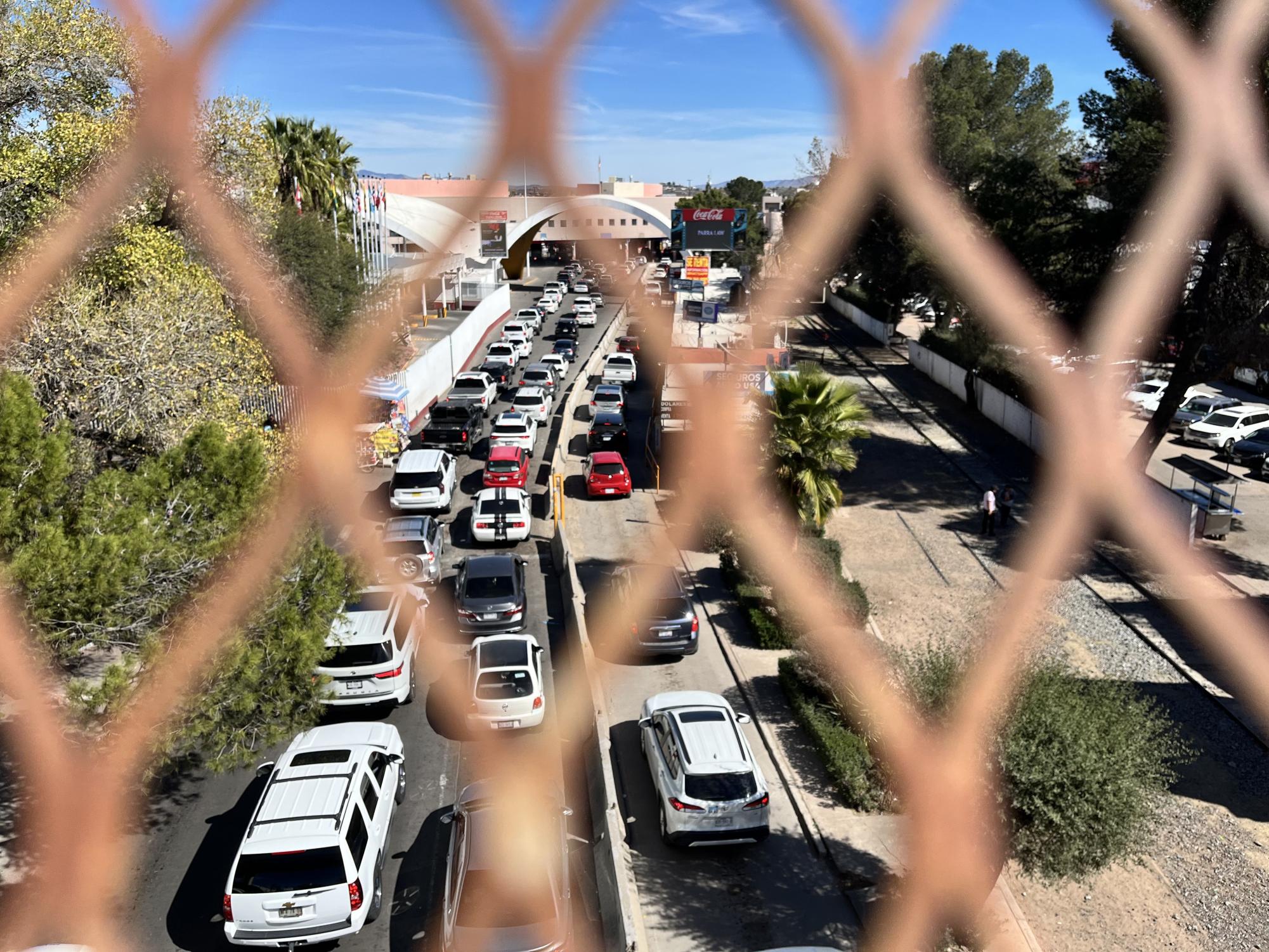
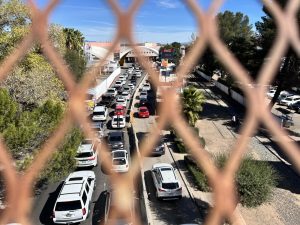
This is the Dennis DeConcini entry point into the United States from Mexico. The separated lane is reserved for U.S. citizens only, and it requires an additional $200 a year to access. At times, waiting in the standard lane can take as long as five hours.
-
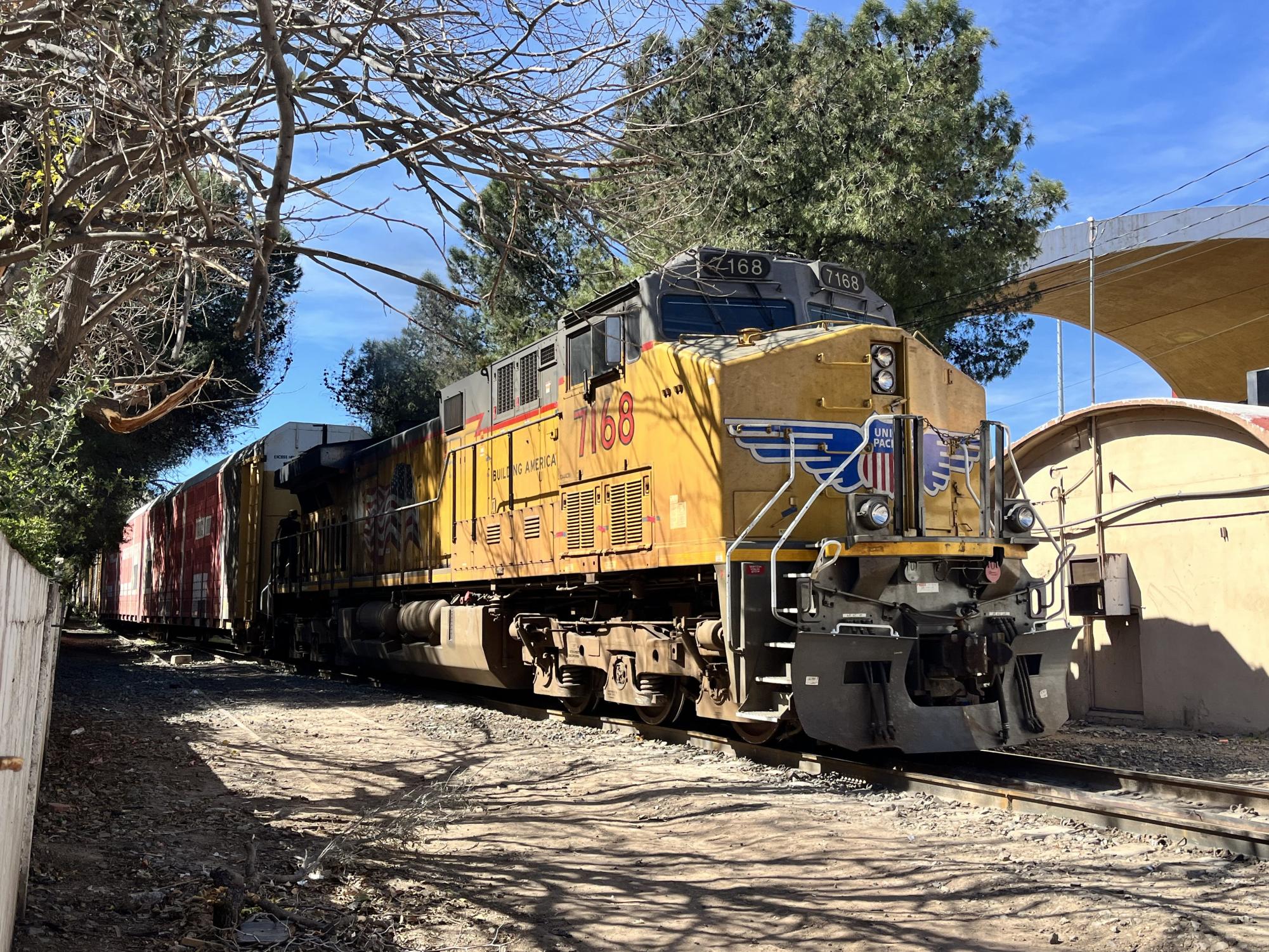
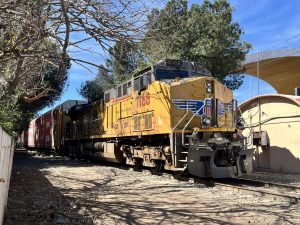
Trains on this track, collectively referred to as “La Bestia” — “The Beast” — are often ridden by migrants traveling through Mexico to shorten the journey, despite the risks. It is easy to fall off, especially once the trains reach their overland speeds — upwards of 70 miles per hour. Sometimes, cartel members lurk on the trains to rob travelers, threatening to push them off if they don’t comply.
-
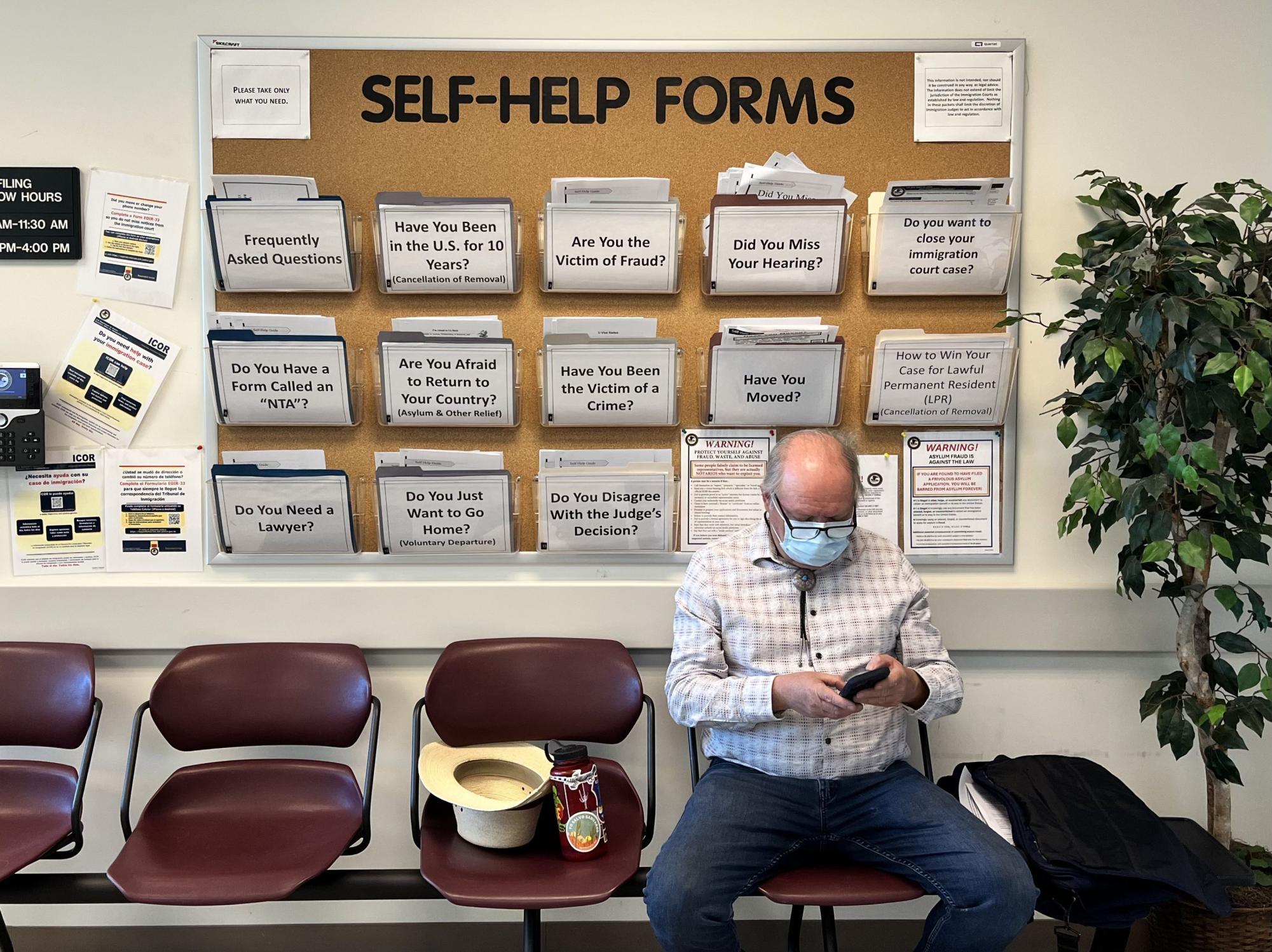
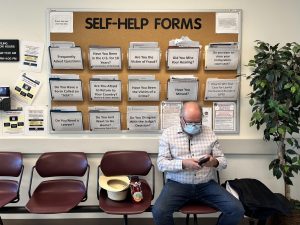
U.S. Immigration Court provides defendants with self-help packets in both English and Spanish, the most recently updated of these being from 2022. The gentleman pictured was there on the morning we went, independently handing out forms with current information as of Feb. 19, 2026.
-
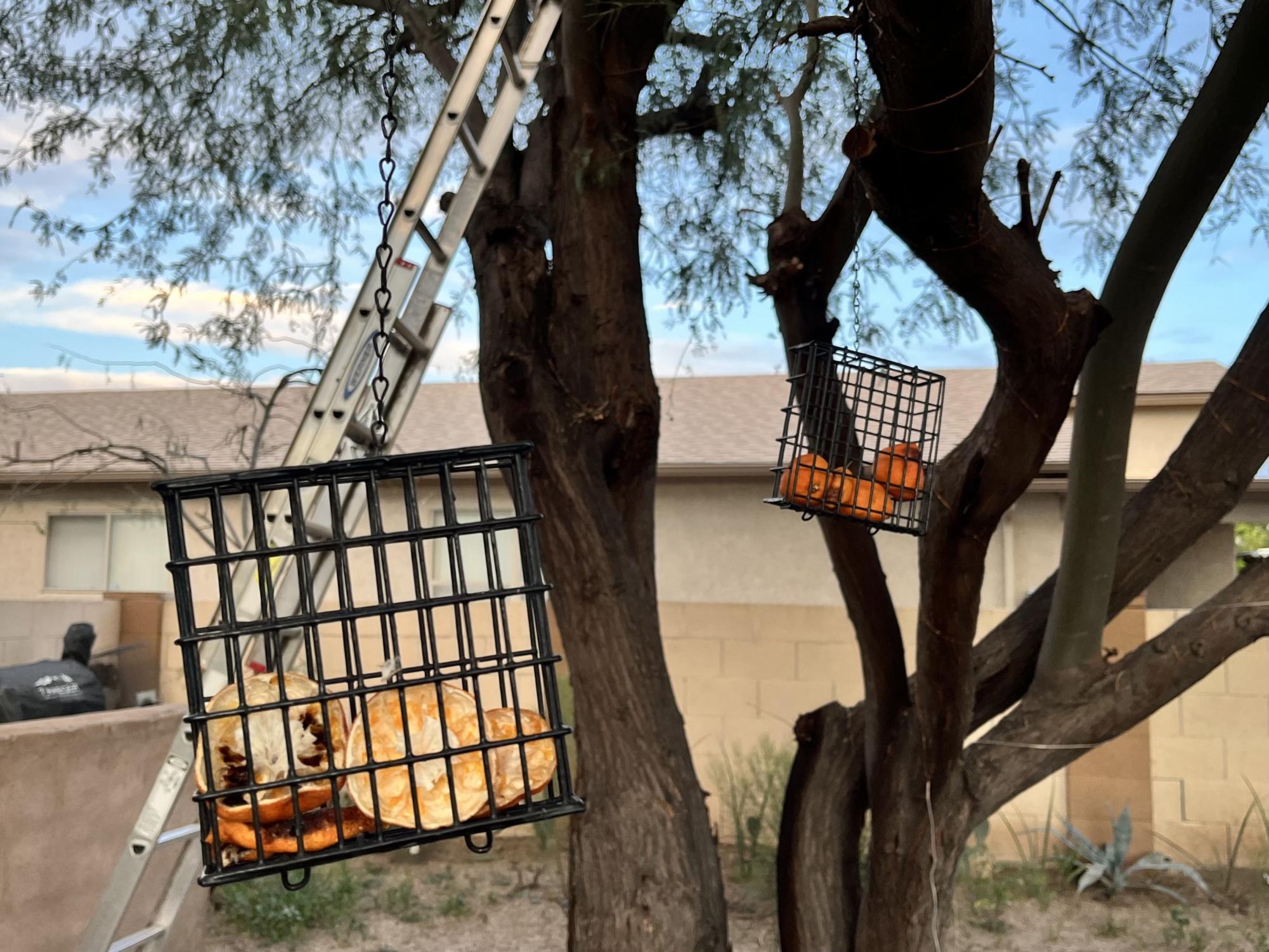
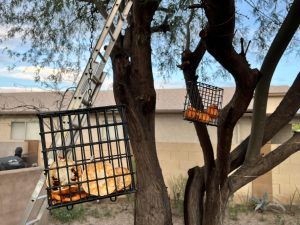
At the end of the first full day, we had dinner with the three Lasallian Brothers who work at San Miguel High School, the school through which El Otro Lado is run. Their backyard was very animal-friendly, with a tortoise enclosure and several hanging birdfeeders like the ones pictured.
-
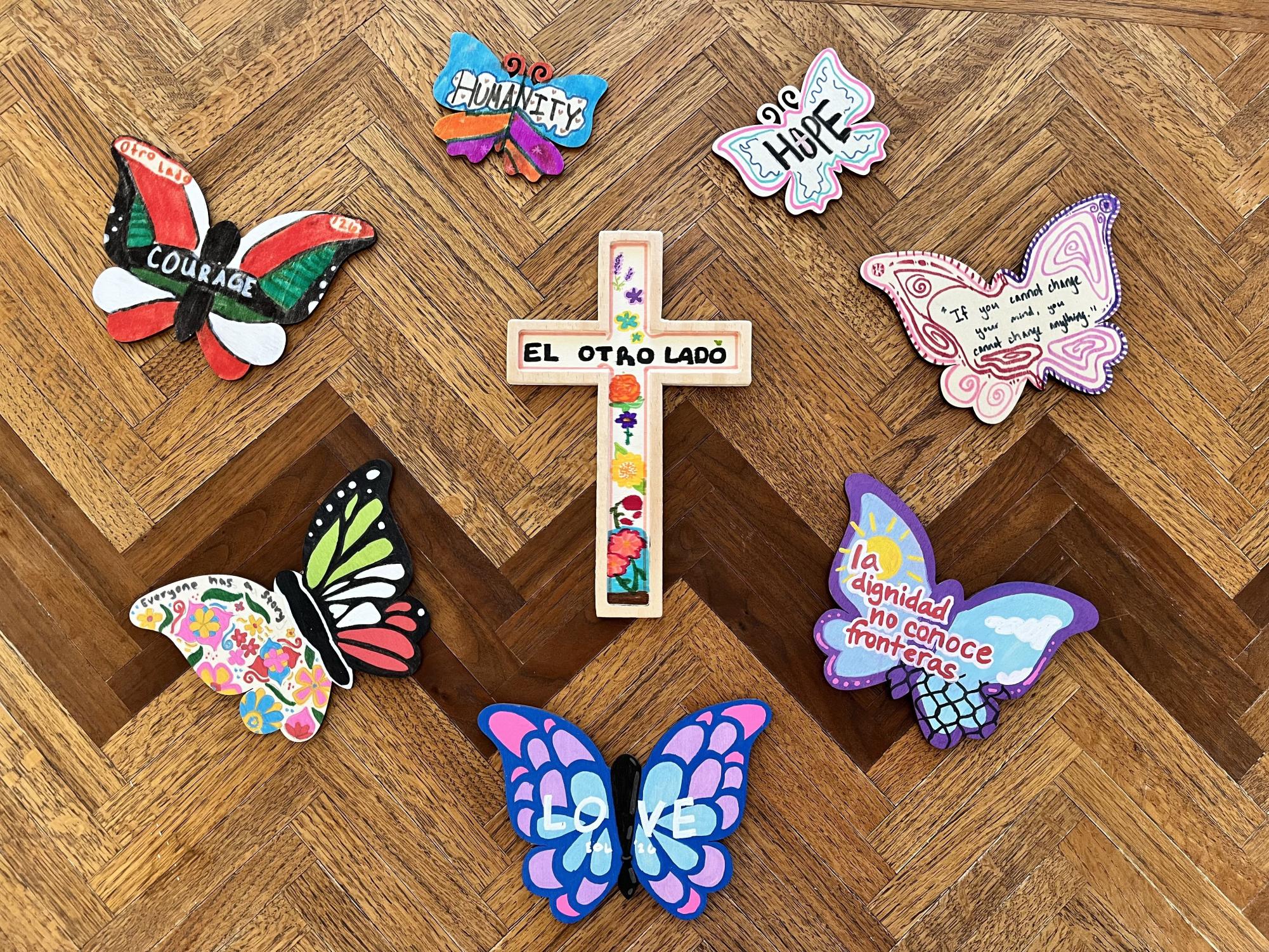
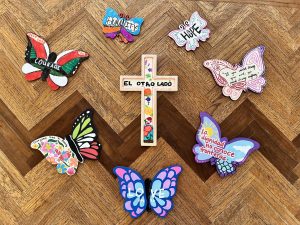
At the end of each day, our group spent at least an hour journaling and crafting together based on our experiences during the week. These items were left behind at the El Otro Lado house, joining the others left by past groups.
-
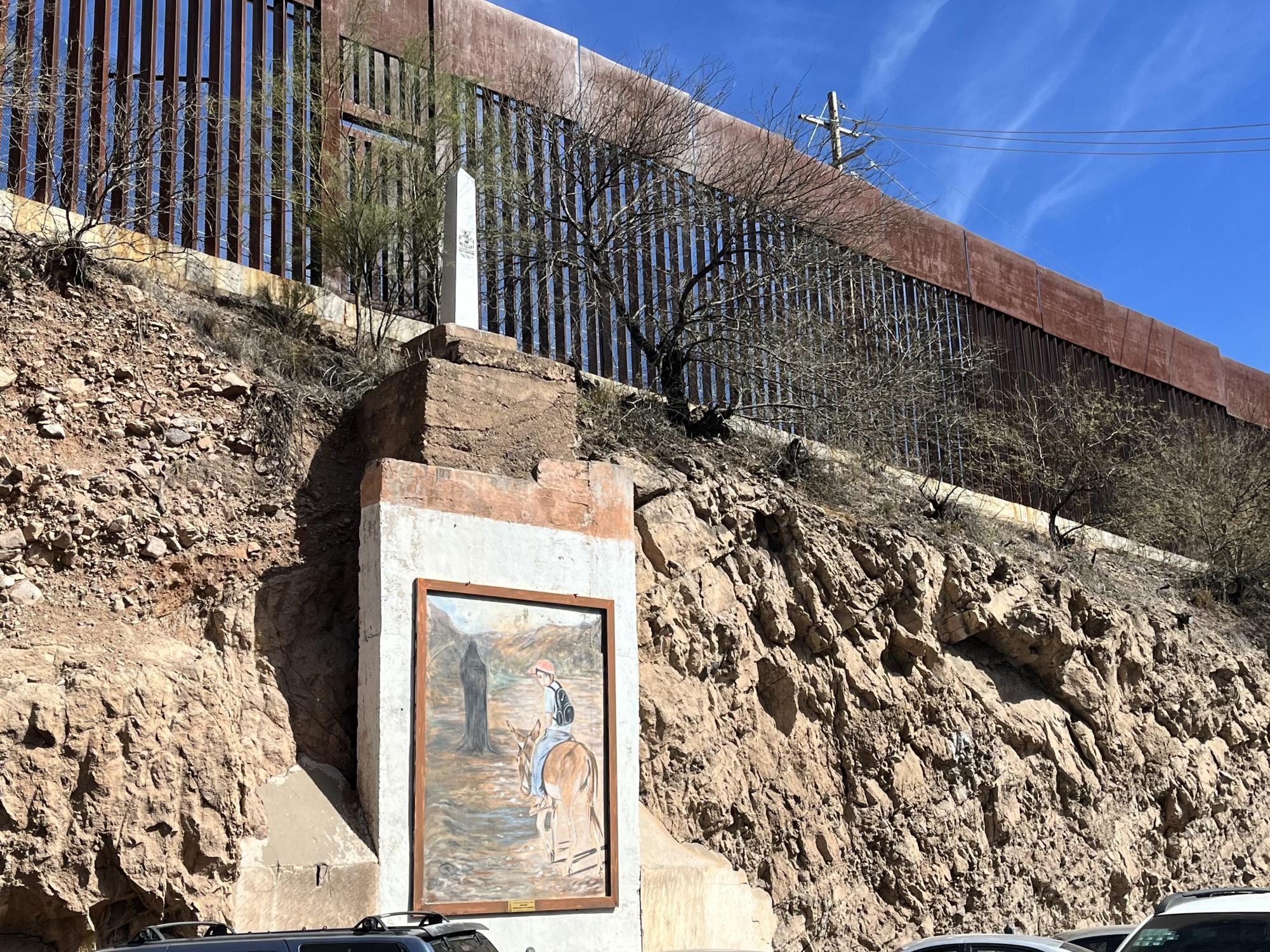
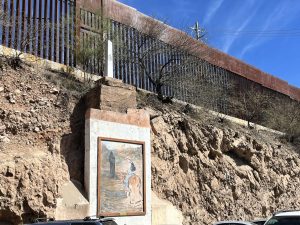
This painting, titled “Infáncia en la Frontera” — “Childhood on the Border” — hangs beneath a silver marker which indicates the true border between the United States and Mexico. The wall stands a few yards back, on American soil.
-
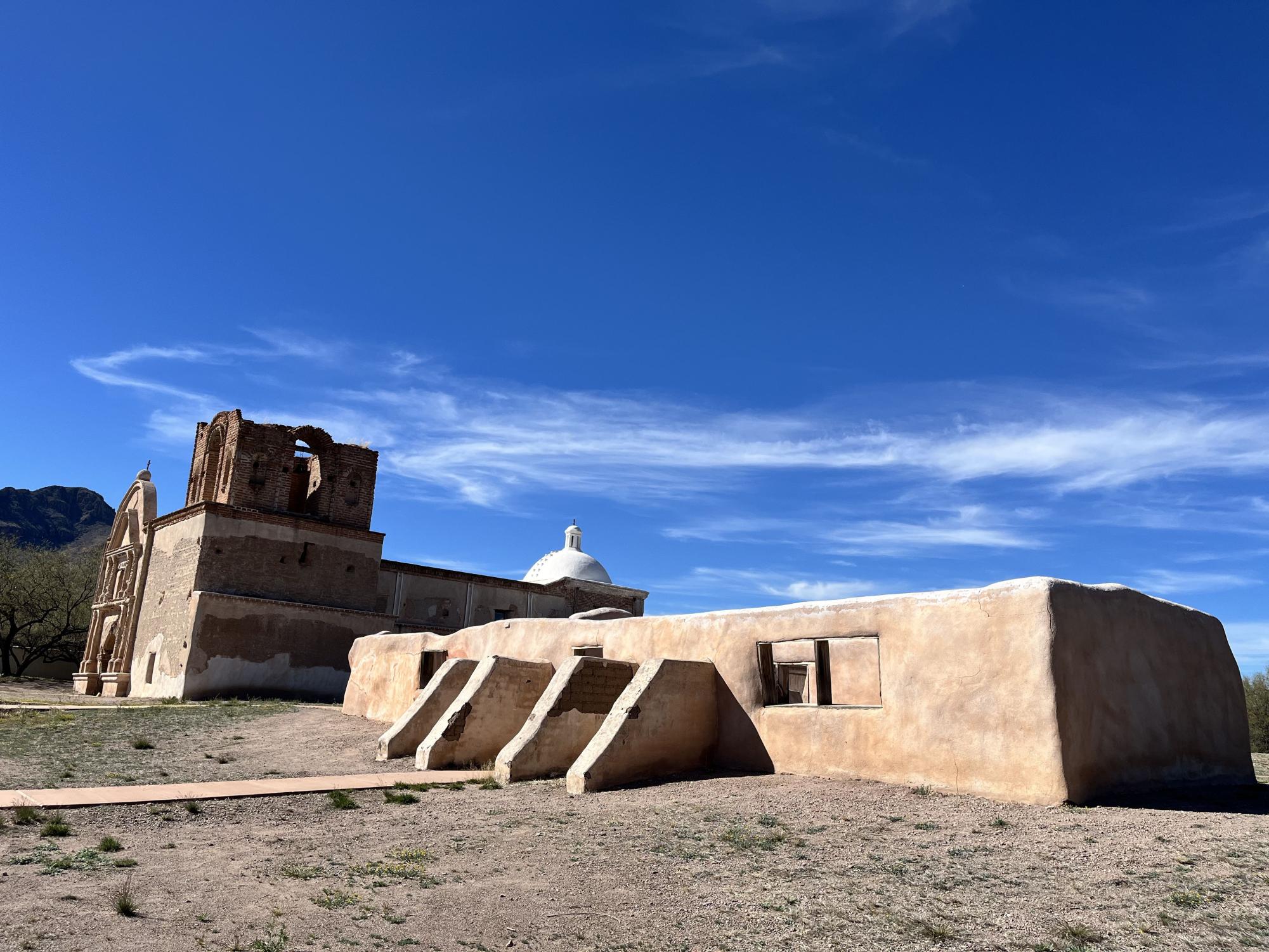
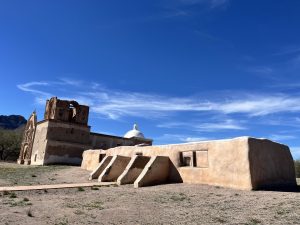
Tumacácori National Historical Park preserves the ruins of La Misión San José de Tumacácori, a long-abandoned Franciscan mission originally meant to adapt the native Tohono O’odham people to Spanish ways.
-
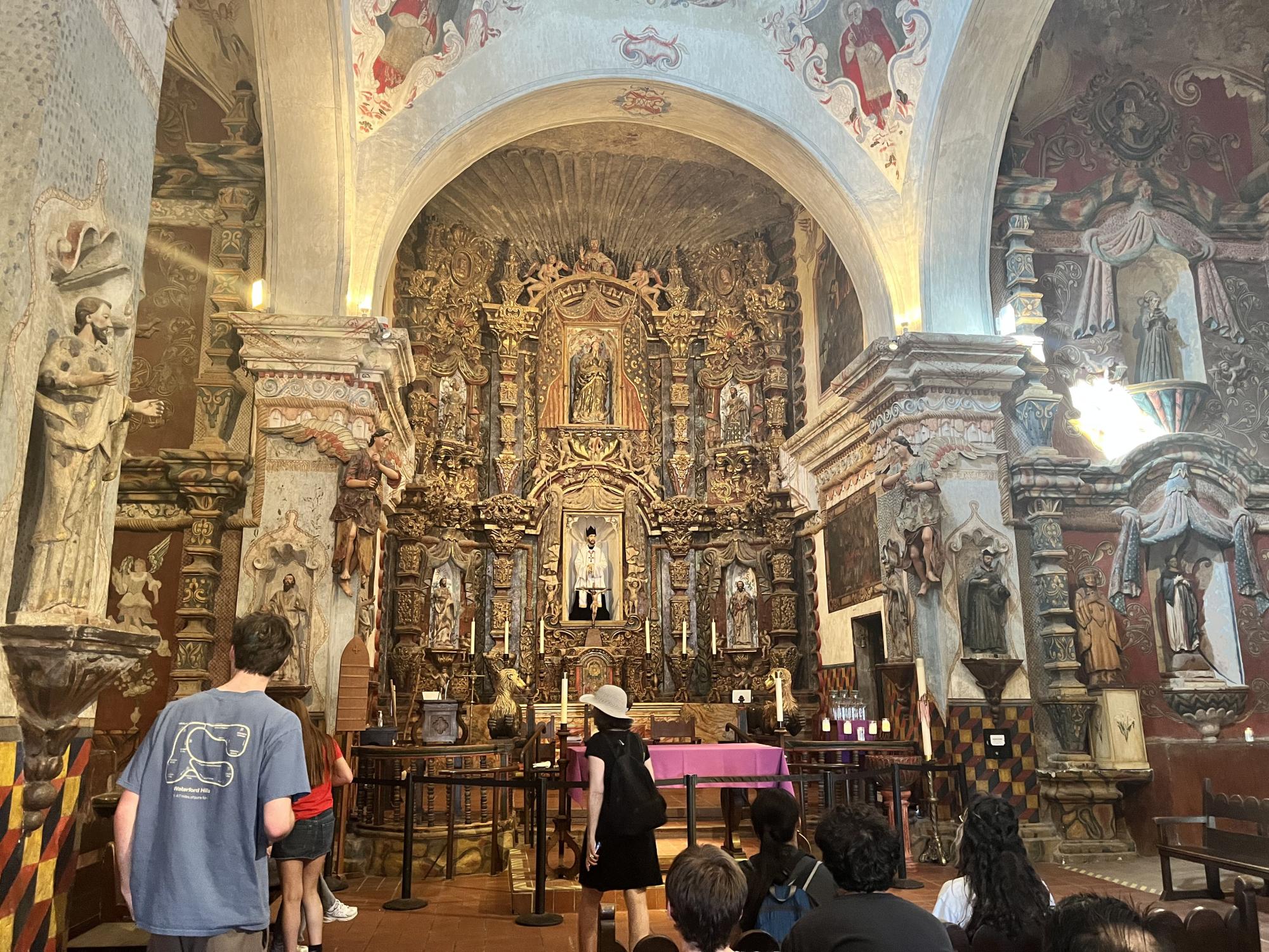
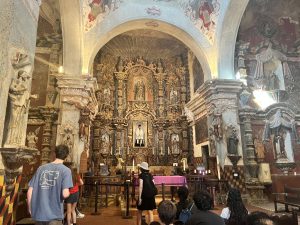
This is the intricately-decorated interior of San Xavier del Bac Mission, which was established as a mission church similarly to San José. It is active to this day in the Tohono O’odham Nation.
What does it mean to be a Lasallian?
I think immediately of two of our core values: “Respect For All Persons” and “Concern For the Poor and Social Justice.”
How one actually goes about living those values, however, is a trickier question.
I began to understand the answer to that last week in Tucson, Arizona, on the El Otro Lado (EOL) immersion, a program that provides students with firsthand exposure to the humanitarian crisis at the U.S.-Mexico border.
The trip’s first day set the tone. We watched 15 detainees processed through federal court, all picked up by the U.S. Border Patrol from the previous weekend. According to our guide, that was a small number; she said she usually sees at least twice that amount.
Only 15, and I find it difficult to articulate the emotional weight of even that many.
It’s a girlfriend holding aloft her 15-day-old baby to the judge, hoping the child will be enough to prove its father’s connection to the states.
It’s a teenage boy blowing kisses to his crying mother as he’s escorted from the courtroom in chains.
It’s a line of iron links and bright orange jumpsuits, like the ill-fitting uniforms can somehow distract from the detainees’ eyes and faces as they are herded out single file.
-
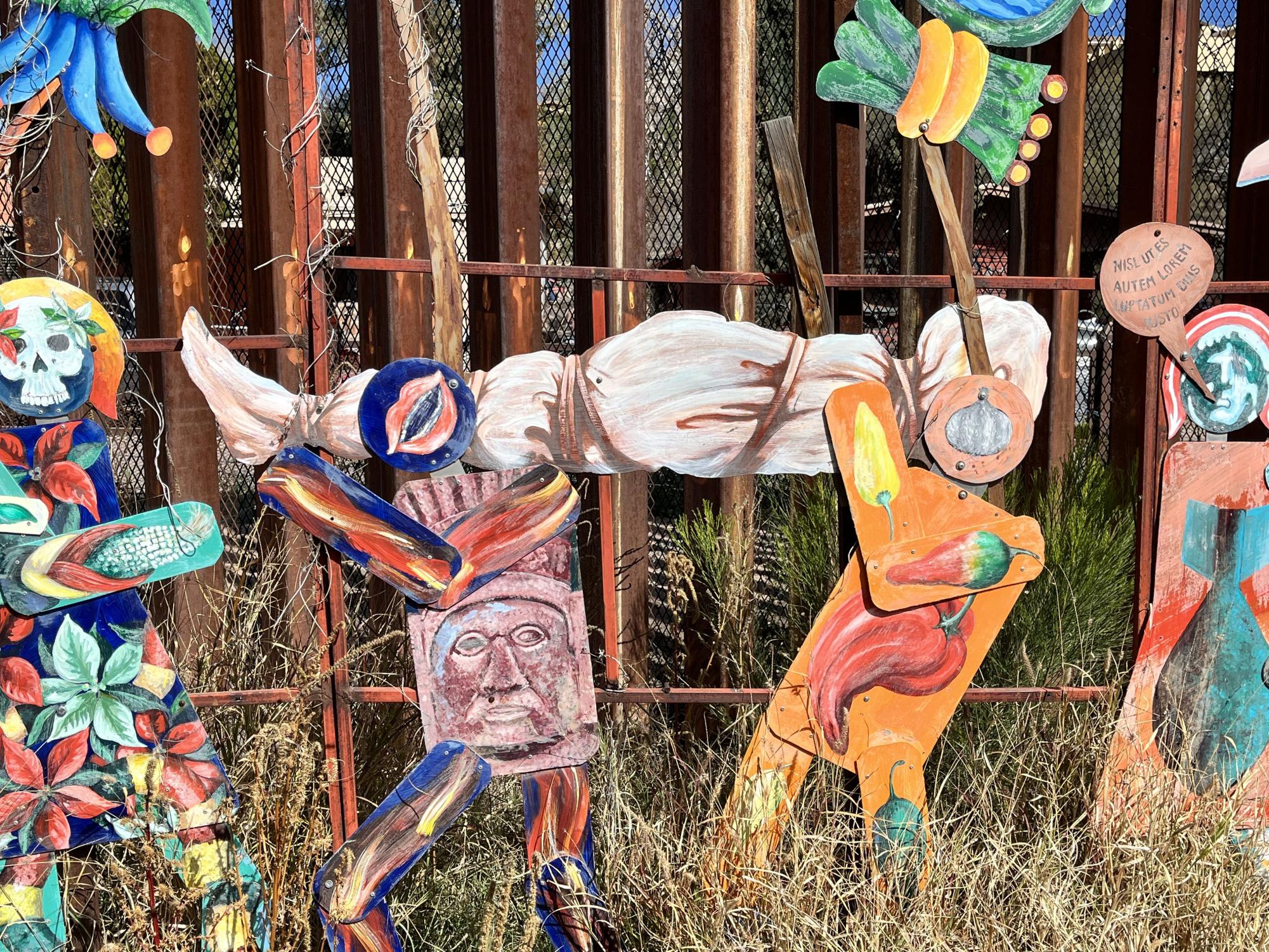
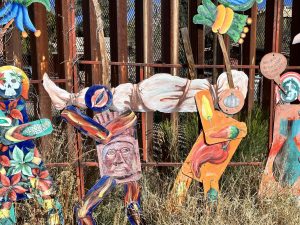
These walkers are part of a larger installation that represents the various cultures and events that have influenced Mexico throughout time.
-
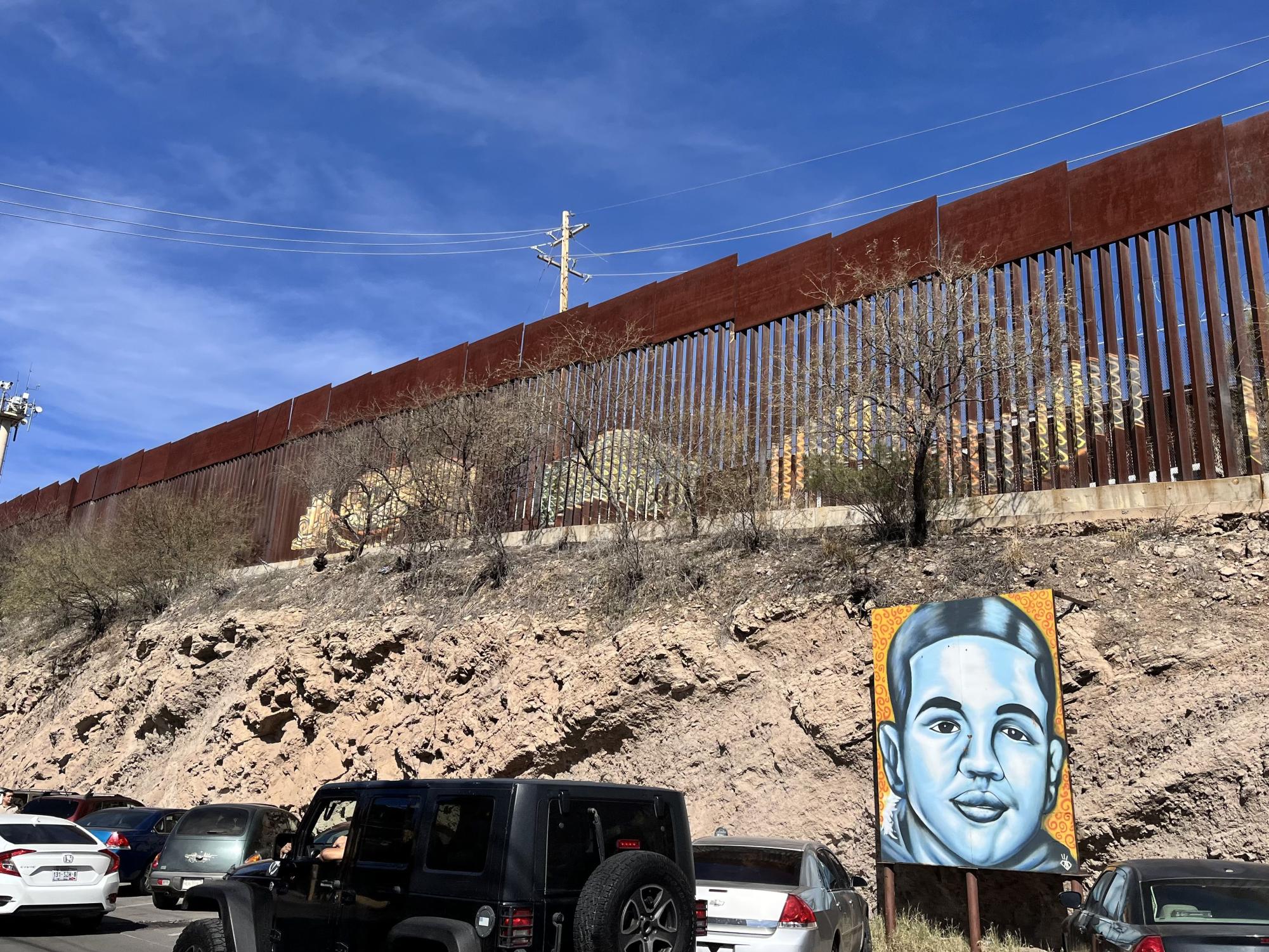
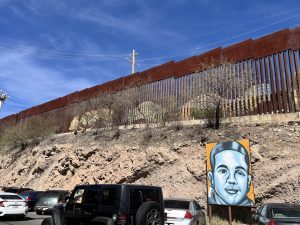
16-year-old Jose Antonio Elena Rodriguez was shot and killed by U.S. Border Patrol in 2012 after throwing stones at the rock wall beneath the border from the opposing sidewalk. As none of his family were able to enter the states, they could not press charges. This painting of him stands beneath the wall as a memorial.
-
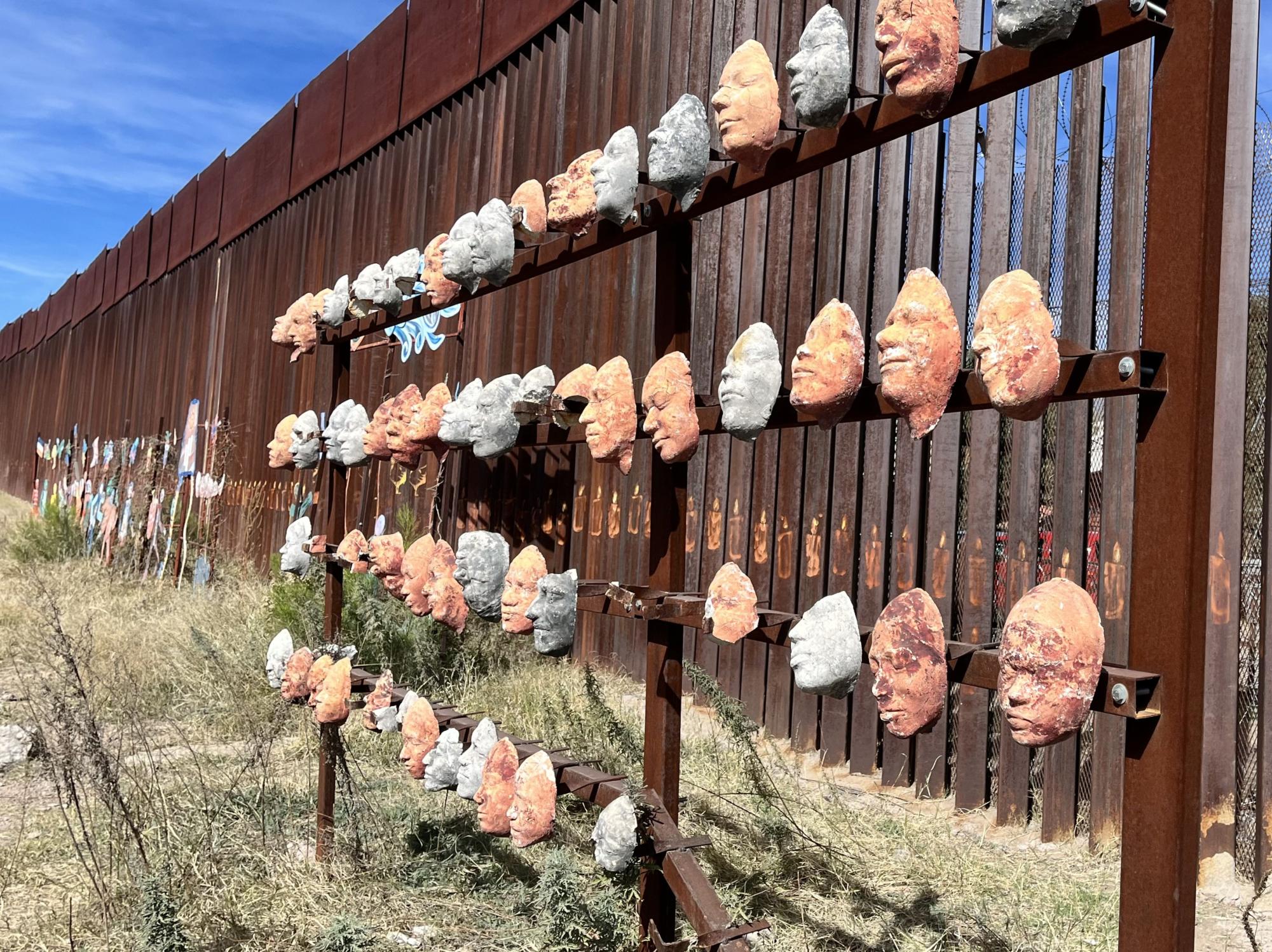
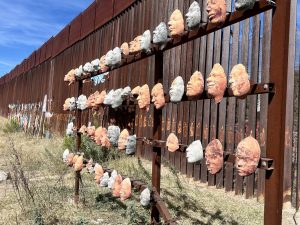
Various art installations line the Mexican side of the border wall.
-
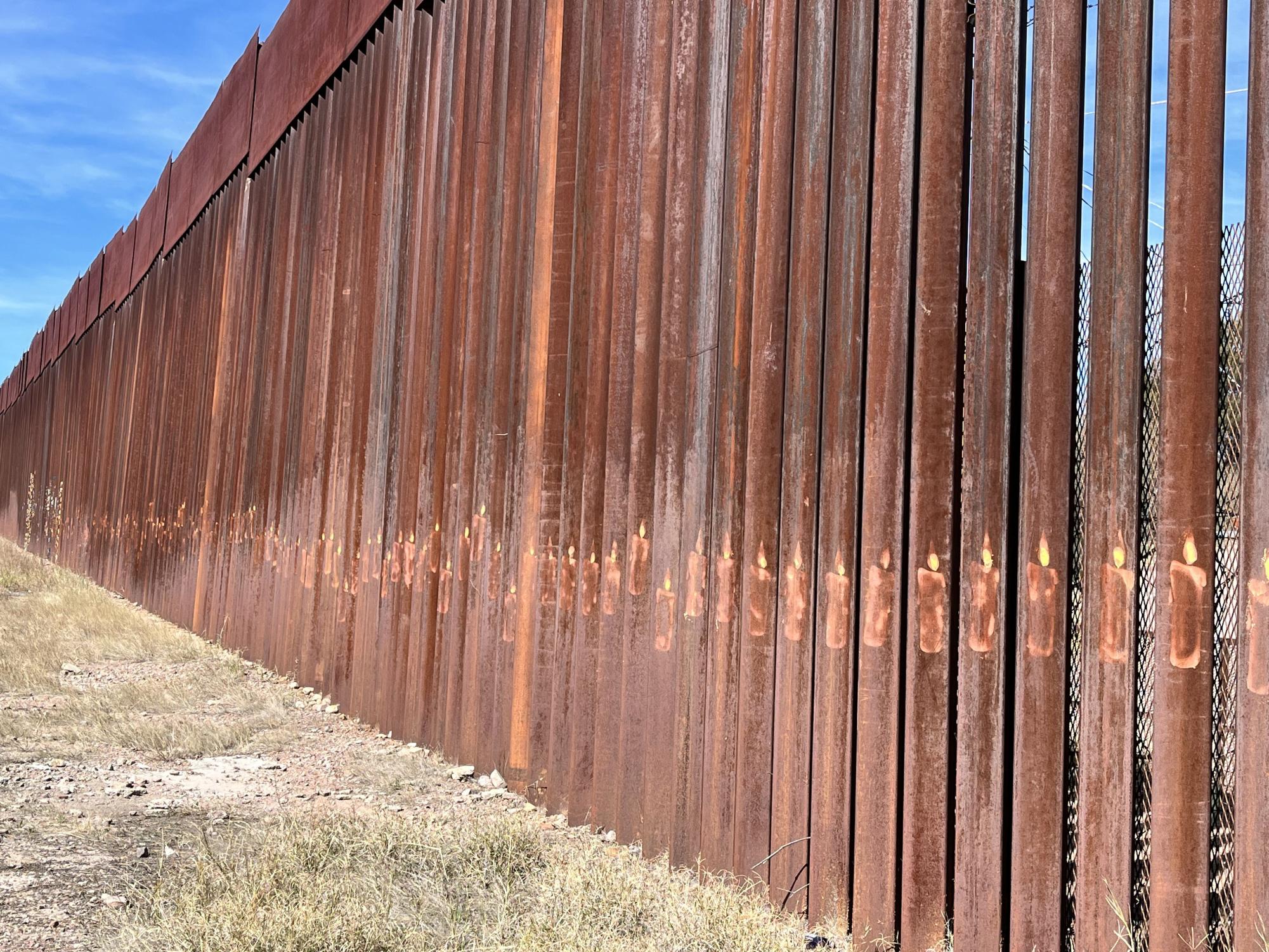
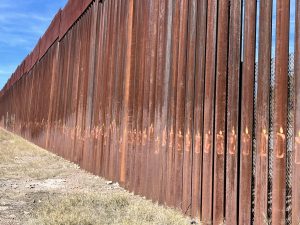
Lit candles are painted on slats of the border wall, memorializing the people who have died trying to cross the desert.
Their humanity is something I would not truly have understood if I hadn’t seen it for myself on EOL — because, for all the immigration news I read as a journalist, I’m realizing I had never truly heard those individual stories, nor seen their faces.
Being on this trip taught me that much of what is shown in the media about immigration is not the full story. Regardless of political alignment, reporters and officials alike tend towards sensationalizing rather than humanizing, prioritizing sweeping statements and emphatic statistics over individuals.
EOL did not teach me compassion so much as it taught me what the word “immigration” actually means without headlines and arguments.
The Lasallian values aren’t slogans; they’re a commitment to recognize and support people wherever you can. The more you interact with a person face to face, the more difficult it becomes to deny their humanity.
Living Lasallian values means seeing people first — and to do that, you have to understand what exactly they’ve been through.
To reach Tucson, immigrants must cross hundreds of miles of desert, and many begin much farther south in Mexico or even other countries. And the journey just gets more dangerous and expensive the longer it is.
According to our guide, the average price that cóyotes — guides who are often connected to cartels — charge to take one person across is 12,000 USD, plus an additional fee for supplies. A well-paid worker in Mexico earns about 50 USD a week, she said, and often, families sell nearly everything they own to afford the journey.
Not every cóyote is honest, either. Many hold migrants hostage to extort more money from the families which, while devastating on its own, is only one risk immigrants face in the desert.
There are countless ways the journey can kill a person: dehydration, heatstroke, infection, injury, illness, animal attacks, and exposure.
And for all those broad-brush facts, what really brought the humanity of the situation into focus for me was a wooden cross that stands 15 miles north of the border. It is a memorial for a stillborn child who was found a few yards behind it in the bushes with his umbilical cord wrapped around his neck, and for his mother, whose fate is still unknown.
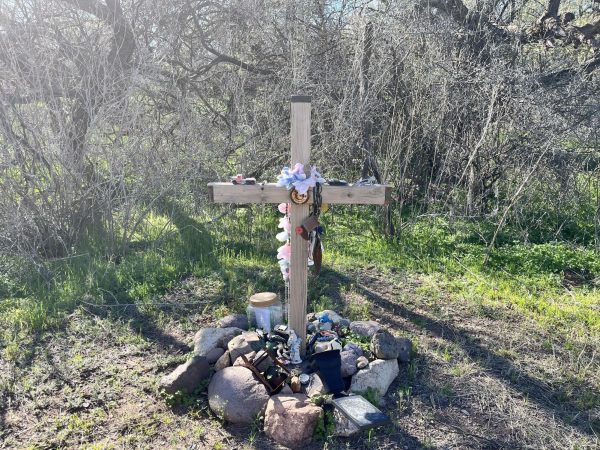
We stopped to pay respects to this tragedy, reading a poem left in a jar beside the cross and tucked in the rocks with flowers and children’s toys left by travelers. It wondered about what the woman had been running from and mourned the life her baby might have lived. She had no donkey, and no inn willing to take her in, it said.
She was only a few miles from civilization.
Even for those who reach physical safety, there is always the threat of being discovered and deported to their country of origin — where at best, they may have family to take them in, and at worst, nothing at all.
Yet people make the journey anyway, because the dangers they face are preferable to the lives they leave behind.
Some are fleeing cartel violence; some are trying to send money home to their children; some are attempting to reunite with family already in the United States.
Regardless of the conditions, people will cross.
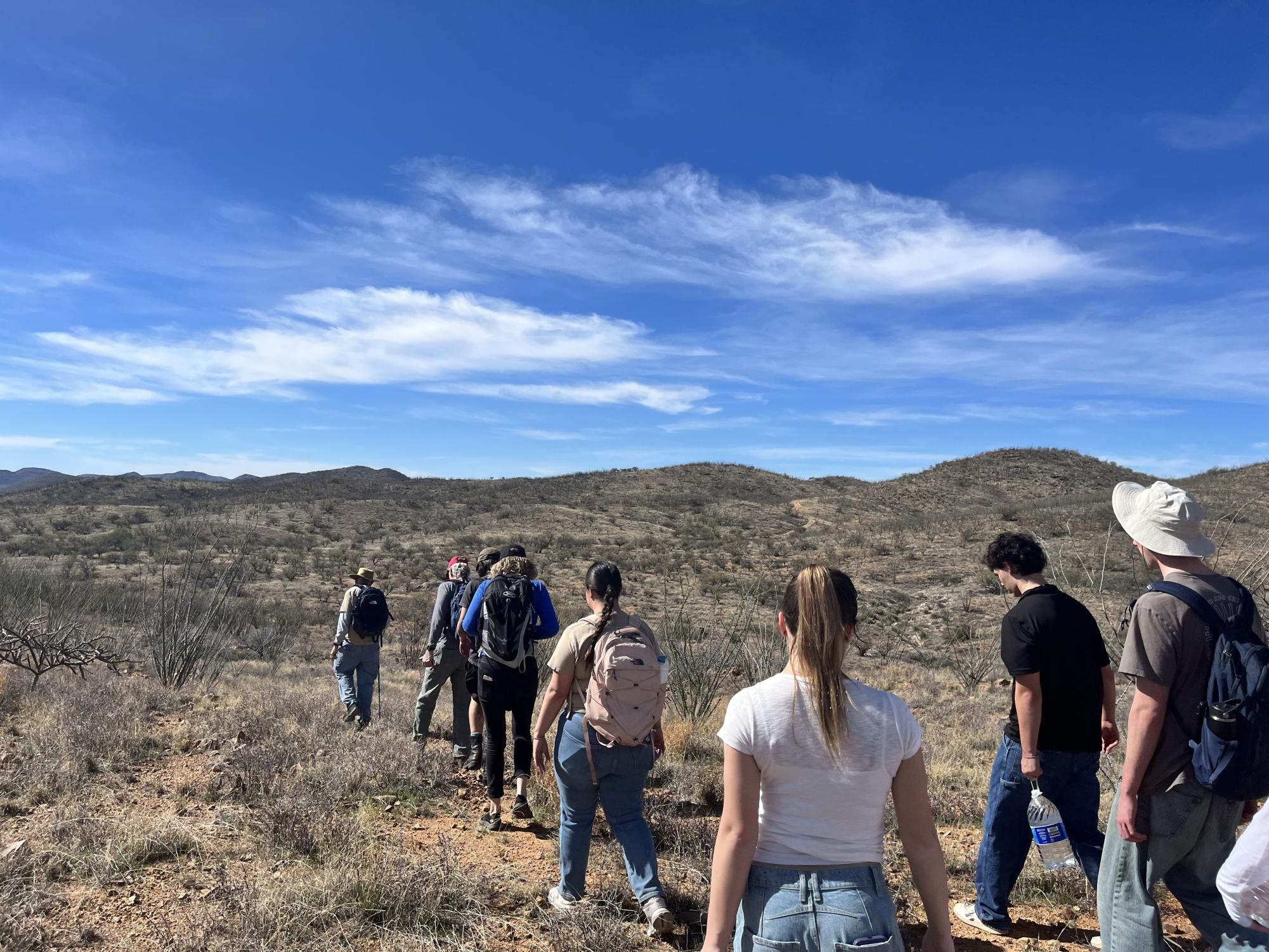
I saw the clearest evidence of human passage during the water-drop hike. On our second day, we traveled into the desert with Tucson Samaritans, a humanitarian group, to leave jugs of water and canned food along known migration paths.
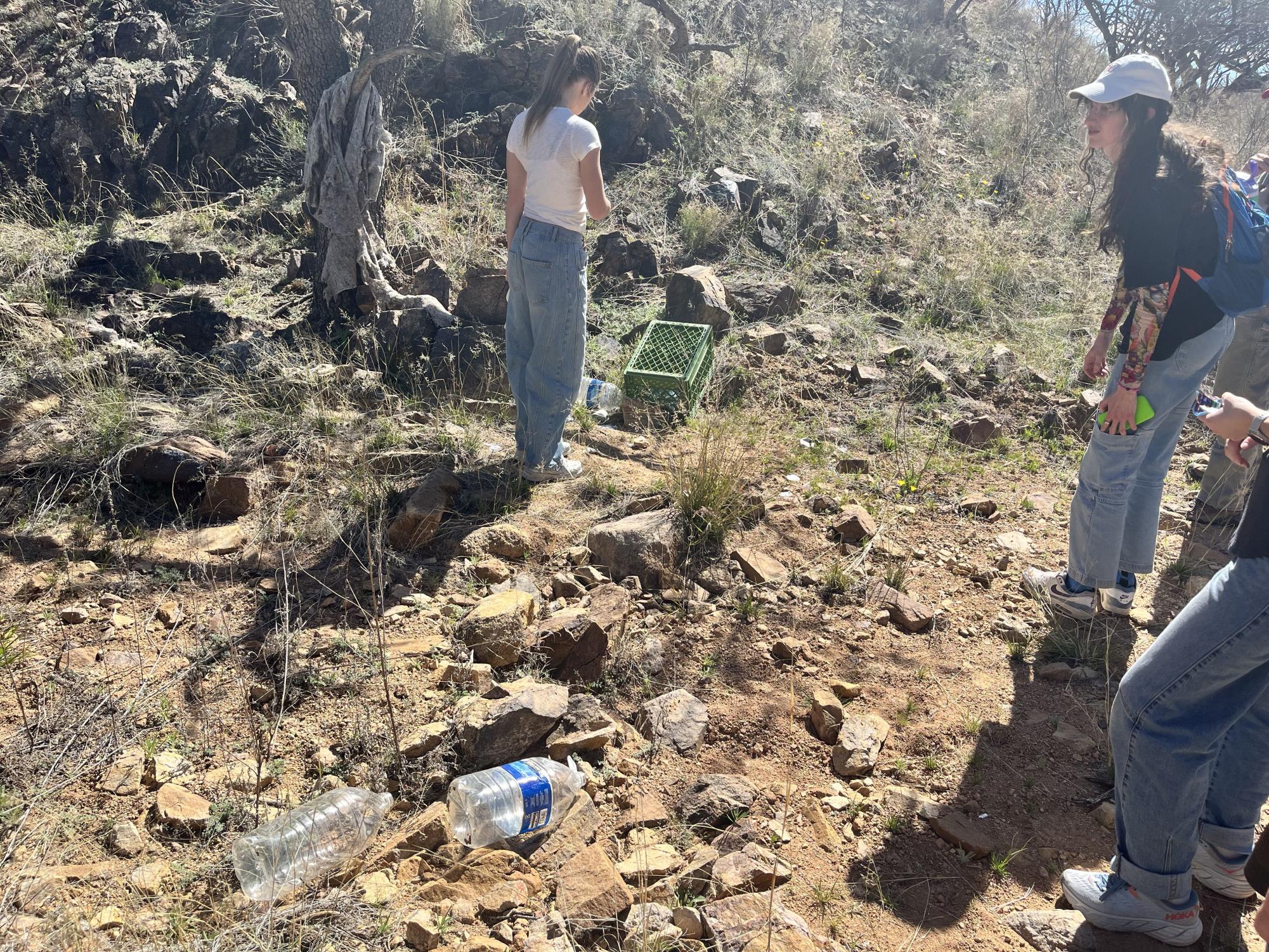
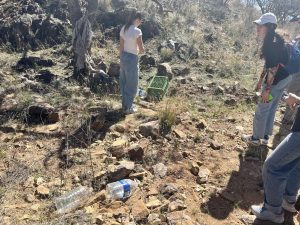
Along the trail, we found 16 empty water jugs, a torn blanket, discarded cans, shredded clothing, and part of a broken rosary — quiet signs that someone had passed through and lived.
-
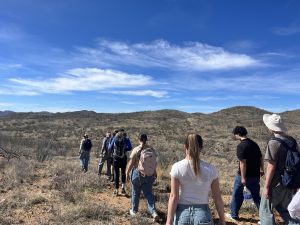
We trekked into the desert with members of the Tucson Samaritans activist group on day two to leave jugs of water and cans of food in the desert for migrants to find.
-
Throughout the water drop, we recovered a total of 16 empty jugs and several empty cans, evidence of recent migrant passage through the area.
-
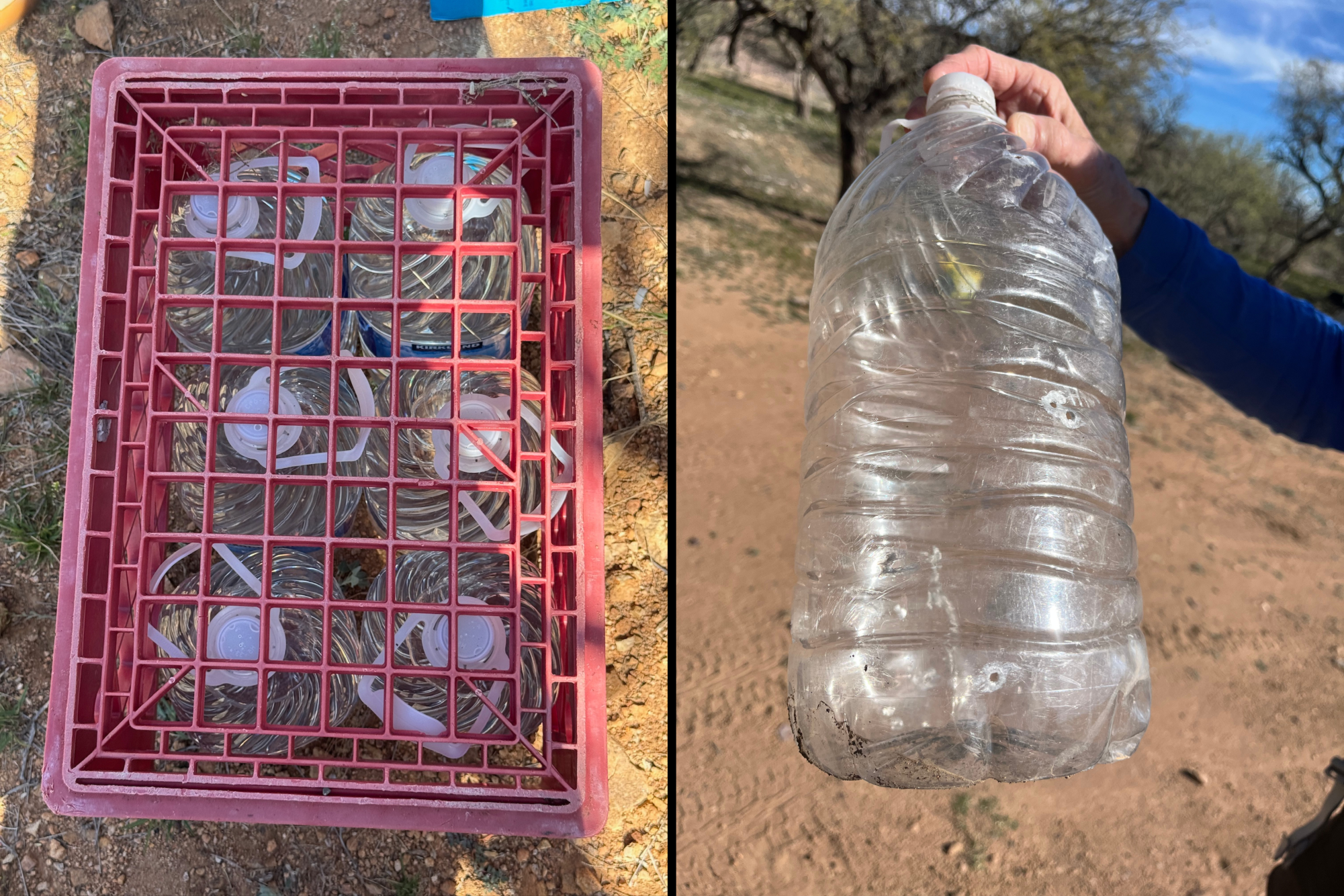
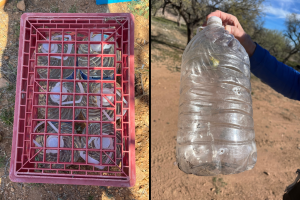
After leaving the jugs, we covered them with crates to protect from animals. One of the Samaritan members speculated that the uniformity of the punctures in the jug on the right indicates human sabotage rather than animal damage, which is unfortunate, but not uncommon to find, she said.
-
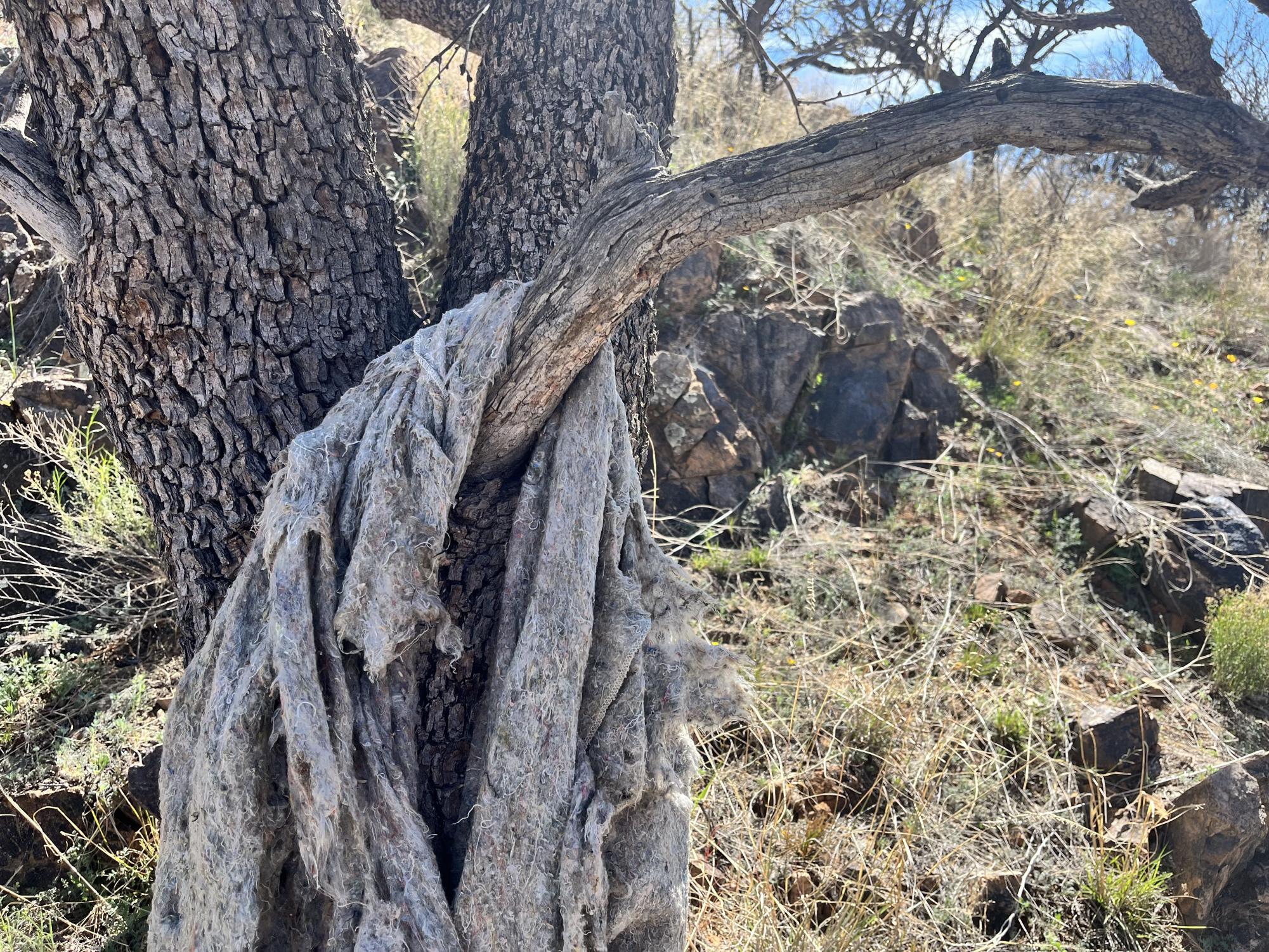
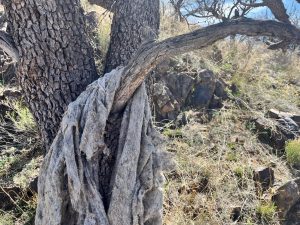
We found this tattered blanket hung over a tree branch near one of the drop sites, in addition to a shredded shirt, pants, and pair of socks further down the trail. Over the long, harsh journey, many organic items such as clothing become too deteriorated to keep and must be discarded, leaving travelers more exposed to the elements.
An hour and a half of my time leaving simple supplies could mean survival for someone else.
And that is where our responsibility comes in as Lasallians.
Even within the legal system, which often feels cold and mechanical, I saw people trying to act with care — judges who treated the defendants with dignity while carrying out laws they did not write. The system is overwhelmed and understaffed, yet they continue to work each day to make the process a little kinder — trying to humanize a deeply dehumanizing process.
As Lasallians, we are called to treat everyone with the same empathy — have “Respect For all Persons” and “Concern For the Poor and Vulnerable.” Though this trip gave me a deeper understanding of the humanitarian crisis at the border, the compassion it emphasized was not new to me.
What I learned is how those values are meant to be lived, at La Salle and beyond. Compassion does not have to be grand to matter. Here, at home, we can help.
There are organizations, like the Portland Immigration Rights Coalition, that support people going through this and offer real, immediate aid. Register to vote, get out and protest — whatever issue you choose to devote your time to, your voice and the pressure you apply can both directly and indirectly shape what is possible.
And perhaps most importantly, talk to people. Seek out the other side — “El Otro Lado.”






Charmaine • Mar 6, 2026 at 7:39 am
Thank you, Harper, for this balanced and thoughtful piece. It’s so hard, in today’s world, to find journalism that I know I can pass on to any friend, regardless of how they vote. Brava. With heart in hands, you have reached out to us all. I especially appreciated, in what often feels like an endless (and hopeless) struggle across borders, the hope that human kindness and compassion brings.
You bring us to the edge with this piece, and bravely hold our hand as we peer over a wall that we might not have without you. Thank you for doing this work.
Chris Krantz • Mar 5, 2026 at 1:28 pm
I really don’t see how Harper could have written this any better. What impresses me most is her restraint, especially in lines like this one: “How one actually goes about living those values, however, is a trickier question.” A trickier question, indeed! Harper invites us to ponder our real relationship to those basic principles–treating others with respect and compassion. Our real relationship: ourselves but also our leaders’ and our nation’s relationship to those values. Harper has done what the best journalists do: they go and see for themselves and report back in as clear and honest prose as they can muster.
Chris Babinec • Mar 5, 2026 at 8:39 am
A beautiful examination of moving from theoretical and intellectual understanding to felt and lived experience. The emphasis on what it means to humanize. I also have no doubt the author was compassionate and empathetic prior to this trip.
But direct service, being in contact with people and seeing and hearing their stories first hand, changes us. It moves us, it lights a fire in us to do better and to do more. With more and more people moving further and further apart by defaulting to online interaction, we are losing our sense of responsibility to one another, the ability to listen and learn from human beings. People talk loudly and often of rights, but few remember that rights go hand in hand with responsibilities.
Kamya • Mar 4, 2026 at 11:39 pm
Thank you Harper for the well written article about your recent experience. I was moved by the reminder that these are real people, made in the image of God, who live and love just as I do. I also appreciated learning there are may volunteers, as well as people in the justice system, who do what they can to provide compassion and dignity to their fellow human beings.