



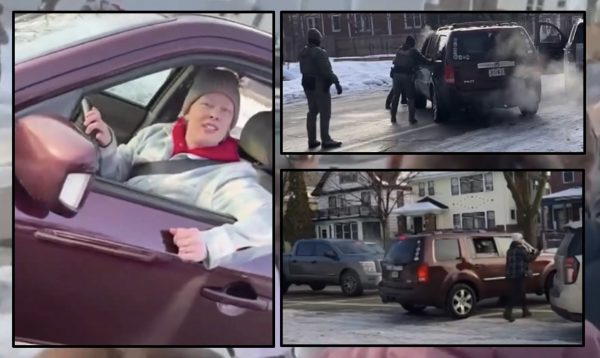
While driving away from Immigrations and Customs Enforcement (ICE) agents after previously blocking the road with her vehicle, 37-year-old Renee Good was fatally shot by an ICE agent in Minneapolis, Minnesota on Wednesday, Jan. 7, prompting fierce and divisive reactions from across the political spectrum.
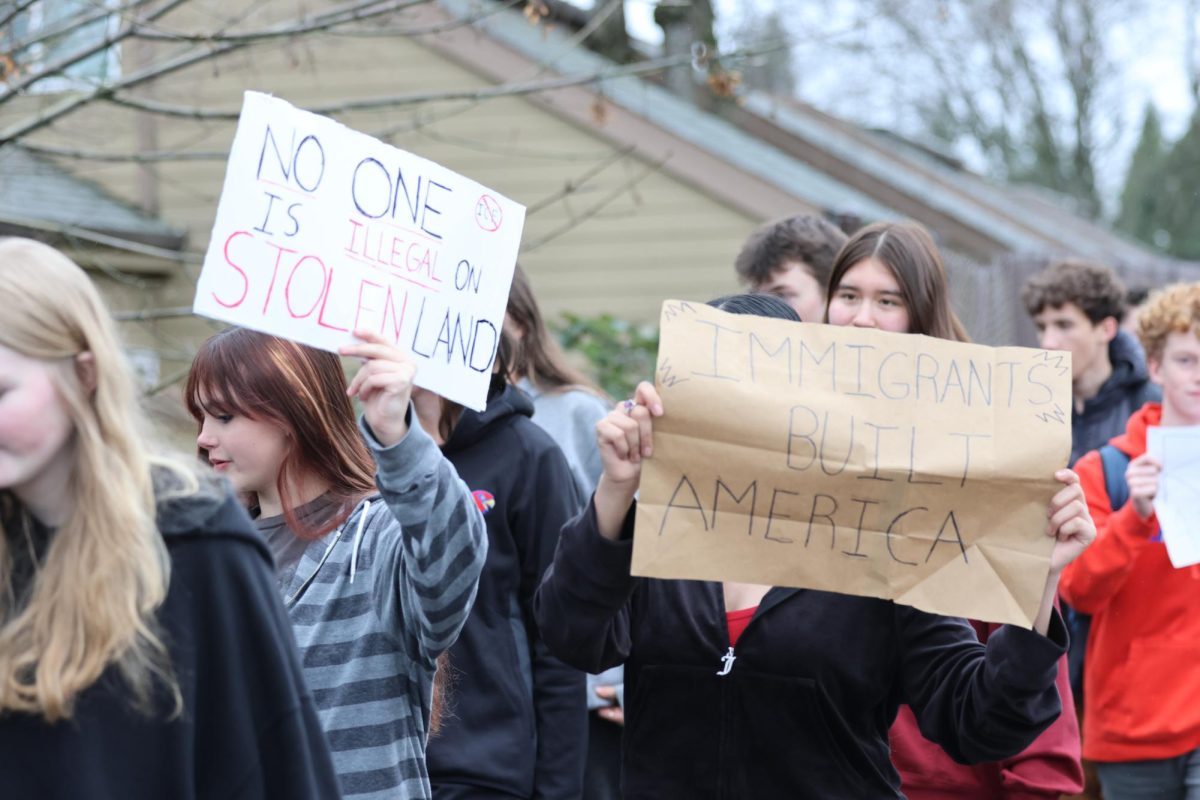
In the week since, protests have broken out both nationwide and in Portland, where two people were injured after a Border Patrol officer fired at them the next day. Contrasting narratives on what occurred in Minnesota — including from government officials — have spread online following Good’s death.
President Donald Trump called Good “very disorderly,” saying she “violently, willfully, and viciously ran over the ICE officer.”
Echoing this, United States Secretary of Homeland Security Kristi Noem characterized Good, a U.S. citizen, as a domestic terrorist.
Minnesota Governor Tim Walz challenged these claims as “verifiably false” and “verifiably inaccurate,” mirroring the stance taken by Minneapolis Mayor Jacob Frey.
According to senior Kellen Fisher-Lutes, these opposing accounts only serve to generate confusion, making it difficult to form an opinion on the situation and separate officials’ opinions from the facts.
“It’s hard because the news is really split right now on it,” he said. “It’s kind of split down the middle of, ‘she was entirely innocent, everything she did was justified,’ and ‘she’s a terrorist,’ which could not be more different.”
For junior Jack London, these disparate portrayals of what occurred reflect not just increasing polarization, but worsening media bias.
“It’s very dangerous,” London said. “People — and news organizations in general — need to do their best to present the facts and not spread false information.”
“We look to the organizations that kind of confirm what we already feel and ignore those that might contradict it,” Mr. Krantz said.
Many students, despite the stark disparities in how different groups framed the issue, were struck by the tragedy of Good’s shooting.
When junior Katarina Fuhrmann and her friends heard the news, she said the prevailing sense was of anger, sadness, and disillusionment with the system.
“There was an overall feeling of wanting to do something but not really knowing what to do,” Fuhrmann said. “I make a habit out of calling my representatives, but it just doesn’t feel like enough right now.”
For senior Ana Nieto, this most recent violence prompts questions about where ICE’s boundaries are.
Since President Trump’s reelection, the topic of immigration in America has become increasingly politically charged, widening the chasm between parties, Nieto said.
“I don’t think we should necessarily abolish ICE, because it’s an important thing — getting people who could be dangerous to our country out is for the best,” Nieto said. “But when you have these armed guards going and raiding people’s houses, hurting their children, and shooting people in the middle of the street … It’s just completely unjust.”
Both Nieto and Fisher-Lutes emphasized that it’s crucial to separate the institution and purpose of ICE from its current actions.
“I think it’s an important thing to have in our world; we need people to protect our borders,” Fisher-Lutes said. “But we also don’t need to be shooting people.”
To Fuhrmann, the divisiveness she sees from the current administration is another example of how, from her perspective, it’s failing U.S. citizens.
“As government officials who are elected by the people, you are supposed to serve your people and represent them and their interests,” Fuhrmann said. “I think that a lot of officials in the government right now are very much not doing that.”
Mr. Krantz believes that one of the Trump administration’s statements — Vice President JD Vance’s claim that Good’s shooter has “absolute immunity” as an ICE officer — is especially alarming. Though Vance’s statement only holds verbal power, rather than legal, Mr. Krantz sees statements like this as a foreboding shift for the nation.
“It tells me that we are — at least in this regard — another example of a lawless society in which the government has given permission to these agencies, such as ICE, to terrorize, harm, even kill with impunity,” Mr. Krantz said.
-
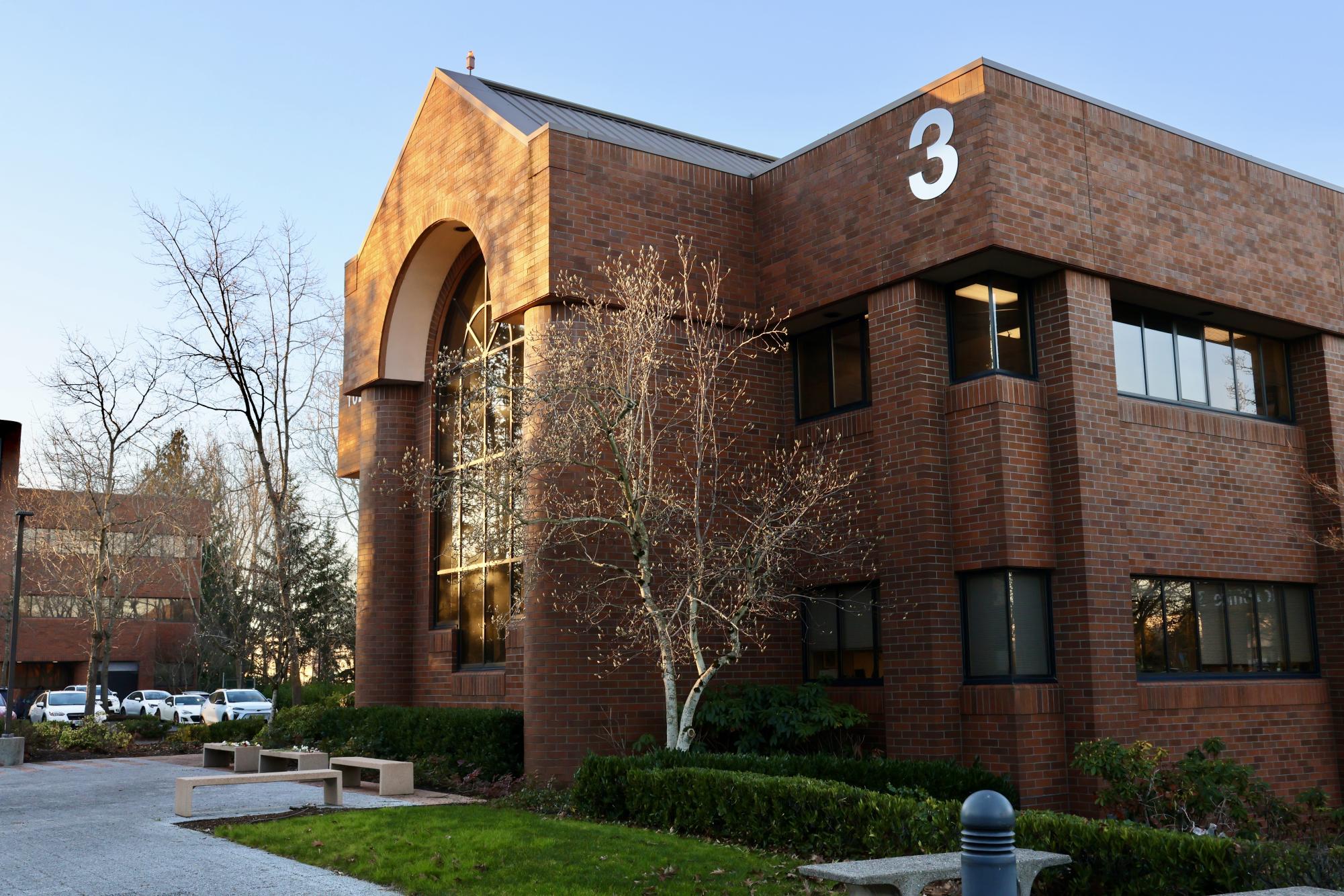
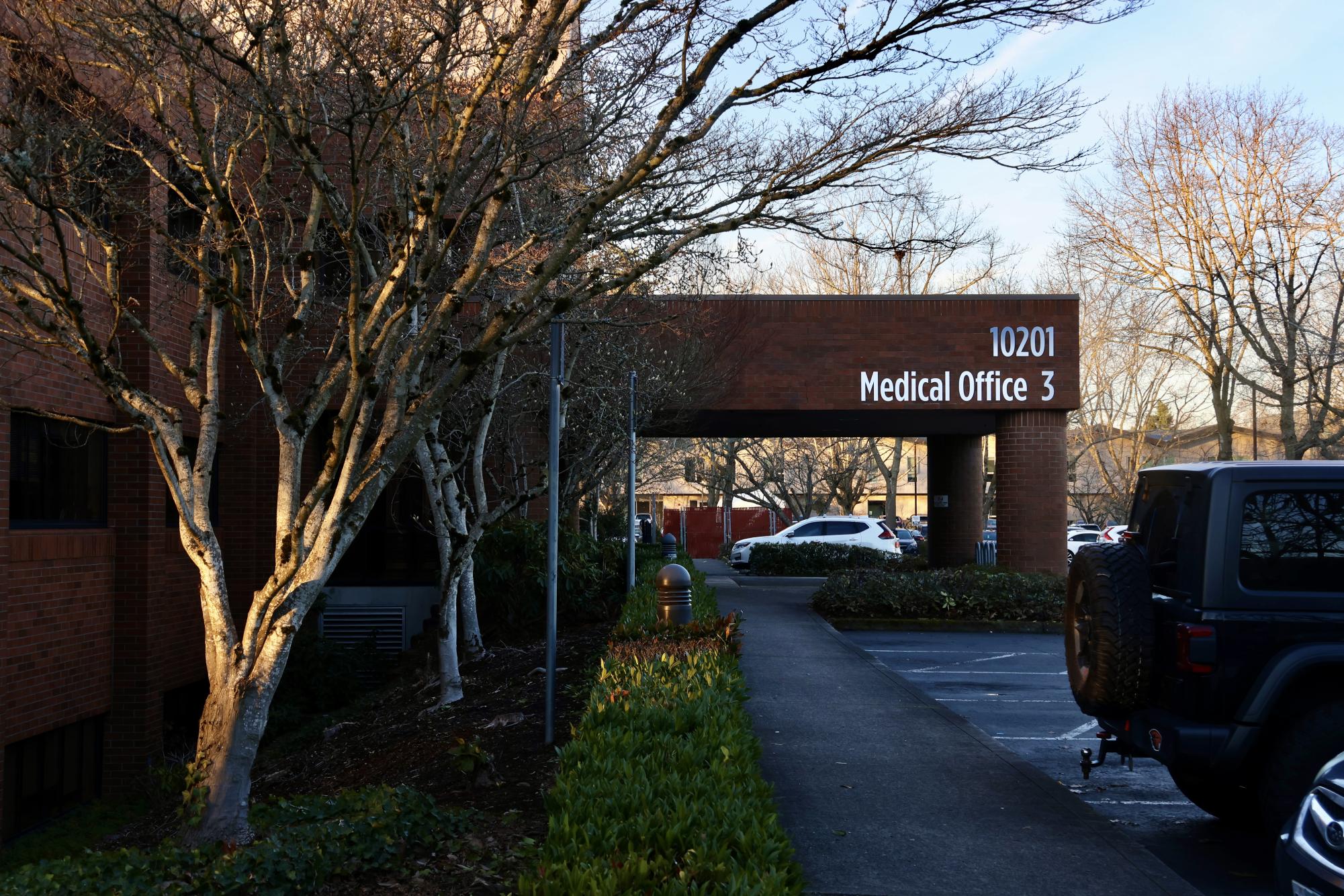
Luis Nino-Moncada and Yorlenys Betzabeth Zambrano-Contreras were shot by a Border Patrol officer outside of an Adventist Health medical office building on the afternoon of Thursday, Jan. 8. After the shooting, the pair called 911 and drove to Southeast 146th and East Burnside street, where they were brought to the hospital.
-
Prior to the shooting, the victims’ truck had been circled by Border Patrol vehicles, and they attempted to escape by ramming an unoccupied federal vehicle multiple times, according to the FBI report.
-
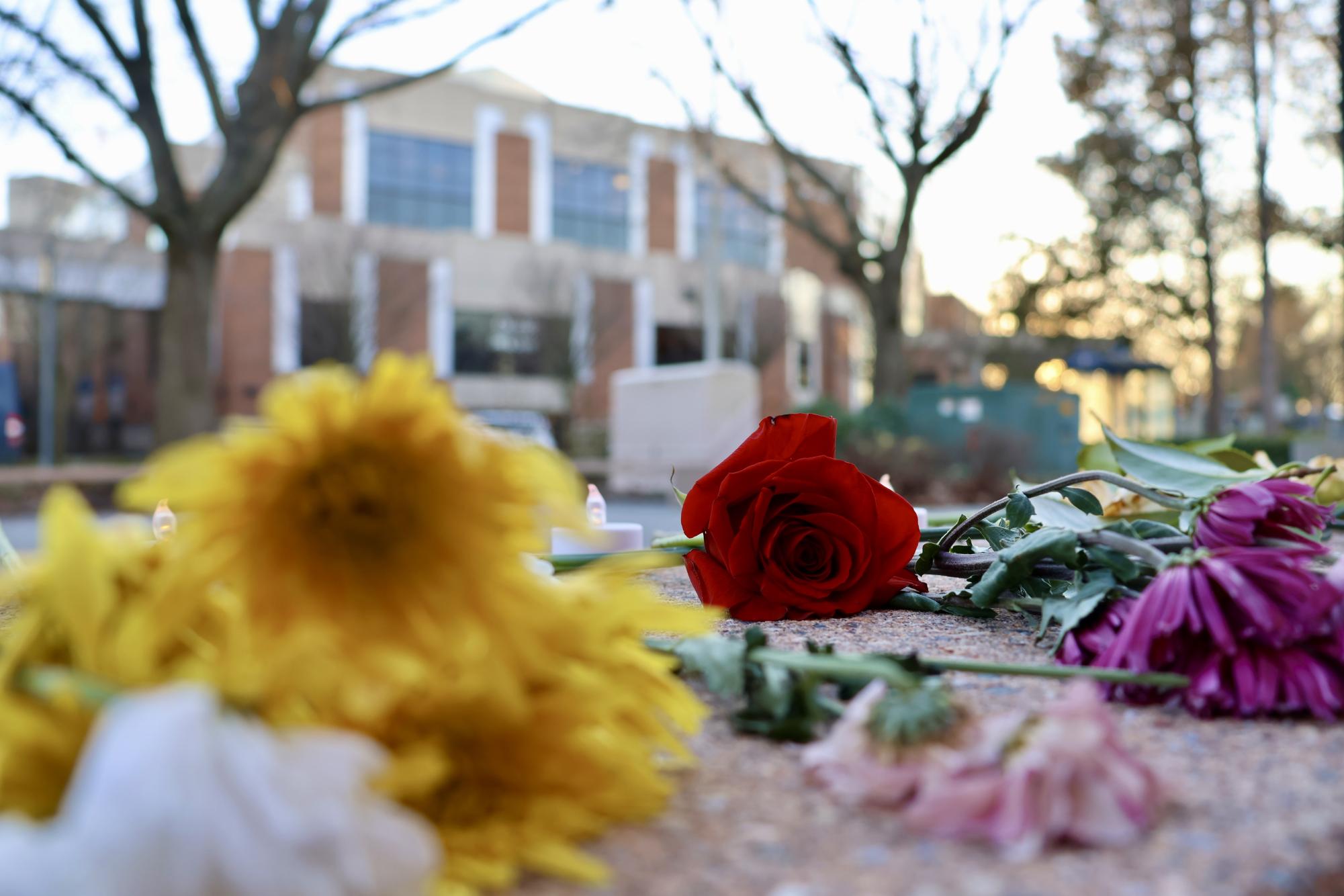
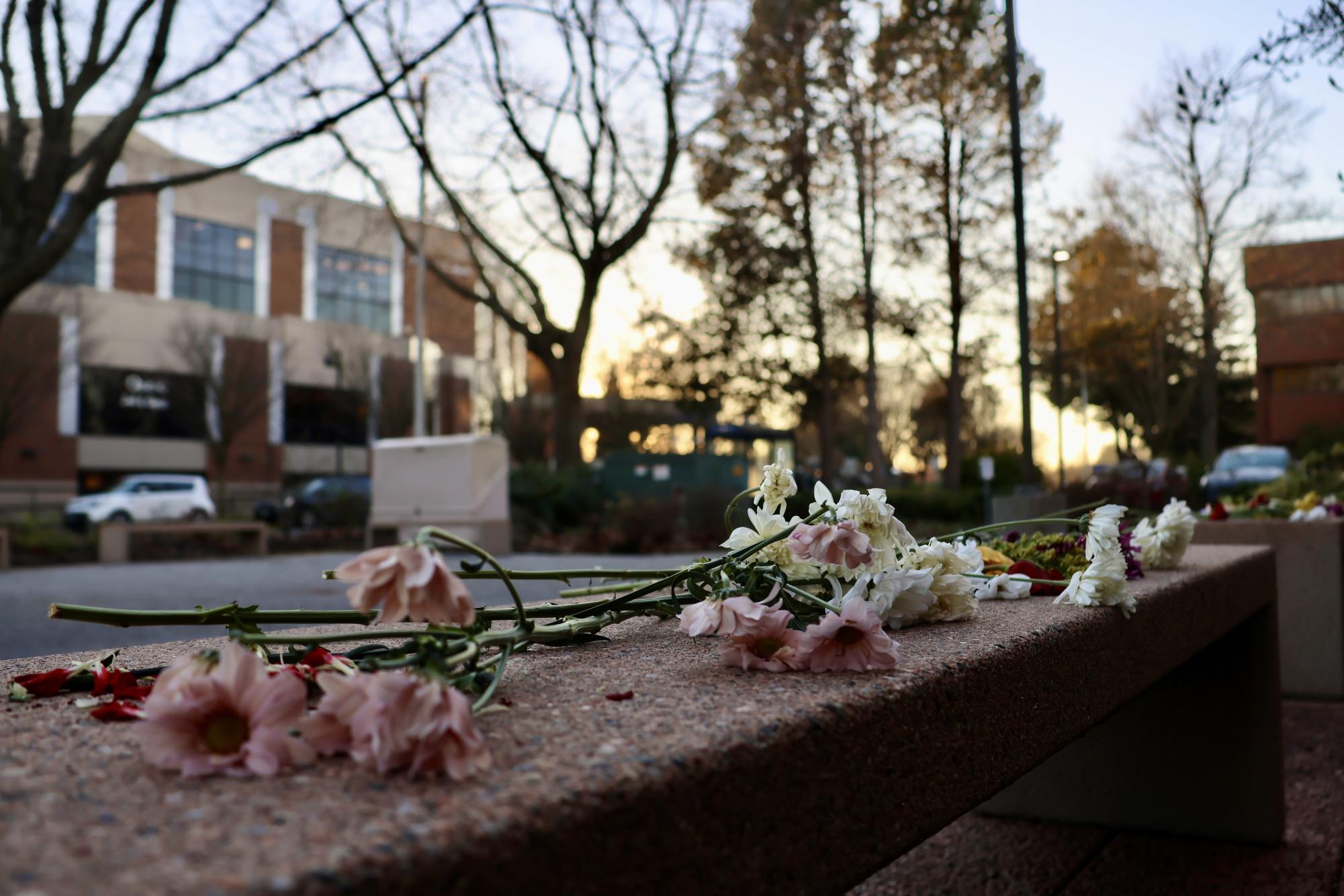
In the days since the shooting, flowers and candles have been laid on benches outside the medical center where Nino-Moncada and Zambrano-Contreras were shot.
-
In the days since the shooting, flowers and candles have been laid on benches outside the medical center where Nino-Moncada and Zambrano-Contreras were shot.


Nieto believes both shootings mark a more violent turn in how law enforcement may interact with the public moving forward.
“I honestly don’t think that the incident in Portland was necessarily influenced by the incident in Minneapolis, but I think it just goes to show how [much] more common these things are going to become,” Nieto said.
Political polarization on the scale that the nation is experiencing can only make things worse, Fuhrmann said. London seconded this, worrying that growing partisanship will keep people from connecting across the aisle, dismantling empathy.
“I feel like that’s dangerous, because you have to be able to have these conversations with people about important topics that you might disagree on,” London said. “I hope that in the community, people aren’t hating each other … and are able to have a conversation and hold that empathy.”
London said that Good’s death shouldn’t be a partisan issue, and that situations like these should focus on the person and tragedy rather than political implications.
“From a legal standpoint, I feel like I haven’t completely made up my mind on that yet, because there’s arguments for both sides, but someone shouldn’t have died, regardless,” London said. “This situation is very, very sad.”
For senior Ana Nieto, the shootings display a need for deeper systemic change, especially in how law enforcement are trained for dangerous situations. When Good drove forward suddenly, the ICE agent fired one shot through her windshield and two into the driver’s side of the vehicle, ending her life — a reaction that Nieto believes is preventable.
“Even if the ICE officer was directly in front of the car, if you shoot somebody driving a car at you, it’s not going to help take their foot off the pedal and onto the brake,” Nieto said. “That did not help anyone … If you really want them to stop, shoot a tire.”
Social studies teacher Mr. Peter Snow echoed Nieto’s perspective, commenting on the low amount of training American law enforcement receives as compared to other countries, where rates of police killings are often lower. He believes this can lead to an insufficient amount of preparation for dangerous situations, contributing to tragedies like this.
“You’re not setting your employees up for success in doing that,” Mr. Snow said. “We’re not demanding higher training for a very demanding job, and we’re not putting forth the resources for that training.”
For senior Vince Faris, the prevalent discourse on social media about this incident is doing more harm than good, removing humanity and compassion from people’s perspectives.
With so many strong opposing views on the issue, he said, people become overwhelmed, disengaging from real-world issues.
“We’re so distracted, and we’re so focused on our own lives,” Faris said. “People aren’t looking towards what’s happening right outside their door.”
Junior Hope Tanzambi first saw the video of Good’s shooting on TikTok rather than an official news website, which immediately prompted an increasingly common doubt: “There’s a chance this could be AI.”
“That’s a very real question we’re asking now,” Tanzambi said. “So I feel like the lack of information comes from a lack of trust in information.”
The presence of misinformation and AI sows distrust and confusion into situations that should be about the person, she said, desensitizing people even further.
Tanzambi emphasized the callousness she sees on social media related to events like this.
“‘People die every day’ — I’m hearing that phrase a lot … like it shouldn’t matter,” Tanzambi said. “It should matter that these people are dying. It should matter that she was shot for protesting in her car.”
For several of those interviewed, it’s not difficult to draw a comparison between Good’s shooting and the killing of George Floyd in 2020. Both citizens were killed by law enforcement on video, and both sparked nationwide protests.
“The violent actions aren’t stopping,” Fisher-Lutes said. “It’s not just one thing that happened. It’s continued violent actions. It wasn’t just George Floyd, it wasn’t just Renee Good, it was a lot of people, and it’s continuing to happen.”
To Tanzambi, these violent events exemplify the problem with internet activism — acts of solidarity like posting on social media, changing profile pictures, and liking and sharing videos that align with the cause.
While it spreads the word, according to Tanzambi, it doesn’t bring permanent change. She pointed to the dwindling of Black Lives Matter protests as an example. Faris seconded this, saying that more people need to raise their voices more consistently.
“I think that our voices are what matter the most, and I think that we’re not speaking out,” Faris said. “In this day and age, you need more than one person speaking out — more than 10,000 in a country of [343] million.”
In addition to protests and internet activism, legal and systemic correction is called for, Fisher-Lutes and Fuhrmann said.
“I’m hoping that people are realizing that this does affect them, and it is affecting them, even if they’re not an illegal citizen,” Fisher-Lutes said. “I think that was the biggest thing: this person killed was just an American citizen … she was just a normal person.”












Glenn Krake • Jan 21, 2026 at 9:41 am
Your staff’s coverage of this ongoing issue facing our community and country is becoming required reading for me. Thank you for your diligent and thoughtful reporting.