



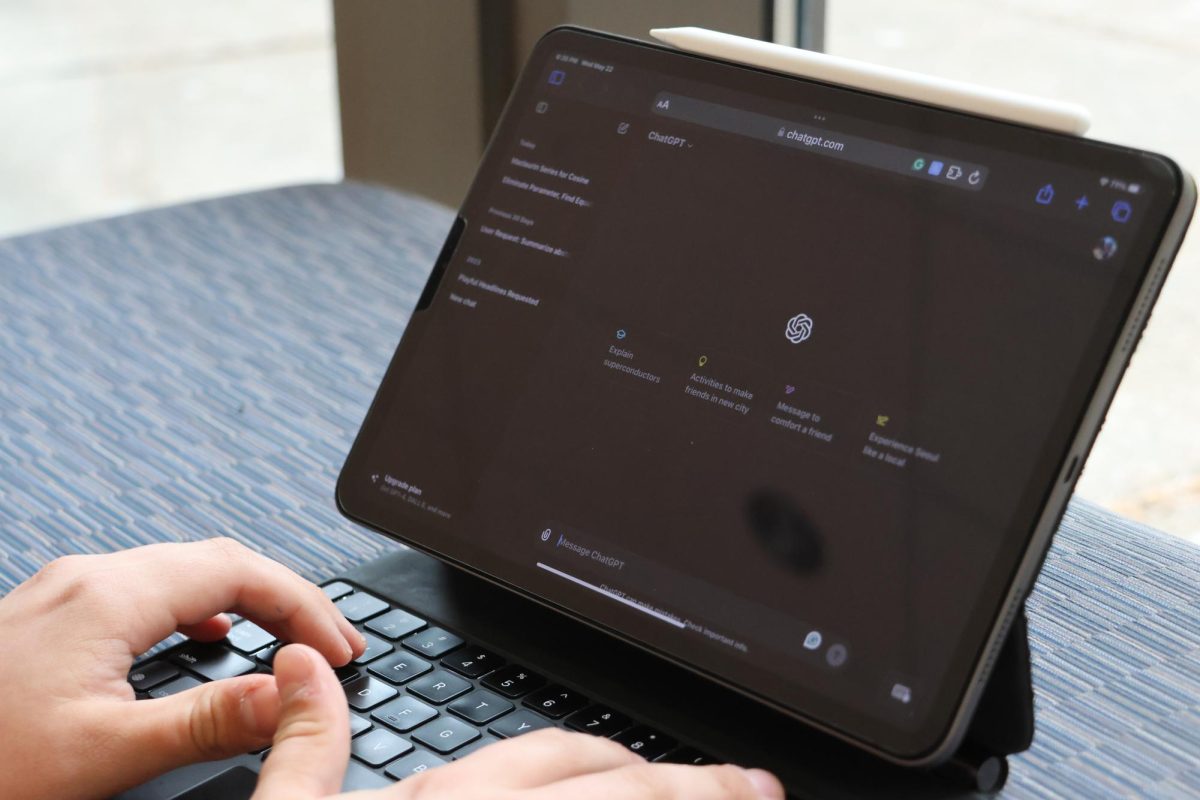
Following the release of ChatGPT a little over three years ago, our world has been thrust into an AI revolution with new, advanced models being created at a rapid rate. These powerful tools affect many parts of our society in many ways, including education, prompting teachers to make adjustments.
This need to adapt is something that Principal Ms. Alanna O’Brien has embraced despite some personal misgivings.
“If we had a choice, we might like it to go away; however, it’s here and it’s not going away,” she said. “So we need to learn how to engage with it.”
She and several other staff members said that they understand the importance of adapting — not only for themselves but also for students as they adjust to and start using AI tools in the classroom.
“I feel some sense of personal responsibility, given my job,” English Department Chair Mr. Greg Larson said, adding that since reading and writing are difficult, they are “one of the first places students look to use AI.”
Part of teachers’ new responsibilities during this AI revolution involve making sure students use AI properly.
“If we’re not careful, students will let AI do all of [their] critical and creative thinking for them, and that’s what we want to avoid,” Ms. O’Brien said. “If we become overreliant on it, then we’re losing our human abilities to think for ourselves.”
She said that what the administration is trying to do is make sure students are in “the driver’s seat of their own education,” and that they “feel responsible for their own learning.”
Ms. O’Brien noted that a common misconception of AI is its association with cheating, which “doesn’t have to be the case if we’re able to coach students and frame our assessments in a way that promotes student agency and critical thinking,” she said.
This is something that social studies teacher Mr. Peter Snow noted as well.
“For a long time, there’s been movements away from multiple-choice questions in terms of assessment and more towards more authentic assessment,” he said. “I think that authentic assessment now has to include conversation about process and understanding student process of how they went ahead and produced that.”
He explained that one way he allowed students to use AI was by having them generate images for an assignment. He then required them to make connections to the material from the image and explain what’s going on in the image.
If students can’t explain their work and the process, he said, then “they don’t know what’s in that product.”
Mr. Snow also allowed his students to use AI to create graphics and charts using data that didn’t already have corresponding ones.
Additionally, he has started letting his students use it to assist with research, but requires his students to verify all the information they find and show the sources used.
“It might lead you to an answer faster, but you still need to make sure that what it’s saying is accurate,” he said. Mr. Snow also uses AI to help with his research, posing it as a great brainstorming tool.
“If you’re having a quote, unquote ‘conversation’ with AI to kind of interact with a sounding board to help redirect where your research needs to go, that can be great,” he said.
Part of what he is trying to do is promote long-term engagement with the content, teaching students to have helpful conversations rather than use AI as a search engine.
In Mr. Larson’s classroom, students are sometimes allowed to use AI to get feedback on some of their grammar work or organization without fixing them.
“AI could write topic sentences,” he said. “You could also feed it your topic sentences and say, ‘Ask me questions about these in order to develop them. Do not write them for me.’”
This side of AI — a classroom assistant — is something that Director of Academic Resources Mr. Chris Long is interested in.
“There’s engines that we can create to help students continue the learning process so that if they have an immediate need, these AI engines can provide responses, especially if a student knows how to provide a good prompt,” he said.
He explained how, in a classroom of 30 kids, a teacher can’t help everybody all at once, but AI can allow for quicker feedback and question-answering. This then helps to “set up better environments for students to work within,” he said.
Mr. Long also heads the Educational Technology Steering Committee, which involves creating more detailed policies on AI use and getting input from other staff members about AI in the classroom.
The school’s official AI use policy states, in part, that “the use of artificial intelligence (AI) tools to complete classroom assignments and assessments must come by direction and permission of the teacher.”
Mr. Long stressed the importance of having conversations about AI, something which all the interviewees agreed with.
“I try and air on the side of more transparency than less,” Mr. Larson said, regarding his AI use as a teacher.
To him, AI can be quite helpful. He uses it for several things, including scanning and formatting short stories.
“A lot of the scans of short stories you find online are bad,” he said. “There are typos and it’s no good, so I’ll have it checked for formatting.”
Sometimes he will also use it for “crunching some numbers,” which entails feeding in raw student scores and pulling out patterns.
Mr. Larson is also interested in getting student feedback. For example, he used AI to generate a graphic based off of a story and asked students for feedback.
“One of the things I think is really, really, really important — of paramount importance — is talking to students about your usage and their usage and being really clear about what’s you and what’s not you,” he said. “It’s really important that my classrooms stay human and that human moments are still possible.”
Mr. Long recognized the importance of maintaining humanity while using AI tools, specifically around cognitive skills.
“I really try to rely on my own brain as much as possible to do most of my tasks, rather than using it to drive my thinking,” he said.
He uses AI — mainly ChatGPT and Claude — to assist with more time-consuming tasks, like building rubrics and making student checklists. “I use it for all kinds of things that could generally take a very, very long time to create,” he said.
Sometimes Mr. Long will also use it to refresh his knowledge in certain areas, help look over lesson plan drafts, and provide ideas for class activities, which is something Mr. Snow does as well.
When Mr. Snow is going over a past lesson and figuring out how he can improve it in the future, sometimes he uses AI “if I see that there’s kind of a rut… [and] if there’s not something coming to me already on what direction to go to,” he said.
But sometimes, he doesn’t even have to follow through with AI for it to aid him. He said that it is helpful in and of itself to write out the prompt in detail and “[spend] that time to really focus on what is it I’m asking and what is it I want and what is it I want them to spit out.”
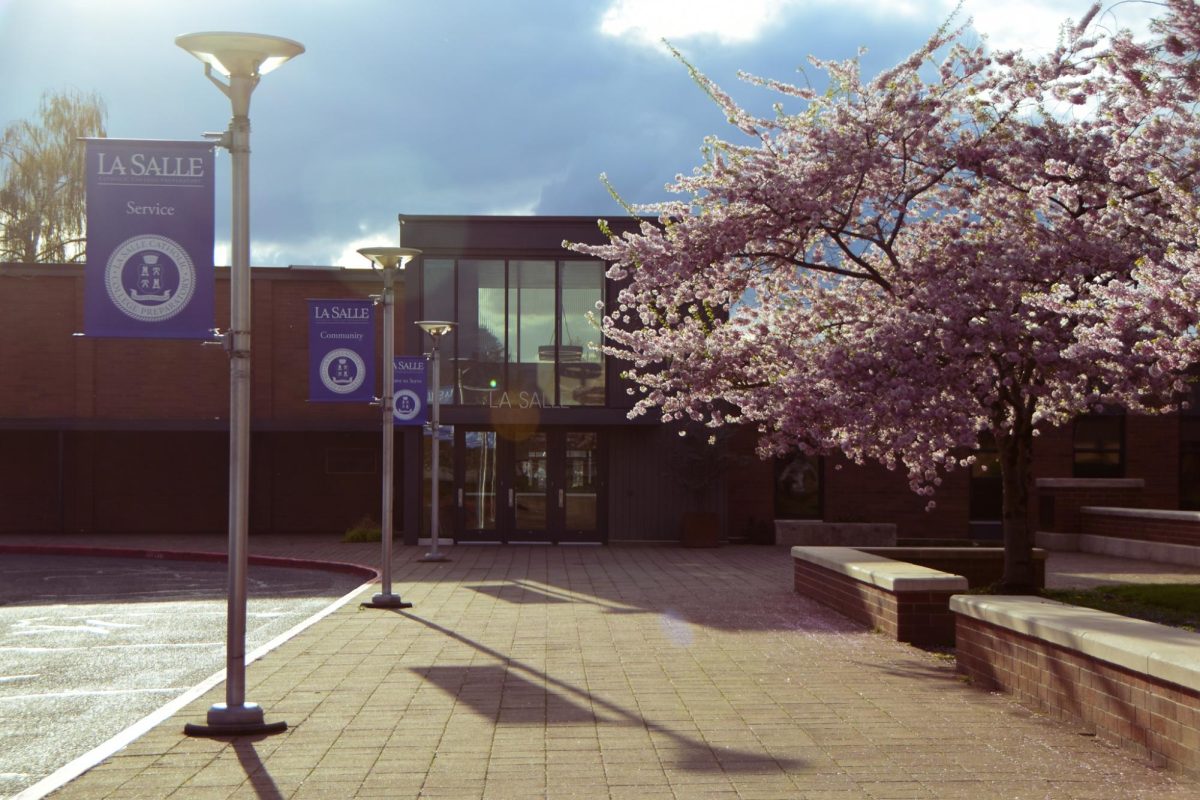
Reflecting on how AI fits into La Salle’s mission, Mr. Snow sees parallels between La Salle’s community and other schools’ in the sense that AI can be used in a variety of contexts to help utilize creativity, and each school can focus that in whatever direction they want.
“AI will allow people to harness creativity, so what is the goal of your creativity?” he said. “Here, there are certain goals, there are certain banners, there are certain objectives, and I think that as long as the focus in the community’s guidance is in that direction, I think AI can be that kind of important partner in the community.”
Ms. O’Brien interprets one of La Salle’s core values of “push your limits” in the context of AI as “coaching students how to take responsibility for their own learning, even if there is AI in the world,” she said. “Whether we decide that it’s a priority or it’s not a priority, whether we decide that it aligns with Lasallian values or not, more importantly, I think we need to learn to coexist with AI.”
















Comments are moderated, and won't appear until they are approved. An email address is required, but won't be publicly displayed. The Falconer's complete comment policy can be viewed on our policies page.