



Pope Leo XIV issued a call to action to Americans on Nov. 4 while speaking to journalists outside his residence in Castel Gandolfo.
His statement came in response to questions about detained migrants being denied access to religious sacraments — Communion — at a facility outside Chicago.
In his statement, he cited chapter 25 of Matthew’s gospel.
“Jesus says very clearly at the end of the world, we’re going to be asked, you know, how did you receive the foreigner? Did you receive him and welcome him, or not?” Pope Leo said to reporters. “I think that there’s a deep reflection that needs to be made in terms of what’s happening.”
This comes amid the Trump Administration’s broad crackdown on immigration, which has led to Immigration and Customs Enforcement (ICE) raids across the Portland metro area, and prompted several neighboring cities to declare states of emergency.
In addition to Pope Leo, both the Archdiocese of Portland and the broader United States Conference of Catholic Bishops have condemned the current treatment of migrants in the U.S.
However, many Catholic communities are still grappling with how to respond to these policies, most of which intersect with the Church’s core values.

Principal Ms. Alanna O’Brien believes the immigration crisis contains two distinct questions that often get conflated.
“There’s this question about systems — ‘how do you do this well?’ — and then there’s this question of humanity and care for the person in front of you,” Ms. O’Brien said. “I think those can get bungled sometimes, that you’re either for one or the other.”
She hopes that the school can be a safe forum for difficult discussions.
“We try really hard at La Salle, as a faculty and staff, to create spaces where students can develop their own critical thinking,” Ms. O’Brien said. “For that reason, the faculty has always been coached to not bring their own strong opinions about things — especially things that are political in nature — into the classroom so that all students can develop their own thinking and use their voice and engage in healthy debate.”
Setting aside politics, Ms. O’Brien said that she prioritizes the church’s teachings.
“Whatever the policies are around how somebody can come to the United States, how do you also be a person of compassion for the human being in front of you?” Ms. O’Brien said. “It’s a political issue, but it’s also a human rights issue. As Catholics, we care about human rights.”
That perspective is mirrored by much of the school’s faculty.
“The church is clear on the principle,” Religious Studies Department Chair Mr. Edward Kendrick said of the situation. “The prudence of how to do that well is up for debate.”
He outlined the practical challenges of building functional systems. Documentation — an integral aspect of legal immigration — requires bureaucracy, which often contributes to long wait times.
“If people need to wait — you know, six months, a year, two years — through the proper channels in order to be allowed to work, if they already don’t have a means of livelihood, that just doesn’t work for people,” Mr. Kendrick said. “People will, and must, be able to work to support themselves and their family.”
To help illustrate some of these ideas to his students in Catholic Social/Moral Teaching, Mr. Kendrick uses the analogy of a host-guest relationship, and the metaphor of preparing a meal with one another.
“The host country has a responsibility to care for the guest,” Mr. Kendrick said. The first night, the host cooks; the second night, the host shows the guest the fridge. And on the third, the guest can help prepare the meal.
“Basically, if people can’t have security, and if they can’t have a means of livelihood in their home country, wealthy nations must care for them to the extent they’re able,” Mr. Kendrick said. “If someone’s seeking for security and seeking means of livelihood and the country can accept them, they should … with the U.S. being one of the most prosperous nations, if not the most, we do have a responsibility to welcome people.”
Director of Campus Ministry Mr. Carter Powers has dedicated countless hours to facilitating border immersions. Through this work, he has heard the perspectives of those affected on both sides of the issue — including voices across the political spectrum — in an effort to help himself and students understand this issue and the Catholic response.
“Catholic social teaching says people have three things: they have the right to migrate, countries have the right to protect their borders … and people have the right to stay where they were born,” said Mr. Carter Powers. “How people are treated when they come here, that’s not humane.”
And through those conversations, he also gained insight into the motivations behind migration.
“There are so many reasons that I encountered for people coming over [the border],” he said. “Whether it’s to be reunited with family, to pursue economic opportunity, [or] for them to be able to love who they want to love.”
Religion teacher Mr. Dan Marcantuono encourages having a perspective guided by the core principles of Catholicism.
“We can be informed by, [most] importantly, the example of Jesus as someone who would never cast anyone out who [is] seeking refuge, who would go identify with those people,” Mr. Marcantouno said. “My Catholic perspective would say that this is deeply sad and an enormous violation of human dignity.”
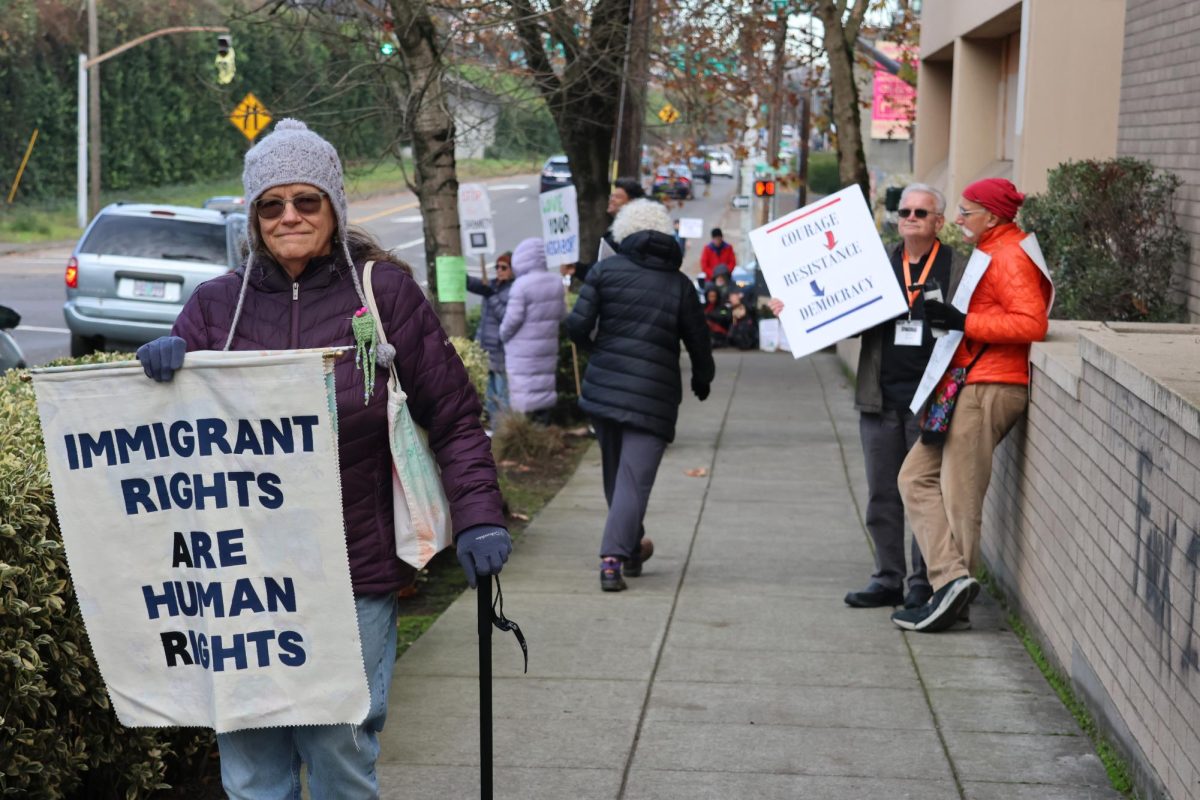
At the South Waterfront ICE building — where protestors have been gathering since enforcement action began — people of all faiths are figuring out what they can do to stand in solidarity with those affected by ICE detainments and deportations.
-
The Portland Immigrant Rights Coalition (PIRC) Macadam office is the last building on the right of Moody Avenue, a mere block away from the ICE building. The building is an outlet for those affected by ICE detainments, providing legal advice. There, the atmosphere is meant to evoke a cozy feeling — in stark contrast to the intimidating property down the street — and aims to comfort those who are impacted, taken on Monday, Dec. 1.

-
The Portland Immigrant Rights Coalition (PIRC) Macadam office is the last building on the right of Moody Avenue, a mere block away from the ICE building. The building is an outlet for those affected by ICE detainments, providing legal advice. There, the atmosphere is meant to evoke a cozy feeling — in stark contrast to the intimidating property down the street — and aims to comfort those who are impacted, taken on Monday, Dec. 1.

-
The Portland Immigrant Rights Coalition (PIRC) Macadam office is the last building on the right of Moody Avenue, a mere block away from the ICE building. The building is an outlet for those affected by ICE detainments, providing legal advice. There, the atmosphere is meant to evoke a cozy feeling — in stark contrast to the intimidating property down the street — and aims to comfort those who are impacted, taken on Monday, Dec. 1.

-
The Portland Immigrant Rights Coalition (PIRC) Macadam office is the last building on the right of Moody Avenue, a mere block away from the ICE building. The building is an outlet for those affected by ICE detainments, providing legal advice. There, the atmosphere is meant to evoke a cozy feeling — in stark contrast to the intimidating property down the street — and aims to comfort those who are impacted, taken on Monday, Dec. 1.

-
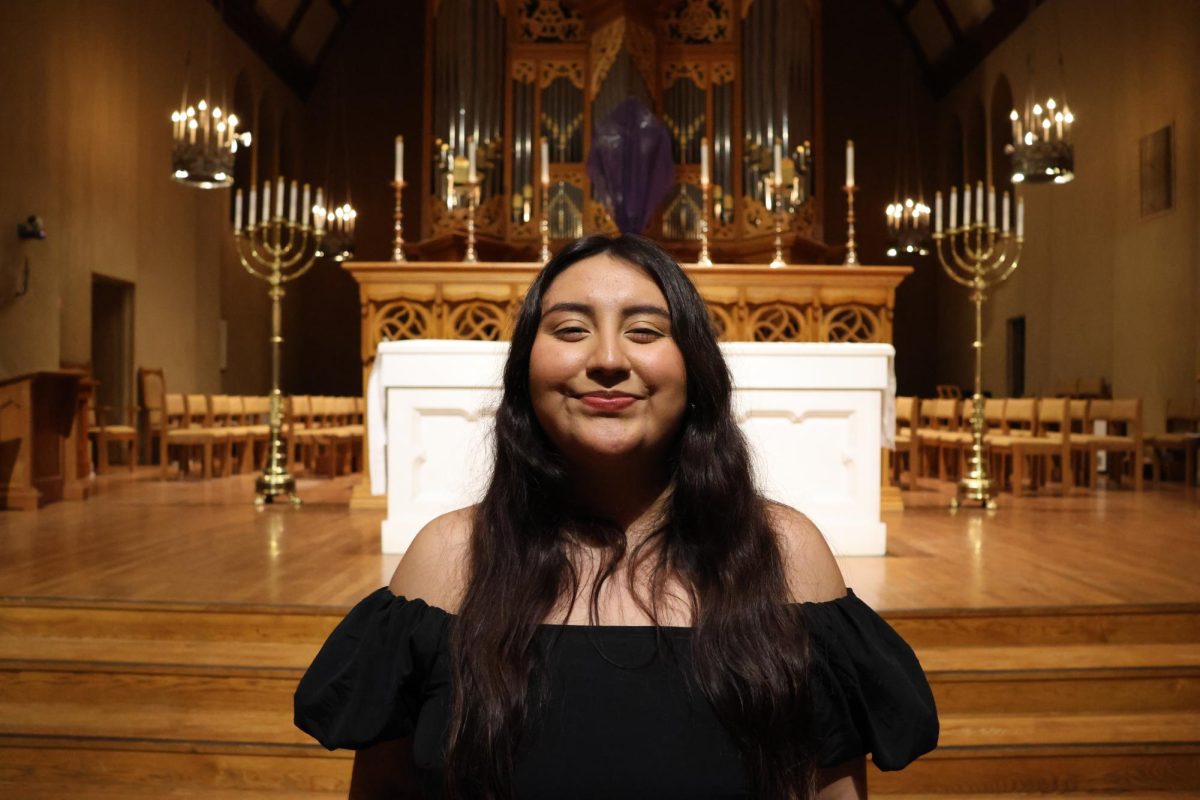
A volunteer with the PIRC, Brenda helps maintain the safe space their office hopes to provide to those affected by ICE detainments on Monday, Dec. 1.

-
The Portland Immigrant Rights Coalition (PIRC) Macadam office is the last building on the right of Moody Avenue, a mere block away from the ICE building. The building is an outlet for those affected by ICE detainments, providing legal advice. There, the atmosphere is meant to evoke a cozy feeling — in stark contrast to the intimidating property down the street — and aims to comfort those who are impacted, taken on Monday, Dec. 1.


Portland Immigrant Rights Coalition (PIRC) volunteers wait in front of the main entrance, ready to help anyone headed inside. They enumerate rights and provide legal and emotional support in case of detention.
For some volunteers, it’s community service. For others, it’s personal.
“When I was 16, I was home sick from high school, and I saw my mom get picked up by ICE. It was really traumatic, and I still remember it to this day,” one volunteer, Brenda, said. “And it turns out she was a U.S. citizen the entire time.”
Now, she sees young people facing similar situations at the facility.
“We have 16-year-olds who are showing up here whose parents or uncles are being detained,” Brenda said. “It’s happening to your classmates, and if it hasn’t happened, they are deathly scared it’s going to happen.”

Every Monday morning, an interfaith coalition led by Quakers gathers in front of the building, holding signs and praying. For many, such as retired Protestant minister Rev. Richard Nystrom, these acts of solidarity are central to Christian faith.
“I went to South Carolina and helped out with voter registration back in the 60s; it’s what you do as a Christian. You step forward,” he said. “Other people say, ‘Well, aren’t you afraid?’ I say, ‘this is not a time for fear. This is a time for faith. Faith gives you the courage.’ So for me, this is … where we belong.”
The Quakers, who started the demonstration in January, are just as unequivocal.
“The primary thing for me, being a Quaker, is equality of all people,” one demonstrator said. “So it doesn’t matter if people are undocumented or citizens or anywhere in between, [they] all deserve freedom.”
It’s not just Christians taking a stand on Macadam Avenue.

“The Torah teaches us to strive for justice,” Emma Lugo, a Jewish protestor, said. “The commandment to pursue justice is one of the fundamental tenets of the Jewish experience, so it’s really important to be out here on the streets.”
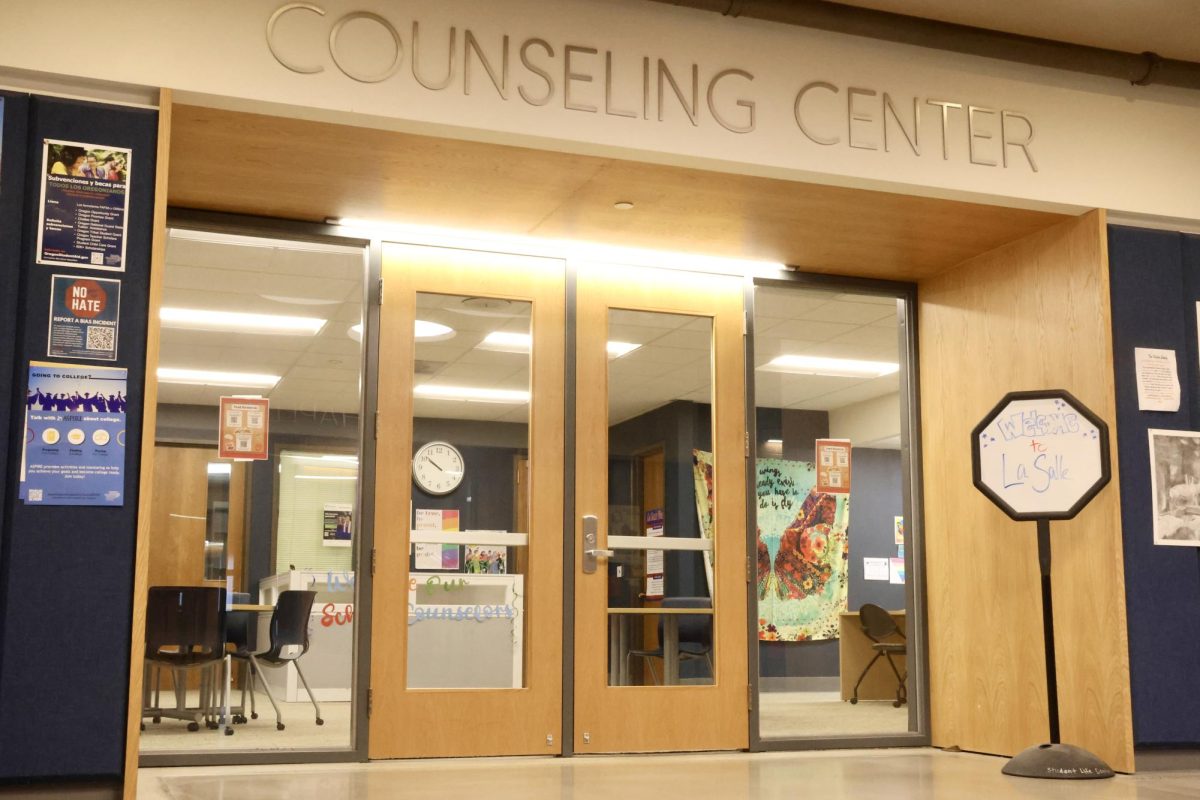
Back on campus at La Salle, the administration has drawn a clear line on federal agents entering school grounds.
“From a very practical level … let’s say that Immigration and Customs Enforcement comes to La Salle: they are not welcome here without a judicial warrant,” Ms. O’Brien said. “Our faculty knows that.”
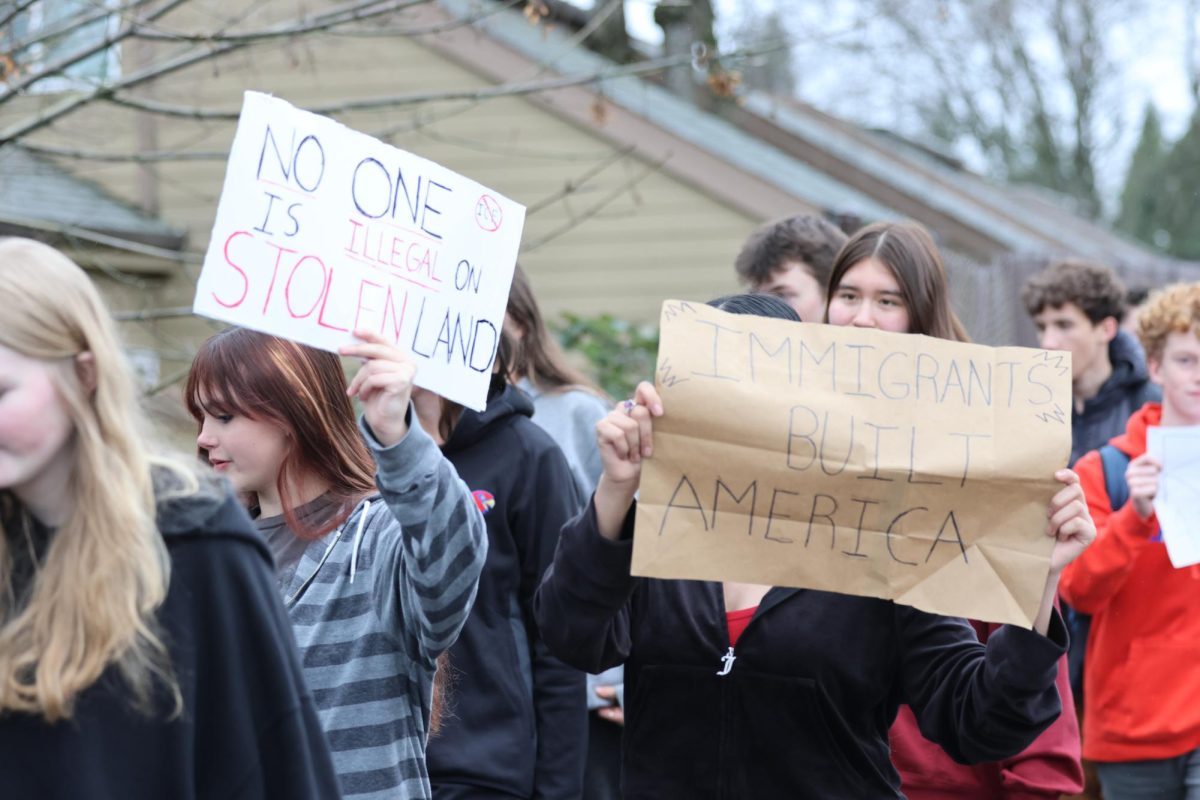
But what, if any, broader action the community at large will take is still up in the air. Whatever the result of that discussion, the administration hopes to help amplify students’ voices.
“If students wanted to start something, we’ve had a history here of students addressing social justice topics in co-curricular ways,” Ms. O’Brien said. “If we have students who are looking to use their voice to advocate for good, that we would want to find channels to help them do that, but that often comes from the students.”











Jessica Guadagna • Dec 6, 2025 at 12:21 pm
Thank you so much for this wonderful article, standing up for truth and justice! I am active in promoting immigrants’ rights and these words and interviews mean the world to me and most of all to those for whom we are fighting.
Charmaine Coleman • Dec 5, 2025 at 10:11 pm
Clover, good work! Strong points— a terrific article.Too many voters out there think about the policy first; you remind us it is, and always was, about people.
Kamya Smith • Dec 5, 2025 at 9:04 pm
Thank you for a good article. I like how you brought out that policies around immigration and the way we treat immigrants are two separate issues: the first is complicated, while the second is not. Our first response should be kindness. The scripture that came to mind as I read your article and that I have committed to memory in these last couple of years is Micah 6:8. “He (God) has shown you O mortal what is good. And what does the Lord require of you? To act justly, and to love mercy, and to walk humbly with your God.”
Rejina Injety • Dec 5, 2025 at 9:19 am
It is uplifting to hear these considered, thoughtful perspectives. Gives me hope in these dark times.
John Gunn • Dec 4, 2025 at 8:26 pm
That was a wonderful article. Keep up the good work and thank you for the thoughtful words.
Lilly Grey Rudge • Dec 4, 2025 at 9:05 am
Once again, Kieran, Clover and The Falconer staff have done a fantastic job collecting diverse perspectives on current events that effect us all. Thank you for your impactful reporting, now more than ever! I hope (and know) it will continue to inspire conversation and action.
Glenn Krake • Dec 5, 2025 at 8:54 am
Seriously. Kieran, Clover and staff are doing amazing work covering perspectives that our communities (and world at large) need to hear. I came across this article on the “Best of SNO” blog and hopefully this article can give some perspective to people who don’t get to see first hand what is happening in Portland. Keep it up.