

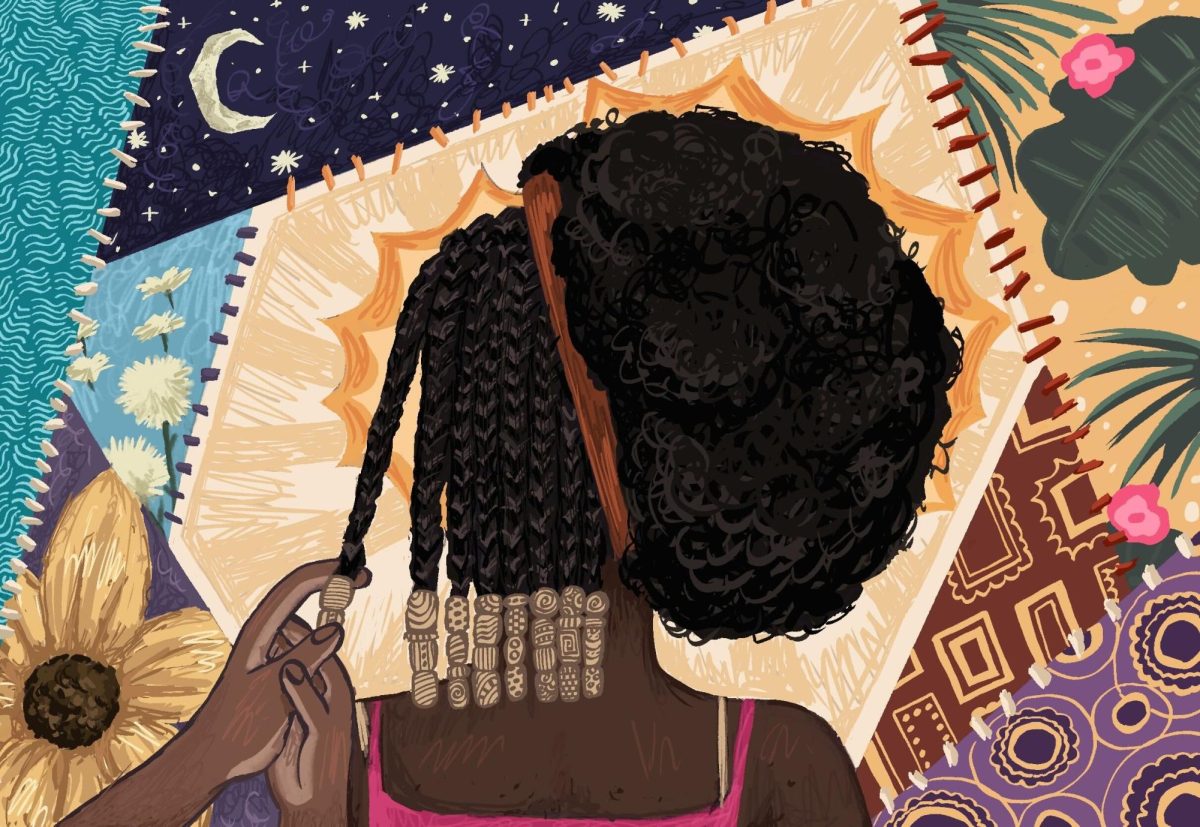
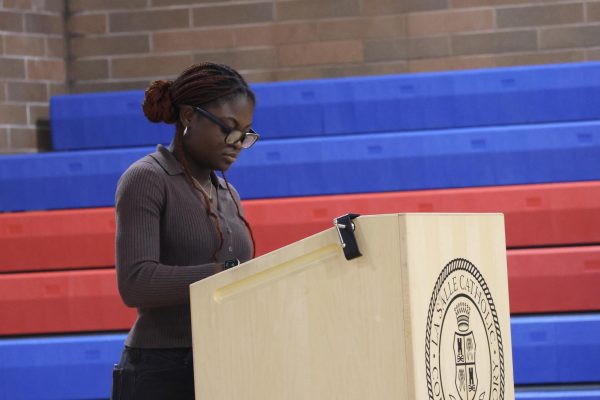
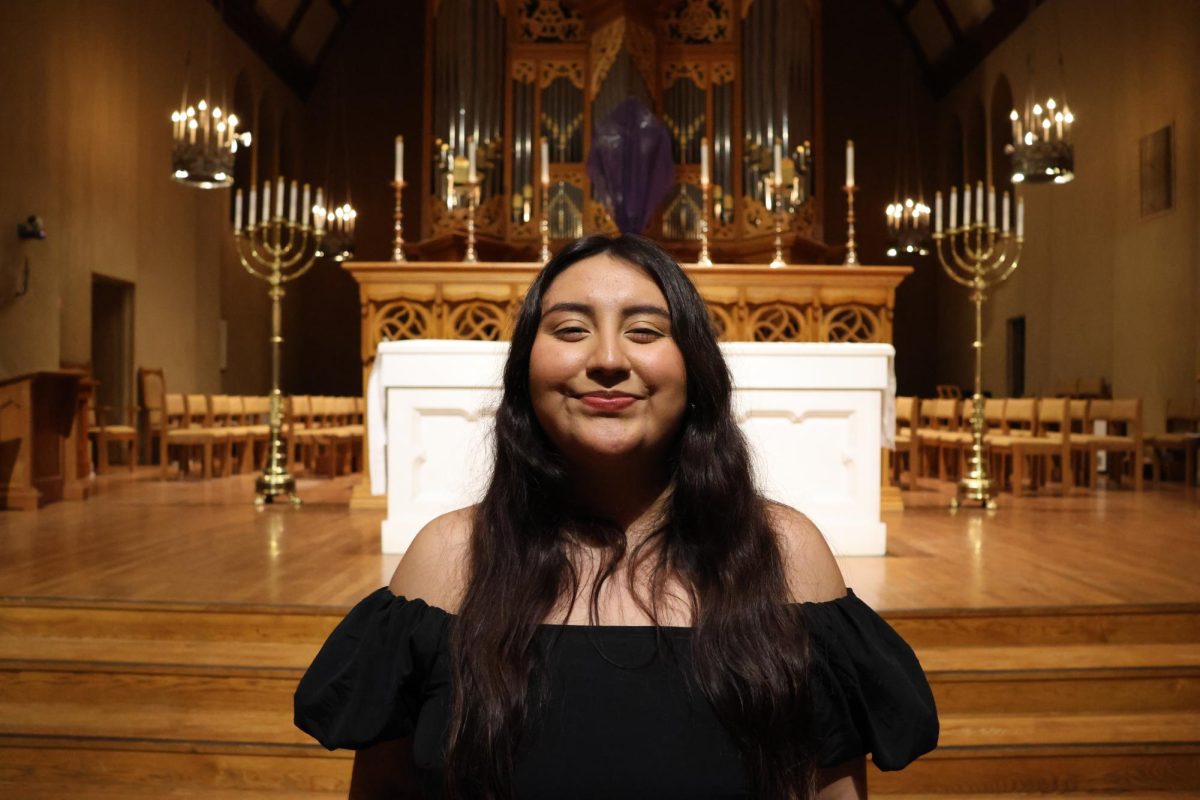
While writing her speech for the annual Black History Month assembly on Friday, Feb. 6, junior Hope Tanzambi said she wanted to emphasize one critical thing: love.
Her speech, which took place at the beginning of the assembly, opened with a verse from the Bible.
“You shall love your neighbor as yourself,” she said. “Do we really love our neighbors the way we love ourselves? And not just the neighbors … who look like us, think like us, or benefit us. Do we love the neighbors we don’t see every day?”
In the planning stages of her speech, Tanzambi was presented with the prompt: “What makes my Black beautiful?” However, she felt that the question framed her response as a justification of her worth, and decided to not answer it.
Instead, she focused on a core component of her message: human dignity.
“We don’t need to justify who we are,” she said. “We are all human and we should be treated as such regardless of gender, regardless of skin color, regardless of sexual orientation … We need to put aside our own comfort and our own biases and just treat each other with humanity.”
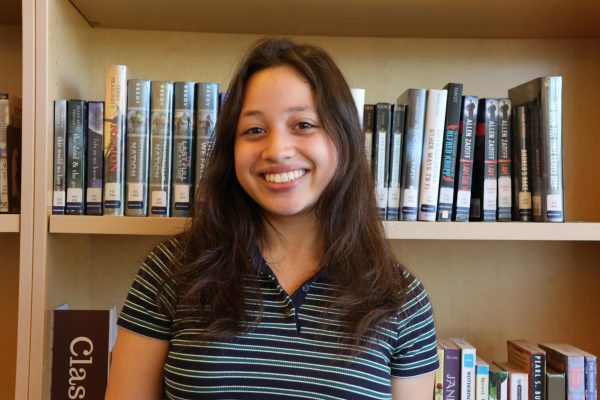
Senior Meklit Wondwossen, one of the leaders of Black Student Union (BSU), said that an essential part of organizing the assembly was providing an opportunity for members of the club, especially underclassmen, to speak.
“We just really wanted to highlight the voices we have in our student body because they really are important,” Wondwossen said. “They’re going to be the next generation, so getting them comfortable may seem like a small thing right now, but I feel like that’s something we all need to emphasize.”
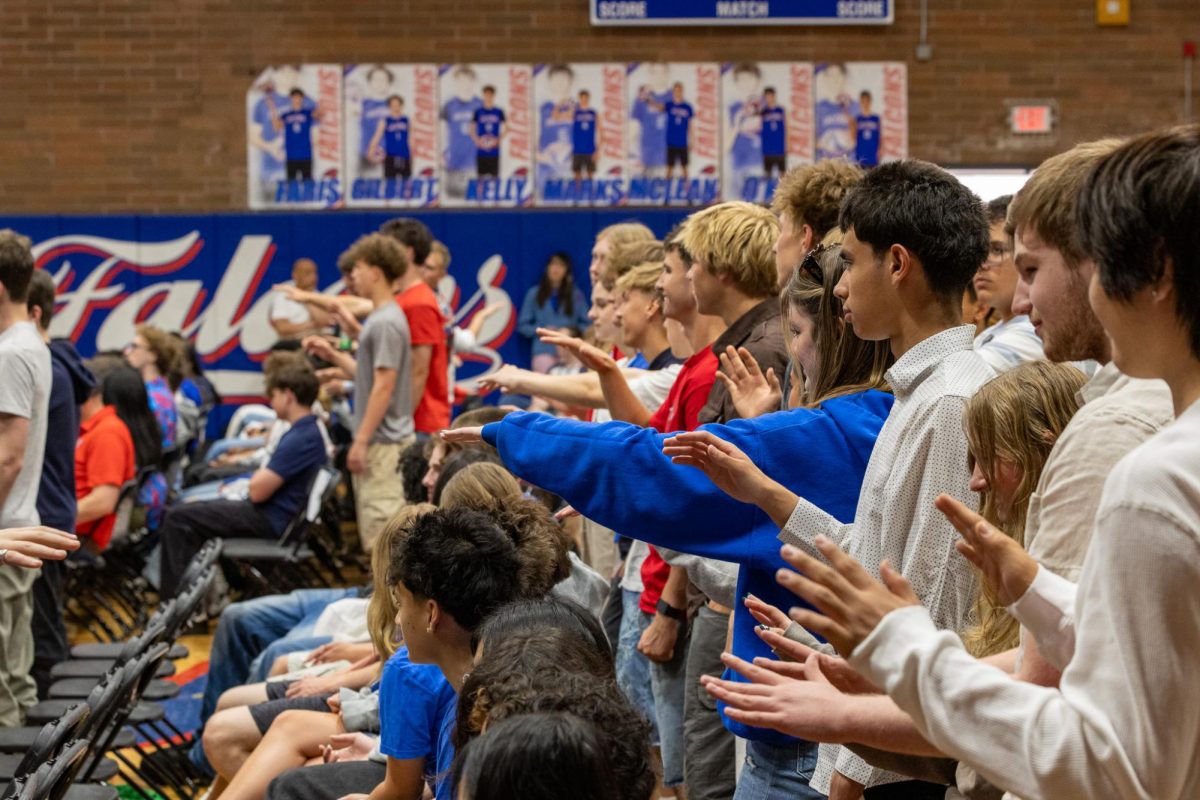
As the bleachers filled with people, Tanzambi said that’s when her nerves started forming.
“I was going into it knowing that we’re not really in the best political climate … There’s a lot of fighting going on. I was ready to receive backlash,” she said. “Anytime you share about yourself, you’re being vulnerable to the entire school. You have to just hope that they don’t use that against you.”
Afterward, she expressed how overwhelmingly positive the response was from the community.
“I thought it was beautiful,” said junior Heremela Solomon, another BSU leader who was involved in the assembly’s planning. “I was moved by it.”
This appreciation was echoed by Director of Equity and Inclusion Mr. Mario Garza, who emphasized the importance of Tanzambi’s focus on the inherent value people have.
“Everybody deserves dignity. Nobody has to explain themselves to other people,” he said. “It’s a weird thing because we don’t talk about white excellence, we talk about excellence in general … you’re almost fighting against a narrative that says there’s no excellence in the community.”
Mr. Garza, who is typically a person of support when students face discrimination at school, said he is actively working to help build a more accepting school culture.
Last semester, Mr. Garza led a professional development session for staff where he cited a need for more dialogue and proactivity. In order to help them understand what students experience, he revealed what some of them shared with him, including one Black student who told him there wasn’t a day this year where they weren’t called the n-word.
“It happens everywhere. La Salle is not such a special place where we’re immune from those kinds of things,” Mr. Garza said. “It exists. And if we’re a place of inclusion and belonging, which we say we are, then we need to try to fix that issue.”
To address discrimination, he said, requires meaningful conversations where more perspectives can be gained, as well as self-reflection and a greater understanding of one’s privilege.
“It is a constant struggle that I think people have to undertake,” he said. “If people really want things to change, it’s something that they have to put both feet in and try to do it.”
Dean of Students Ms. Kenzie D’Ambrosio, often a point of contact for Mr. Garza when addressing these issues, shared the sentiment that there’s always work to be done.
“I think everybody really held those stories with a lot of care,” she said, in reference to what Mr. Garza shared with staff. “These are real things that are happening for our students on campus and off campus and part of our job here is to make sure that we’re doing right by everybody and making people feel safe here.”
Ms. D’Ambrosio typically works alongside one other adult, whether it’s a member of administration, a counselor, or Mr. Garza, to handle incidents regarding racism.
“I never want La Salle to be a place where anyone feels unsafe,” she said. “I know I can’t stop that from happening, but my goal is to do the best I can for our students when something does happen.”
Outside of addressing these incidents, Ms. D’Ambrosio believes everyone should learn to have awareness and open conversations. She noted that an essential part of working toward a better place is a holistic endeavor rooted in the school’s core values.
“If we use our Lasallian core values and our mission statement as a guide, our whole goal here is to care for each other,” she said. “But that means everybody. It has to be a collective effort.”
In many cases where Mr. Garza is approached by students of color, he said they often feel pressured to stay silent out of fear of being judged by their friends or peers.
“It’s almost to the point where some kids are making a decision, like, ‘I want to accept some ugly things, because I need somebody,’” he said. “We don’t have a huge number of Black students. We don’t have a huge number of Latino students on this campus, or many other groups for that matter. And oftentimes it can be a lonely place for people.”
Wondwossen, although saying her experience so far at La Salle has consistently been positive, echoed the hardships posed by a predominantly white setting.
“It’s really hard to go to school with only one Black staff member, and it’s really hard for affinity groups when they don’t see that diversity especially within admin and other levels,” she said. “This is a different environment, and it’s okay to be different … But it’s not okay to be disrespected.”
One reason Tanzambi spoke at the assembly was because it allowed her to educate the community about her experiences as a Black person, something she sees as a critical way of creating change because it reveals more than one point of view to the community.
“I needed to say this stuff because I feel like a lot of the kids here at La Salle don’t get a perspective other than their own,” she said. “If I wanted them to see that perspective, I had to tell them about myself.”
Tanzambi added that when she hears someone say something racist to her or in passing, she speaks up about it — only for it to happen again.
“I’ll tell one person, and then they’ll maybe listen, but their friend’s not listening,” she said. “Unless I’m telling it to all of them at once, nothing is really going to change, and that’s a sad reality of the world right now.”
Wondwossen explained that even with the difficulties, it’s a privilege to go to a school like La Salle, a place where students have the opportunity for their voices to be heard on sensitive topics such as racism.
“It’s just really important for us to highlight why [we], not only as people, but as Black people who have endured many different things, why our voices are not only special, but very valuable,” she said. “It’s important that we’re able to share our voice, especially in places like our school, where we’re at every single day for years. This is a really big part of our lives and I feel like it’s where we find our voice.”







Chris Babinec • Feb 27, 2026 at 2:22 pm
Hearing personal stories can be a revelation. When an idea goes from being theoretical to real, practical, and personal, it gains much deeper meaning. Humans are social animals. We tend to care deeply about one another, especially when we know how people are affected by other people, the environment, societal expectations, etc. Hope’s speech was at once personal and representational and was a beautiful meditation on dignity and connection. The work of the BSU is incredibly valuable and to see the older students support and lift the younger students is an example to us all. My hope is that all students listen, engage, get curious, and continually build a more loving, inclusive, positive, and uplifting community.