

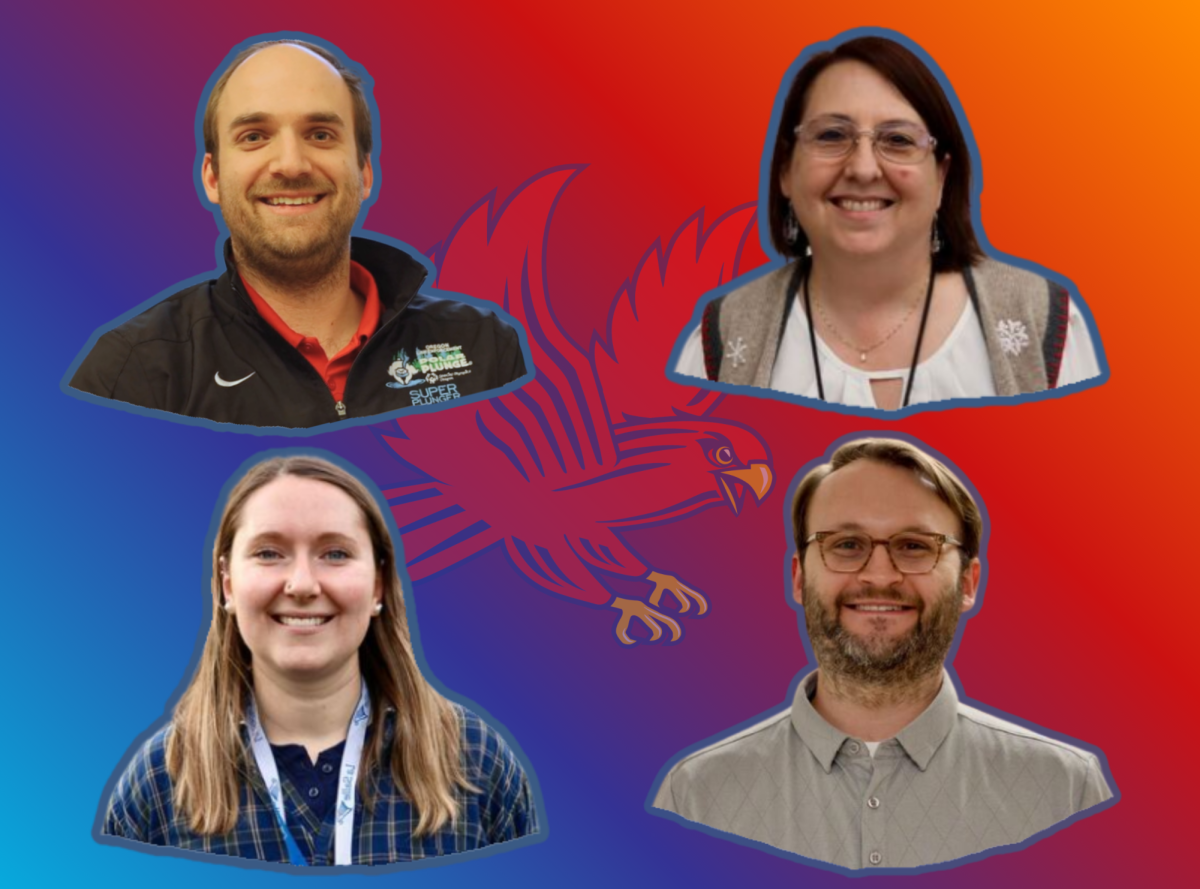
When science teacher Mr. Ryan Kain ‘11 returned to La Salle for his job interview, he was first struck by how similar the place felt. Despite structural shifts, the school’s heart had not changed, he said.
“The same two humans that were working behind the desk when I was a student there literally just got up and gave me a hug,” Mr. Kain said. “That was pretty akin to what it was like coming back.”
Of La Salle’s staff, 12 are alumni — students who returned to work at the place they graduated from. Mr. Kain, math teachers Ms. Susan Pinto ‘90 and Ms. Rose Adkisson ‘16, and religion teacher Mr. Noah Banks ‘12 have seen the school evolve with the world again and again, they said.
With the addition of the Saalfield Athletic Center in 2020 and several new course offerings as technology has developed, La Salle’s structure has certainly shifted over the years. But the school has changed in a deeper way as well, Ms. Adkisson explained, embracing growing diversity and developing the Lasallian identity along the way.
“We’ve worked a lot on improving our respect for all persons,” Ms. Adkisson said. “We’ve done a lot better job of integrating and making sure that everyone is getting the same opportunities, which is really important.”
Many of the changes were made with the goal of keeping La Salle true to its mission of service to the wider community, Mr. Banks said.
The beliefs of La Salle students have become increasingly diverse over the years, and not every student at La Salle is Catholic or looking to grow in their faith — understanding that reality and meeting students where they are is how the school maintains its core values in its changing environment, he emphasized.
“I think the world changes, and so La Salle changes,” Mr. Banks said.
One of the biggest changes, according to Mr. Banks, has been the exponential influence of technology. In the decades since Ms. Pinto, Mr. Banks, Ms. Adkisson, and Mr. Kain attended La Salle, video streaming has become the norm, AI has boomed, and smartphones have become ubiquitous.
“That is one [way] the whole shape of school, I feel like it’s different,” Mr. Banks said. “There were skills that students had when I was in school … I feel like that hasn’t translated to Notability.”
Ms. Pinto echoed this, explaining that technology has drastically altered the student-teacher relationship and broader classroom dynamic. While it has made organization easier and assignments more efficient, it’s also had somewhat of a negative impact on the more social side of things, she said.
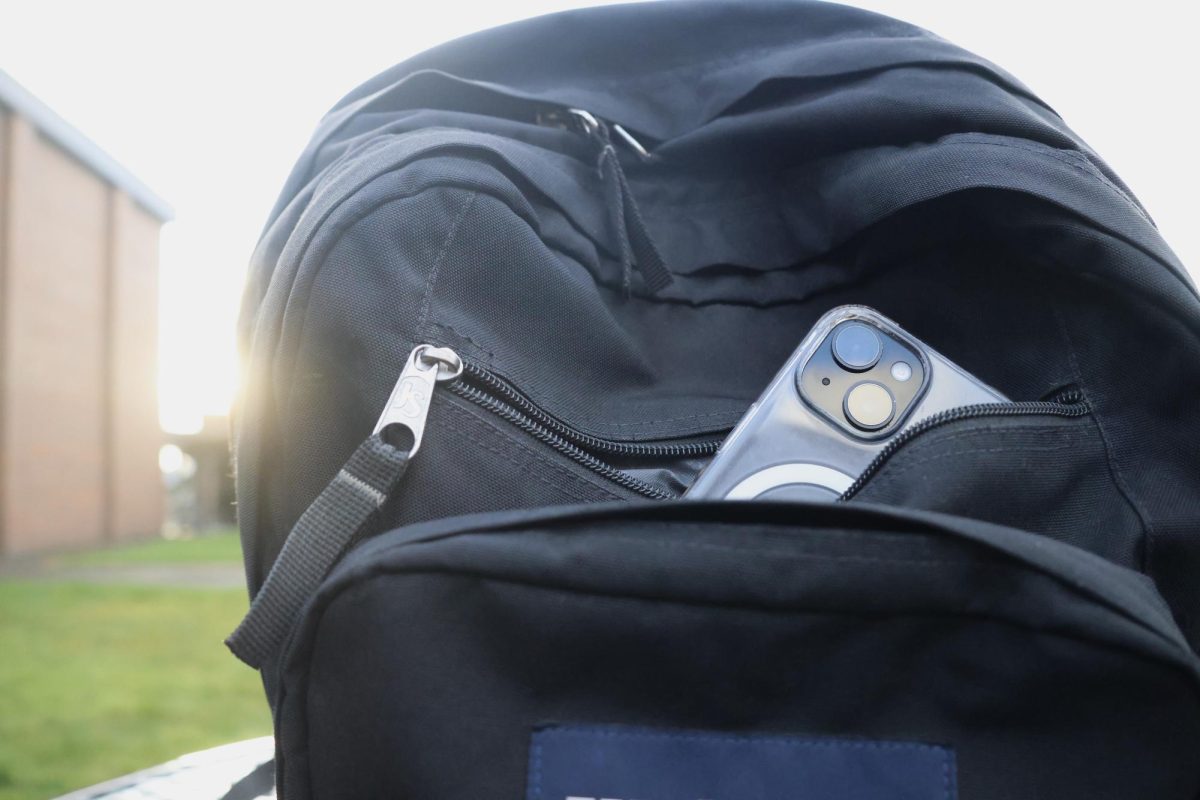
“I have two kids, and technology has brought them closer to people but also kept them from communicating with people,” Ms. Pinto said. “I love the no-phones policy now because I think that’s really helped. [Students] actually talk to each other a little bit more.”
The way that students socialize is remarkably different, she said, as rather than just talking or hanging out, students can text and game more easily.
“Communication is now done more on a social media platform instead of personal, and I think that that takes away some of it,” Ms. Pinto said. “Maybe some of the pressure, but it also takes away some of the risk.”
While the iPhone was available when Mr. Banks was in high school, not many kids had them due to the cost, he said.
Now, nearly every student has one.
“I would say that does change the [social] dynamic a lot,” Mr. Banks said. “Even the way I would goof off and not be on task is really different from how students do now.”
The content of students’ conversations has also developed, Mr. Kain said. In particular, he’s noticed that students are more plugged in — they have more political opinions and are in general more engaged with current events through social media.
“A lot of superficial conversations about nothing occur at all times and spaces,” Mr. Kain said. “But I’d say more conversations that actually have value and meaning happen now than when I was in high school casually, let alone intentionally among close peers.”
Like social media, AI has been a game changer across the board in classrooms, Ms. Adkisson said, as it tempts students to cheat and forces teachers to have to work harder against academic dishonesty.
“I’m really grateful that it wasn’t as big of a thing when I was in school,” Ms. Adkisson said. “I have to say, I’m glad that it’s entering education at the beginning of my career as a teacher because I still feel a little bit more flexible with adjusting who I am as a teacher and what I want my classroom to look like.”
Instead of AI, the challenge for students in Mr. Kain’s time was trying not to get caught printing out copies of SparkNotes. In some ways, it’s the same, he said.
“We were struggling for time as well,” Mr. Kain said. “If you’re struggling for time and there’s something that can do things for you, it makes sense that it’s going to be something that you, for better or worse, might tap into.”
As the years have passed, however, Ms. Pinto has seen an increase in societal pressures surrounding academics, a trend that disquiets her. The narrative push these days, she said, is that you have to be the best at something — it’s not enough just to pass.
“The academic pressure to push yourselves and take a lot of higher-end AP [and] Honors courses has increased hugely, and it is not healthy for young people,” Ms. Pinto said. “We shouldn’t be focusing on grades; we should be focusing on learning, which is what the whole point of education is.”
She’s also observed this in the realm of athletics, noting that often, students have to play their sport club or year-round in order to have any kind of edge. In Ms. Pinto’s opinion, this shift betrays the purpose of high school sports, which is to help students exercise and make friends — not be another stressor.
“It was made to get all kids involved in different things,” Ms. Pinto said. “Now this push to be so exceptional at one thing has taken over.”
It’s not good for students’ mental health, she said, and it ends up affecting the entire community.
“My job as a teacher, it’s changed,” Ms. Pinto said. “I feel like I’m a counselor 90% of the time, and I’m not equipped for that.”
In Mr. Banks’ time, counseling was a little more about college and career counseling than mental health, he said. According to Mr. Banks and Mr. Kain, however, the avenues for mental health support have increased as the topic has become less taboo.
“It’s night and day, because we’re so much more cognizant of it now, and it was still such a faux pas back then,” Mr. Kain said. “There’s plenty of people who I was super close with in high school … I went to therapy, [and] I would have never told them that, because it was so stigmatized.”
In recent years, though, La Salle has been making progress in support for student mental health, Ms. Adkisson said.
The addition of Flex Time gives students more opportunities to talk with their teachers, and the counseling department continues to expand and gather more resources. Teachers also receive directions not to give students homework over breaks so students have time to rest, she said.
Many of these student-focused changes are based in the Lasallian mission and core values, Mr. Banks said, which have lately been more emphasized and made more relevant to students.
“I do remember being reprimanded for behavior that was ‘not Lasallian,’ but not having it really explained,” Mr. Banks said. “I feel like now a student might be more likely to understand.”
Rather than just hearing the language, students now learn the meaning and application of the core values, Mr. Banks said, a development that he’s in support of. According to him, those values are one of the biggest reasons that La Salle’s educators have always been so effective.
“La Salle doesn’t pay as much as our local public schools,” Mr. Banks said. “You have to desire to work in a Catholic school or be part of this mission to work here, and I think it attracts people who want to be good teachers.”
Overall, staff alums said that while La Salle has changed quite a bit over time in response to shifts in social climate and technology, its core values and mission have remained constant and visible.
“There’s a reason I really enjoyed my time here as a student, and there’s a reason that I really enjoy my time here as a teacher, and a lot of those reasons are the same,” Mr. Kain said. “It comes down to the people and the way that they intentionally build relationships, care about being here, and want to make it better.”








Comments are moderated, and won't appear until they are approved. An email address is required, but won't be publicly displayed. The Falconer's complete comment policy can be viewed on our policies page.