


From March 1 to March 7, eight La Salle students embarked on the Urban Immersion in Chicago, a service-based immersion offered for the first time to students this year and hosted by the Br. David Darst Center.
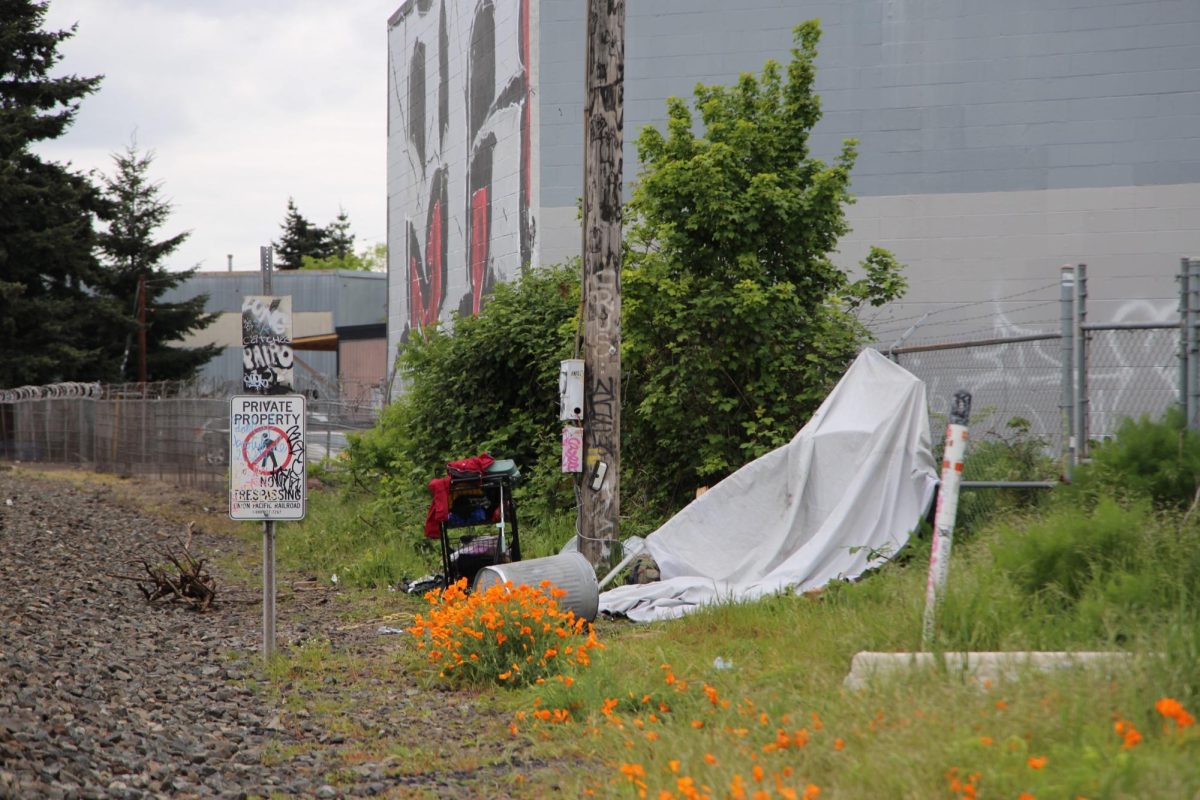
Students worked at soup kitchens, food pantries, and other service sites, with the goal of gaining a better understanding of a variety of common urban issues: houselessness, food insecurity, mass incarceration, disability, gentrification, and justice versus charity.
While these challenges are very present in Oregon as well, Director of Campus Ministry and immersion chaperone Mr. Carter Powers feels there is special value in experiencing those systemic problems in another state — precisely because they have become so routine in our own lives.
The constant local exposure, Mr. Powers explained, often desensitizes people to the humanity of the situation — seeing the issues play out in a new environment can help to make these issues more real and personal, a sentiment echoed by junior Heremela Solomon.
“A lot of the people we met were some of the sweetest people we probably will ever interact with, and their stories were so genuine,” Solomon said. “With the prejudices [and] stereotypes that are based on homeless people, you wouldn’t want to walk up to a homeless person and have a conversation with them. But when we did that and challenged our fears, it was really good.”
According to Director of Community and Student Leadership and immersion chaperone Mr. Quinn Peoples, immersions like this one also create a better understanding of how students and staff can live out the Lasallian core values at home.
“When I think about our values and the banners [in] our hallways, I sometimes feel that our school exists in a bubble,” Mr. Peoples said. “While I understand that our community navigates many challenges, I believe that immersion allows us to see those values in action in communities that are different from ours. The ability to go out, learn more, and bring those lessons back allows us to uplift those values in our building.”
And while the Urban Immersion was focused on showing students new perspectives, it also built on previous experiences for many.
“Much of my service has been going towards [these issues] in the past, so this really felt like a culmination of what I’ve done,” senior Aurora Platas said.
Platas already helps with the organization Night Strike, where volunteers work every Thursday night, providing hot meals and services like haircuts, showers, and mending clothes to the unhoused community.
In Chicago, students worked at a food pantry with a similar purpose. Students helped people “shop” through a mini grocery store for food, taking what they needed up to each person’s allotment.
Solomon recalled how many of the people that came to the food pantry wouldn’t take all of the food provided for them, instead only taking what they currently needed. For example, one card allowed for people to take up to four canned tunas, but most only took one or two.
“I feel like that was just really humbling, and it made me grateful for what I have,” Solomon said.
Platas’ time on the immersion evoked the same feelings and clarified the greater systemic picture.
“So much of life is luck, and so much of life is work,” Platas said. “People can put in the same amount of work and get in very different places because of their situation growing up.”
Before heading to soup kitchens, food pantries, or a myriad of other service opportunities, students and chaperones rose early — around 6:30 a.m. — to cook breakfast and prepare for the day.
Their early wake up call was due to their reliance on public transportation to get from place to place during the trip, Mr. Powers said, which Platas said made the experience especially immersive, as they got to travel alongside other people completing their daily commutes through the city.
Returning home in late afternoon, they made dinner and cleaned before ending the day around 10:30 p.m. with reflection and journaling.
But even with the early mornings and packed days, students said the immersion exceeded their expectations, helped break down stereotypes, and embodied the school’s core values.
“The service that we did definitely encompasses ‘Value the Individual’ and ‘Respect All Persons,’ and ‘Quality Education,'” Platas said. “It was definitely a powerful place to go there and then to bring back what we learned.”
Mr. Powers said that, as a teacher, he is especially aware of the power of a classroom education in forefronting the school’s values, but that in the end nothing is more informative than firsthand experience.
“It just reminds me that we can teach about these issues, but at the end of the day the most impactful way to learn about them is through relationships with those that are directly impacted,” Mr. Powers said.









Jessica Guadagna • Mar 12, 2026 at 10:43 am
Excellent article, and well done to the students who participated! Keep up the good work!