

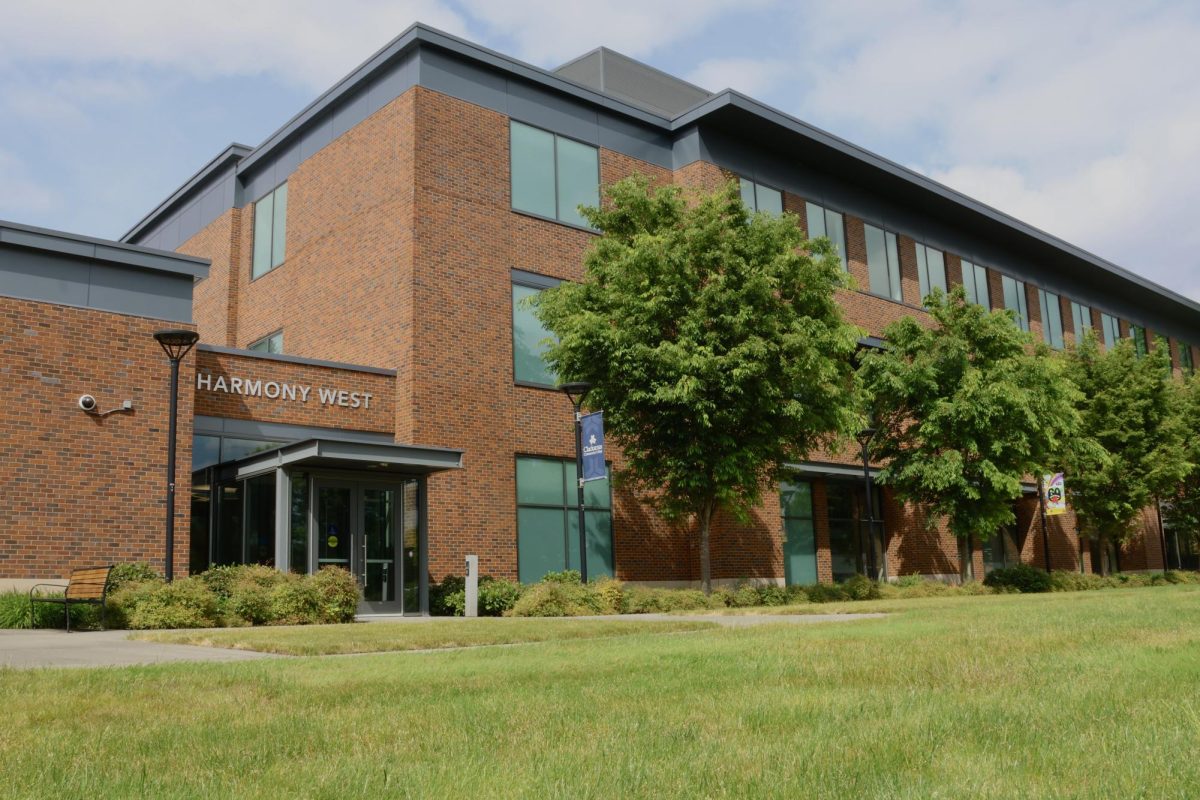
Throughout this week and next, La Salle students are heading to Clackamas Community College to participate in Advanced Placement (AP) testing, which started on Monday, May 4, and will continue through Friday, May 15.
There are a maximum of two exams per day, with the first exam of the day beginning at 8 a.m. and the second beginning at noon. The vast majority of tests will be taken in the Harmony West building, with this being the second year that the exams are held off-campus.
If students score high enough, some colleges count AP classes for college credit, often allowing students to bypass introductory-level courses.
Many students have been preparing all year to take these AP tests. This preparation includes a set curriculum throughout the year and practice exams before testing begins.
Preparation is crucial, AP Physics teacher Mr. Kyle Voge said, not just for understanding the material but the mechanics of the test itself.
“Part of the difficulty when you take an AP exam is not just knowing the concepts, but knowing how to answer their questions,” he said.
Many students study for and take AP tests for different reasons.
For senior Ayva Alston, AP exams are an assessment to see how well she understands the material from the year.
“Part of it was also just challenging myself in general to see if I could do a good job on these exams,” Alston said.
Junior Nolan Wong relates to this, as he also uses AP classes as an academic challenge for himself.
“I just kind of like doing a hard workload,” he said. “It’s [my] junior year. Everyone says it should be hard.”
According to Mr. Voge, one of the challenges for AP tests in particular is the large amount of information that students are expected to know, as well as the applications of information to questions.
“The College Board is very clear with what they expect students are going to learn,” Mr. Voge said. “You can go to their website right now, pick any course … ‘Here’s what they’re expected to know, here’s example questions, here’s the skills they’ll need to do.’”
Because of this challenging courseload, Mr. Voge advises students to “start putting the work in ahead of time,” he said. Every student’s situation is different, however, so he recommends they analyze their workload to evaluate what techniques help them study most effectively.
For Alston, this means focusing on challenging herself in subjects of interest.
She described herself as “more of a language person over STEM,” Alston said. “It felt like the right choice to just continue on with AP English.”
AP Chemistry teacher Mr. Matthew Owen agrees with Alston when it comes to students challenging themselves, especially looking towards life past the classroom.
“Hopefully from the class, students feel prepared and know that they are capable and can do well,” he said.
While APs offer a good way to possibly test out of foundational college courses, Mr. Voge and Mr. Owen both recommend taking care of yourself and prioritizing your interests over the GPA boost.
“What I talk with my students about at the beginning of the year, and as we gear up for AP testing and things like that, you know, at the end of the day, it’s just a test,” Mr. Owen said.





Comments are moderated, and won't appear until they are approved. An email address is required, but won't be publicly displayed. The Falconer's complete comment policy can be viewed on our policies page.