

-
A mural our group found in a wealthier neighborhood outside the National Museum of Mexican Art. The mural is similar to the ones inside the museum, depicting the idea of the relationship between humans, animals, and the environment.

-
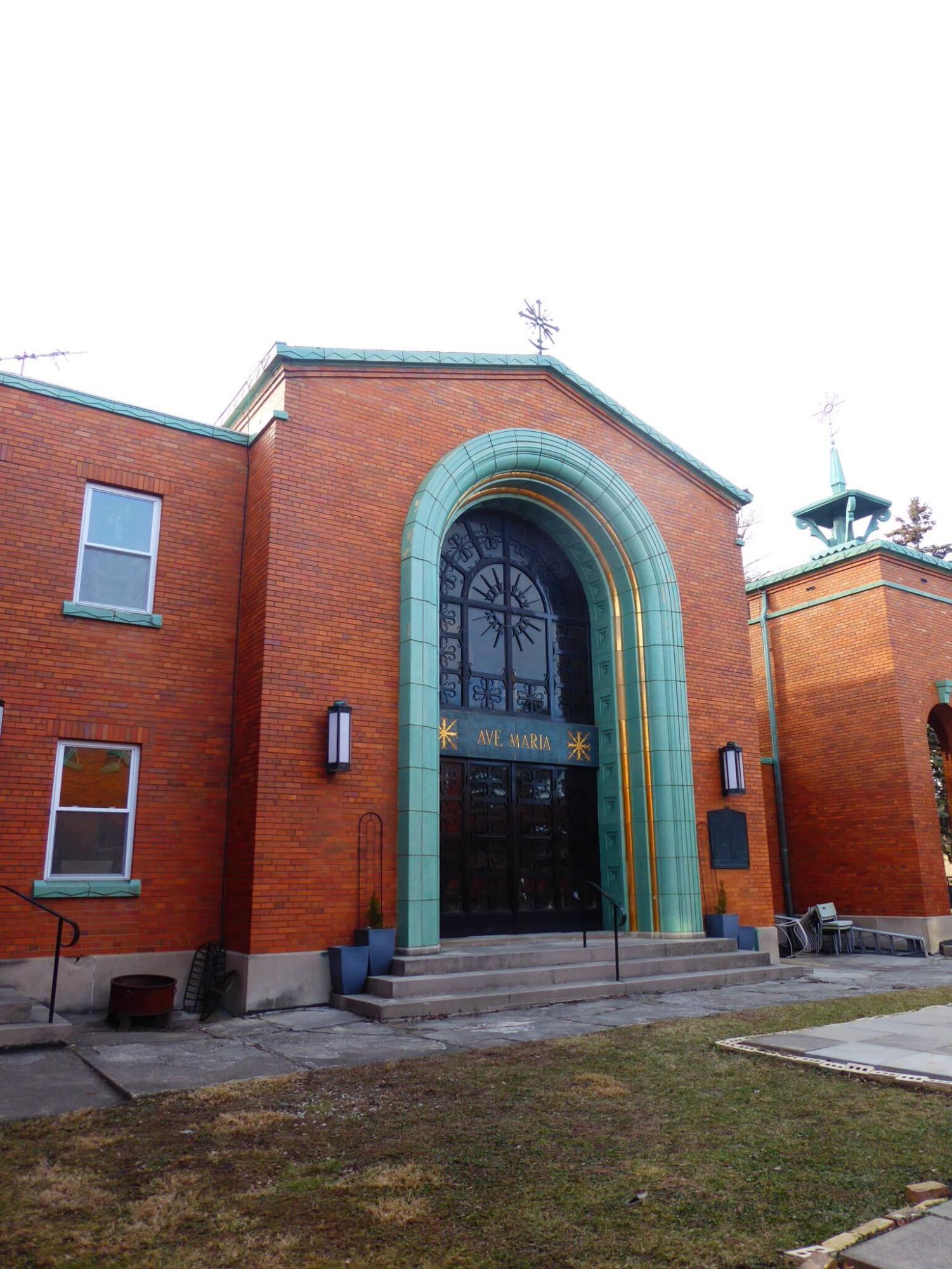
The chapel of the Br. David Darst Center as seen from an angle on a bright day.
-
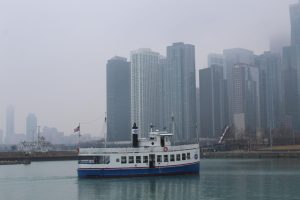
A shot taken from the pier of a boat cruising over Lake Michigan.

-
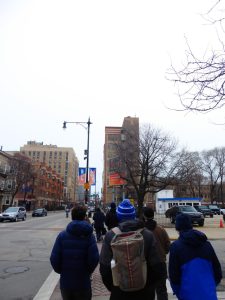
The group walked around in the neighborhood close to the Cornerstone Church and where the fenced-off building and the Mexican restaurant are located.
Zach Mosen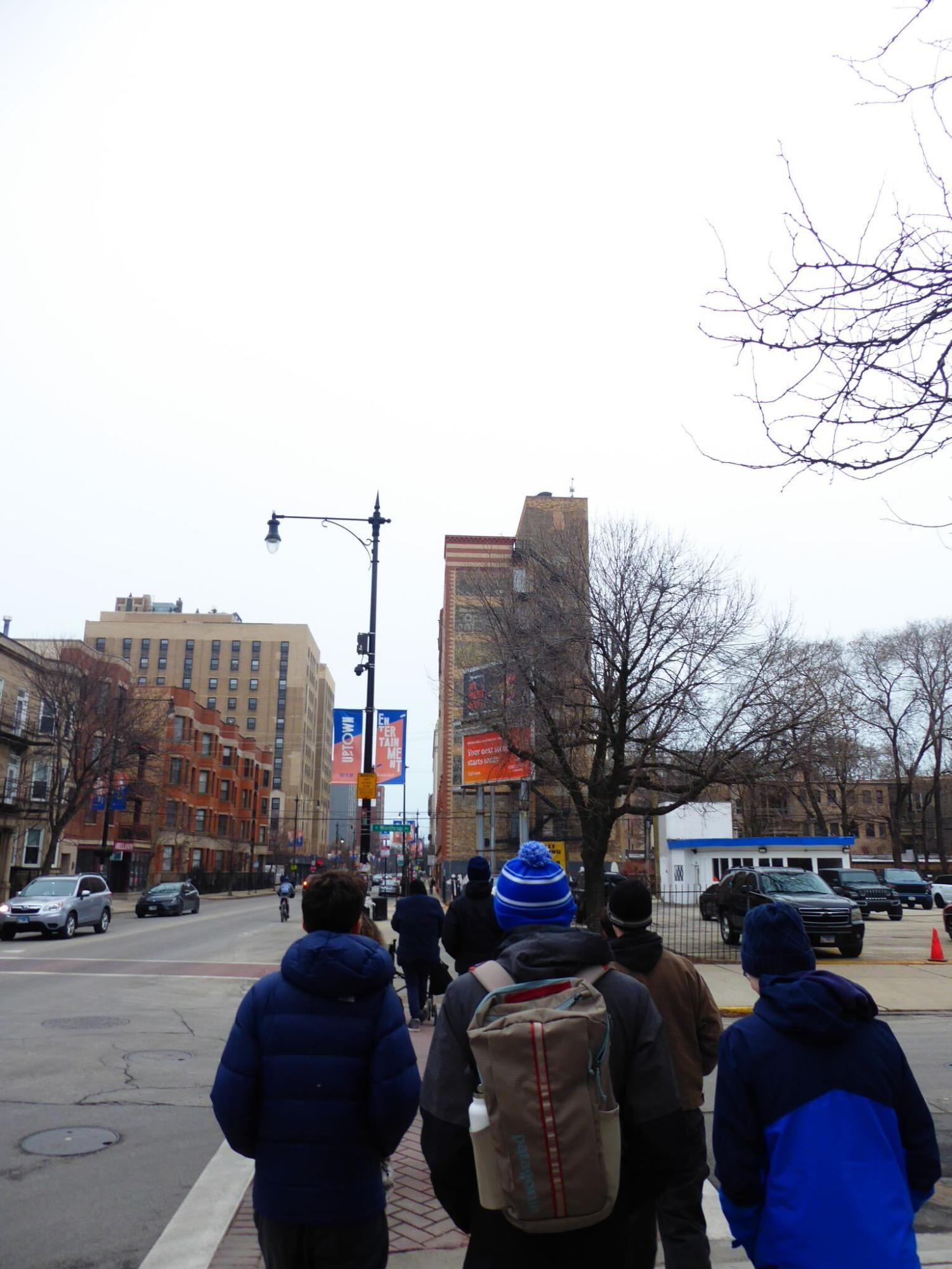
If there is one thing I have learned from being among those who are oppressed, it is that the story told to the masses usually does not match the heartfelt stories of the millions of people who live those realities.
In my trip to Chicago through the Urban Immersion, hosted by the Br. David Darst Center, where we learned about the houselessness situation in the city and offered what help we could, I observed this truth firsthand.
I spoke with people who had been houseless for decades and others who had been incarcerated from their teenage years well into adulthood. All the while, I thought to myself how wrong the stereotypes about these kinds of people were.
One of the most harmful things that stereotypes do is minimize the depth and humanity behind a situation. They condense all the problems people face into something very small, something that can round out the entire image and staunch potential questions.
That is why the most moving thing on this entire journey by far was being able to hear the real, unconfined, unsimplified stories of the actual people who have to deal with these real hardships in their lives.
The first person we spoke to was a man by the name of Vince, who has been running an all-male houseless shelter for over 20 years. He shelters up to 28 people at a time in a small room in the unused gym of the church.
Vince told us that although he went to college and got a bachelor’s and master’s degree, he has chosen to focus his time every day on working at his shelter and supporting the people in need. His wife provides all their income, which allows Vince to focus entirely on his shelter.
He has to stay at the shelter almost every night that it is open, he said, as he only has up to three other staff members at any given time.
He welcomes everyone, and does not care about their race, nationality, gender, sexual orientation, etc. He will welcome any person who is houseless and seeking refuge and has taken in all types of people, from Chicago teenagers to refugees from the Democratic Republic of The Congo.
Vince told us that his shelter, although doing a wonderful service to those in need, is not liked by a specific group of people he called “NIMBYs” — “Not In My Backyard.”
Essentially, these are wealthy people who do not like progressive developments to their neighborhoods such as making affordable housing or houseless shelters, because they are afraid it might affect their property value or “bloat” the neighborhood.
He explained that if anyone staying at the shelter did anything to draw negative attention towards it, the NIMBYs would likely do whatever they could to frame it as negatively as possible and take legal action in the hopes of removing them from “their backyard.”
And the thing that really makes my blood boil regarding this is the fact that all these houseless people were there before the NIMBYs. All the things the NIMBYs bring with them, such as the recent urban developments, renovations, and businesses all came to an area that was already populated by a tight-knit community. Many of the people who are houseless there became so because of the recent developments out-pricing what they could keep up with.
And the NIMBYs have the audacity to claim that it’s “their neighborhood” and that the originals “don’t belong.” I’m not saying that the NIMBYs don’t have a right to move in and expand their businesses; I’m just saying that they seem to not really respect the human beings that have their lives affected by the developments. There are ways to expand your businesses and claim property without hurting others, and much of it comes down to having good communication from all sides.
Because the NIMBYs did not take any measures to help their neighbors, it seems to me that they have no intent of respecting the people that live in the neighborhood or making sure that they can still live well alongside the new developments.
In our group’s excursions around that area of the city, we could see for ourselves the discrimination towards original residents that Vince spoke of.
Our guide showed us a large apartment complex for Hispanic senior citizens who needed a place to stay and receive support in their old age.
But we noticed a few different things about it that seemed unwelcoming.
The building was clearly inspired by the subsidized housing projects the U.S. Government made for low-income individuals. Through the architecture you could see that it was designed to try to cram as many people into one space as possible.
There was a large fence around it, which made the place feel more like a prison. It seemed clear that the designers wanted to encourage the idea of keeping those people inside the building.
And that is why after seeing all of the depressing things we did, it was very important for us to gain hope by experiencing places where people who suffer and are often turned away for things out of their control are allowed a second chance.
One such place in which we heard the stories of those given a second chance was at Saint Leonard’s Ministries, a rehabilitation center for those returning to society after being incarcerated.
Many of these people had little to no resources after they got out, and many found that most jobs and apartment complexes would not take them due to their criminal record.
Many had been homeless for years before they found Saint Leonard’s — such was the case of two middle-aged men who talked to us there. Both had been incarcerated for many years from rash and desperate acts they made as struggling teenagers.
And all the while we listened to them, they spoke recurrently of how grateful they were to Saint Leonard’s for taking them in. I sensed not a hint of malice in them — only endless compassion for the kind souls who gave them the resources they never had access to before.
But I think their true hallmark of genuineness was that they truly believed all of us there who were visiting had bright futures ahead of us. In their smiles and in their words, I could feel as if they were looking into their past selves, young people full of ambition, and perhaps something else too. Maybe they saw the version of themselves that they never could really have because of their troubled childhoods.
And never once did I feel threatened or scared in the presence of these formerly-incarcerated men. If I hadn’t known their background, I would never have guessed it — that is how far they strayed from the societal narrative.
It makes me so upset to see such genuine people being forced into labels that everyone just subconsciously accepts. Like I said earlier, one of the most dangerous things about stereotypes is that they leave you asking no more questions.
That is why I think the most important thing that I brought back from this trip was the curiosity and drive to seek out ways to help in my community. This was a message repeated by Vince, our trip guide Maggie, and people at all the places we helped at.
If there is one thing you take away from this article, let it be that you should do what you can to get involved with your community and understand the struggles people face and go through in it.
If you want to break out of the societal story told about people who were unfortunate enough to end up in situations like houselessness, it is important that you seek out the truth by going out in your community.
So for the sake of all the people that I met in Chicago, I can tell you with great certainty that I will start increasing my number of sessions at places like the Oregon Food Bank and the Blanchet House.
Because unlike the NIMBYs, I want to make sure the houseless — who are my neighbors. Not strangers I believe are unwelcome — are fed and able to live well.



Chris Babinec • Mar 19, 2026 at 9:55 am
The immersion program at La Salle is one of the most important and powerful ways students learn to live and embody La Sallian core values rather than simply know and understand them. The author’s voice and experiences highlight the impact of taking this experience into action and committing to finding ways to support his community, to see the full humanity of others, to embrace nuance and eschew easy answers. He calls us to get curious, to seek truth, to connect to one another. I can’t think of anything that more fully exemplifies what education is supposed to do.