


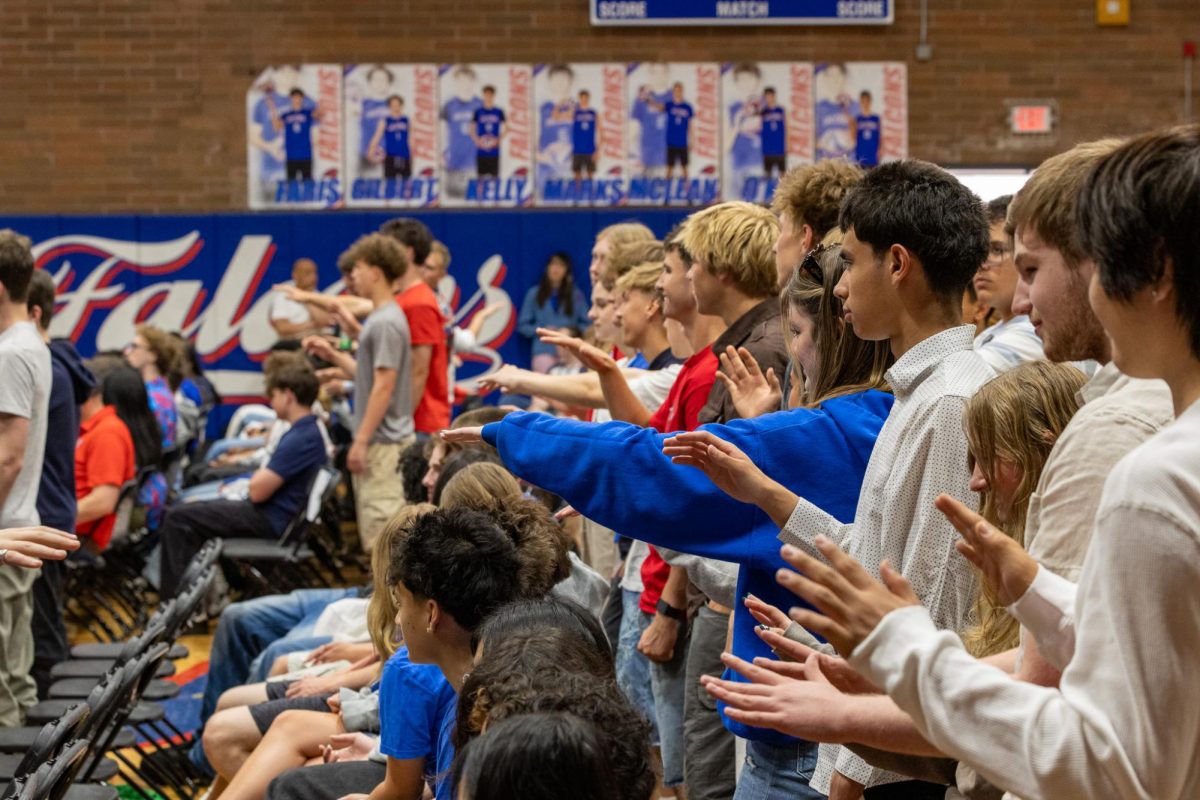
La Salle students participated in the first of several student listening sessions hosted by the student leadership team during Flex Time on Wednesday, Feb. 11.
These sessions, a part of the broader ongoing Student Voices Project, involve members of the Leadership class and Executive Council interviewing other students in a group setting, focusing on a variety of topics with the goal of improving the overall experience of the student body.
Director of Community and Student Leadership Mr. Quinn Peoples hopes that these sessions will allow students to connect more deeply with the school’s community and core values.
“One of our institutional goals is to animate the mission,” he said. “I think the banners are one thing, but I think what I want to know is how the students here are experiencing those banners.”
He aspires that students will see their feedback being implemented and that they will participate more in community events because of it.
“My hope in creating this project is if we can get student input, particularly in our student life space, which is a lot of the work I do, then we can get more students to come to dances, events, sporting events, because they will see the feedback that they gave replicated in the community that they’re part of,” he said.
Although he recognizes that, in the past, student perspectives haven’t always been fully incorporated, he is optimistic that this project will successfully make changes and show students the value of their feedback.
What Mr. Peoples does know, is “that the research says that students are more brought into the experience that they feel they’re a part of,” he said.
Over the next couple months, there will be sessions on the topics of student leadership and shared governance; philanthropy and service; spirit and identity; inclusion and community; communication and engagement; and athletics, arts, and promotion.
They are hoping for around 60 to 80 people to participate in each group, Student Body Co-President and senior Larissa Bonn said, but they will also be inviting people from specific pockets of the community to do more personal interviews and gather input from every part of the student body.
Bonn sees this as an opportunity to increase communication between students and school administration.
“Sometimes it’s just hard to know what people want from their school,” she said. “It’s our job, especially as presidents … to represent the student body to admin and ensure that [people’s] voices are being communicated.”
Mr. Peoples echoed this, explaining how he hopes these sessions will bridge the gaps between the student body, the executive council, and the school administration in order to create a community where participation is incentivized, not seen as a social obligation.
His hope is that “students want to participate because they feel a part of the society and community, not feel like they need to participate because it’s just what everybody else is doing,” he said.
This project goes all the way back to an idea Mr. Peoples had at the first staff retreat. Since then, he has been working with the leadership students to develop it into its modern-day form.
Although Mr. Peoples and the school administration have played a role in this, he explained that the sessions themselves are student-led and designed. Students in the Leadership class, under the guidance of Mr. Peoples, have done research plans and developed a methodology for this project, and will collect data to then create a plan for change, which they will bring to the school administration.
He hopes that this will also prepare the leadership students for college-level research projects.
As for the future of this project, neither Mr. Peoples nor Bonn know exactly where it will go, but they hope to continue involving student voices and incorporating feedback.
“I think I have my own ideas, but there’s nothing that I’m not open to,” she said. “Just by holding these interviews, we’re already improving our communication between the student body and executive council and admin, so I think that’s already a step in the right direction.”
Mr. Peoples wants this project to perpetually improve for the sake of the students and maintaining an updated experience as wants and needs change.
“I really want this project to exist in a cycle of assessment that we’re already doing here, but I want this assessment to really be about what the students in our building are experiencing and what they want to see, because that changes every year,” he said. “How do we continue to make this place present for those who are in the building every day?”
An important aspect of this, he said, is making sure students’ opinions are prioritized.
“Just ‘cause we’re older doesn’t mean we have all the answers. You all are actually far more in touch with that experience,” he said, emphasizing how their goal is “to have you all as the students at the center of that experience, and continue to shift and cultivate this place into something that both challenges you but also supports you.”




Chris Babinec • Feb 20, 2026 at 10:12 am
Student voices are necessary and a powerful tool for positive environments! I hope many students share their thoughts, experiences, hopes, and dreams for a vibrant, engaged community. Thank you Falconer for covering this important initiative!