

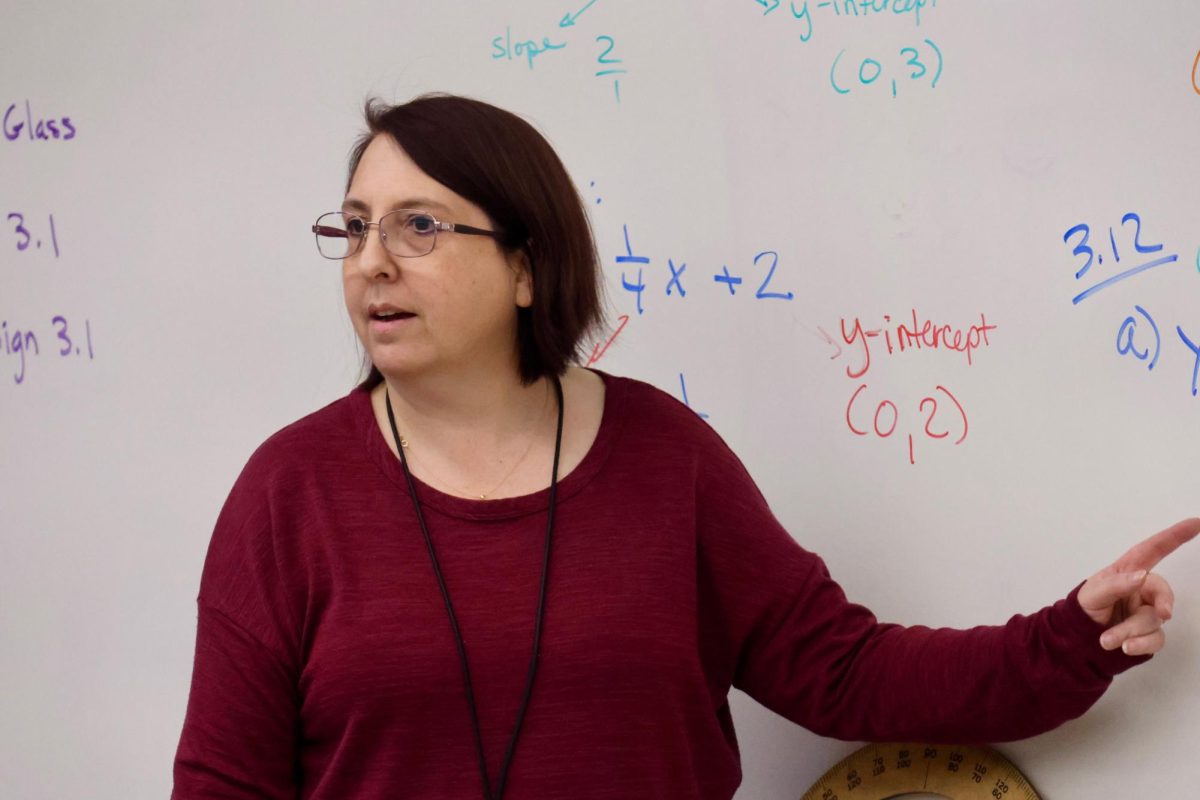
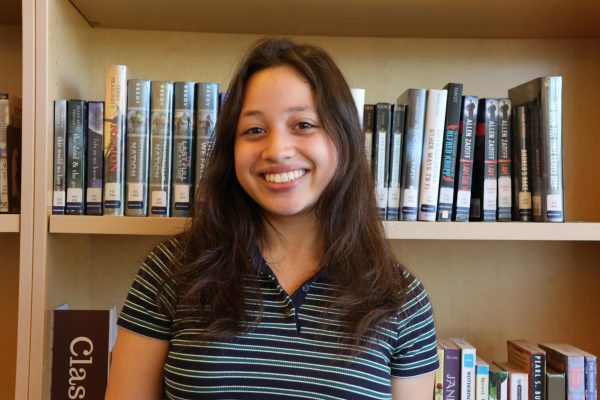
At the beginning of every school year, La Salle announces the Educator of the Year. Nominated and voted on by the faculty and staff, this teacher is recognized for their contributions to the school through their work within the classroom and the broader community.
This tradition — which aims to celebrate an educator who embodies the values of St. John Baptist de La Salle — began shortly after math teacher Ms. Sue Pinto graduated from La Salle in 1990.
Now, 35 years later, she has been honored as the recipient of it.
“It was surreal,” she said.
Ms. Pinto came to the school as a teacher in the fall of 1995 after turning down a position for a religion teacher at Central Catholic High School due to her interest in mathematics. Reflecting on when she first started teaching, Ms. Pinto acknowledged how different it was compared to education today.
“It was very much old school: teach the lesson. Do the examples. Give you the homework,” she said. “It wasn’t a lot of interaction.”
Ms. Pinto felt that the lack of interaction failed to foster an inclusive learning environment for all students, and instead emphasized skill-based work that focused on preparation for the workforce and overlooked their individuality.
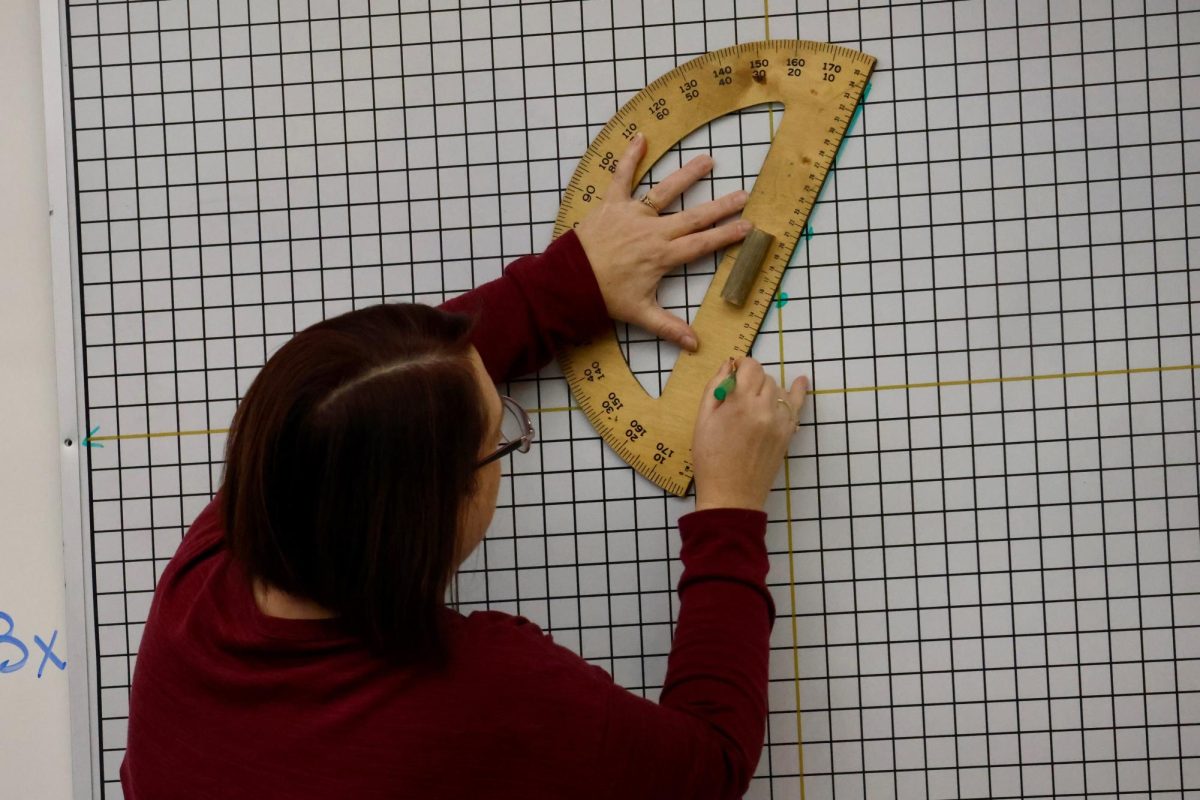
Teaching for more than 30 years has led her to understand the importance of “meeting the needs of different learners,” she said, which she has done by implementing more project-based work and time to process problems on whiteboards.
Another thing Ms. Pinto endeavors to do is ensure her students feel recognized and valued in the classroom.
“This is my goal: to see students for who they are — struggles and strengths — and help them grow,” she said. “If they could just see their potential and build that confidence, they start soaring. That’s my goal every year.”
Ms. Pinto also takes that level of consideration and proactiveness around the building. She said, for example, that it doesn’t matter if the task is something as inconsequential as a spill in the hallway, she’ll clean it.
This mentality was instilled in her by one of her former mentors, Bill George.
Mr. George, who was her religion teacher at La Salle before later becoming the principal after Ms. Pinto rejoined the community as an educator, taught her that “no task is too small,” she said.
“You’re taking care of a whole place,” she said. “It’s not just my classroom, but it’s our building, and we have to work together.”
In 2000, she took time off for maternity leave to care for her newborn daughter. A year later, she returned part-time, but her job description had changed. By then, Ms. Pinto was filling other positions besides math, including working as the athletic director assistant and a computer technology assistant.
“At one point I was like, ‘I can’t change anymore, give me some consistency,’” Ms. Pinto said.
One of the biggest challenges she noted besides adapting to these shifts was figuring out how to balance parenting with work. New to motherhood, she explained that she didn’t want to stop working, but also worried about how her career could impact her ability to spend time with family.
Over the past few years, this has reemerged as a priority for her.
“My kids would say that I didn’t have patience when I got home because I’ve used it all at school, and then I was constantly focused on work,” she said. “I’m really trying hard to be present with my family and not let my work take over. That’s really the balance of a teacher’s life.”
To alleviate stress, Ms. Pinto has learned to decompress during her hour-long commute home so that she’s not taking any of the pressure of her job with her.
“Teaching is a long-time thing,” she said. “You bring it home constantly. Teachers take their jobs with them all the time.”
One of the things which Ms. Pinto said has impacted her journey towards managing work and home life was the pandemic, which required a shift in understanding.
Before the pandemic happened, her work-life balance was much better than it has been recently. One of the challenges during lockdown was her relationship with the students, who she realized were putting in less effort into their learning than her.
“I’m really working on that emphasis in class of trying to get kids to realize, if you want to change what outcome you have, [you’ve] got to show up,” she said.
The pandemic was also a wake up call for Ms. Pinto in terms of the need for more communication.
“I was very intentional [about] communicating with the students; where they were, what they needed to do to be successful,” she said. “When COVID hit, the communication was critical. But it wasn’t just the communication to the parents, it was to the kid, and it was to all of them at the same time, so that everybody got the same message.”
Now, some of her main challenges stem from student absenteeism during the holiday season, especially long-term absences which impact a students’ ability to get back on track.
Ms. Pinto found that as a result her stress is more “cyclical,” fluctuating around certain times of the year, like winter or spring break, when absences increase or behaviors start shifting.
“It’s not like one thing is always my struggle, they’re different at different times,” she said.
Her passion to help has been persistent throughout her life, not just at La Salle, but during her college years too.
Initially, she wasn’t sure what to focus on when she came to study locally at University of Portland, and in her sophomore year, she finally declared herself as a mathematics major.
As a math tutor in college, Ms. Pinto assisted professors with their grading and worked with students. Often, the athletics department would reach out to her asking for help when an athlete was falling behind because of their sport and needed someone to support them in catching up.
“I just felt like that was a good fit for me,” she said. “I enjoyed helping people during high school and college.”
(Eli Batcheller )
However, Ms. Pinto wasn’t the only tutor in her family.
Growing up, she often saw her father — a mechanical engineer who had his own firm — helping high school kids around their neighborhood with math. Seeing her dad, one of the key role models in her life, assisting someone with a problem was typical whenever she came home.
“He taught me how to open anything, read it, and then start applying it,” she said.
As the youngest of 10 siblings, many of whom also went to La Salle, Ms. Pinto only ended up going to grade school at the same time as two of them. Instead, her education occasionally overlapped with her nieces and nephews, many of whom were a few years younger than her.
“I loved having a big family, I loved being part of it,” she said, adding how it was like having a bunch of other parents too.
According to Ms. Pinto, the holidays were one of the few occasions when the whole family could reunite.
“Being the youngest, I didn’t have all my siblings at the same time in the house, so at Christmas and Thanksgiving, those are the times when everybody came back, and I really cherished those moments because I had all my siblings with me,” she said. “It was just nice because it was built around being together. Those moments when we’re all together is what’s important.”
Another key figure in her life and an inspiration to her teaching was Ms. Loreva Bromley, a fellow teacher when Ms. Pinto was returning from maternity leave. Ms. Bromley — who for many years was the math department chair — was someone Ms. Pinto described as a big sister, friend, and someone she strives to be like in the classroom.
Ms. Bromley’s care and kindness was noted and valued not only by Ms. Pinto but by many in the school community, she said. For example, students appreciated her willingness to show up and support them, including during football games, where she could often be seen on the sidelines.
However, Ms. Pinto said her relationship with her felt unique due to personal circumstances.
At the time her husband was going through a brain aneurysm, Ms. Bromley was going through her first bout of cancer treatments. Since he couldn’t drive during his recovery, Ms. Pinto dropped him off at his appointments, which were always near the school.
After those appointments, her husband would take the bus back to La Salle, where he waited until she was done working. During this time, Ms. Pinto said he’d sometimes catch Ms. Bromley in the hallways, and the two not only chatted but bonded over the similarities in their recoveries.
“They were healing together,” she said.
Ms. Pinto said that her teaching style is inspired by Ms. Bromley, as she encourages students to build deeper learning and skills so that they can be successful and learn to face problems on their own.
In the future, the legacy Ms. Pinto said she aims to leave at La Salle is not only her own but also a “continuation” — an extension of Ms. Bromley and the kindness and thoughtfulness she embodied.



Comments are moderated, and won't appear until they are approved. An email address is required, but won't be publicly displayed. The Falconer's complete comment policy can be viewed on our policies page.