

How do you deal with stress?
For many students at La Salle, fidget toys do the trick.
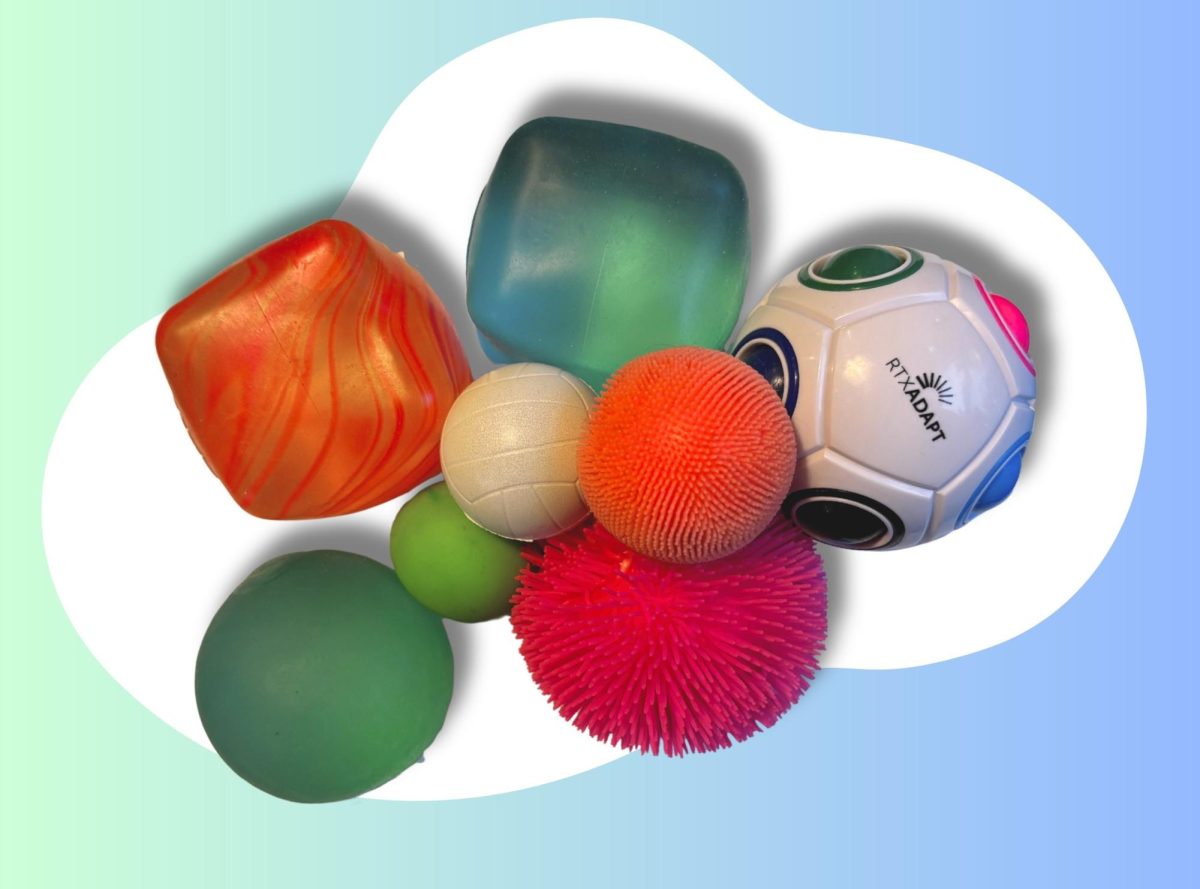
Recently, fidget toys of all different shapes, colors, and sizes have appeared across campus — from NeeDoh Nice Cubes to jumbo cheese stress balls.
The outbreak of the sensory tools isn’t limited to just La Salle. In fact, the hype surrounding fidgets has flooded social media platforms like TikTok in the past few months.
For junior Quinlynn Tran, most of her day consists of fidgeting, using the toys “24/7,” she said. “I fidget until I fall asleep.”
While she uses fidget toys to help pass the time, they’re also a mechanism for regulating stress.
This is also the case for sophomore Olivia Klein.
At school, the sensory toys allow her to pay more attention in class.
“It’s an output for my stress,” she said. “I can squeeze it if I’m stressed out.”
Although Klein hasn’t had a negative experience resulting in one of her fidgets being confiscated, Klein admits that it might be distracting when the fidgets are being passed around in the middle of class instead of being used to help individuals focus.
Director of STEAM and Innovation and Design Teacher Ms. Carie Coleman sees fidget toys appear in the classroom every day.
While Ms. Coleman doesn’t usually use them personally, she makes a lot of them in the Innovation and Design Center.
“I find them relaxing as well,” she said. “I love the texture of them, and I think it’s kind of calming, and so I kind of dig it.”
Ms. Coleman recognizes the benefits of the toys, but doesn’t necessarily agree with advertising notions that give the false impression that they are must-have products for reducing stress, anxiety, and other problems.
“The marketing is saying ‘you have to have this to make you feel better,’” Ms. Coleman said. “I do think that some people just are naturally fidgety. I’m a fidgety person myself, so I think sometimes that is kind of calming.”
As long as they are used for their intended purpose and don’t become an issue, they are welcomed in the classrooms, according to Ms. Coleman.
“If it’s not causing a distraction, why not?” she said.
Senior David Sharyan also believes that stress tools should be accepted in learning environments throughout La Salle.
“I think if kids are distracted, they’re going to get distracted at something else,” he said. “Being able to focus it through their hand and relieve that stress in that way helps them focus on whatever the lesson or assignment is.”
Like almost all trends, the fidget outbreak is at risk of losing its momentum and becoming forgotten. Even if the obsession for the toys hits a lull, Sharyan thinks that it will eventually resurface.
“People bought stuff for this, and they’re not just going to throw it away,” he said. “Even if it dies down now, they’ll find it in their closet one day and it’ll come back.”
Whether the trend becomes permanent or not, Sharyan believes that it has made a positive impact on La Salle’s student body.
“I feel like we can all relate to a good NeeDoh, and having a fidget toy and being able to borrow one from a friend,” he said. “It really brings our community together.”
![According to junior Katie Liu, Blue days are superior to Red days. “[Because of one lunch], I see that communities come together, there is more time for clubs to meet; I see people hang out with their friends that sometimes they're separated from because [of] A lunch or B lunch, and opportunity for more people to interact that usually wouldn't happen,” she said.](https://lasallefalconer.com/wp-content/uploads/2026/06/405A7815-1200x800.jpg)



Chris Babinec • Mar 19, 2026 at 9:39 am
Fidget toys can be incredibly useful for many people. As a school counselor and former therapist I see the benefit of them. 80 minute classes are a very long time to expect teens to sit quietly and pay attention and a tool to help focus the mind can be appropriate.
However, as a person who also cares about the environment and sustainability, the proliferation of these toys and tools is very disturbing.
Another concern is hygiene issues and possibility of viral and bacterial transmission as the toys are often passed between students throughout the day. The sticky, tacky type of plastic used in NeeDoh is particularly good for holding on to germs. Yuck.