


As the weather transitions to summer heat, a new accessory has appeared throughout the hallways: flip-flops.
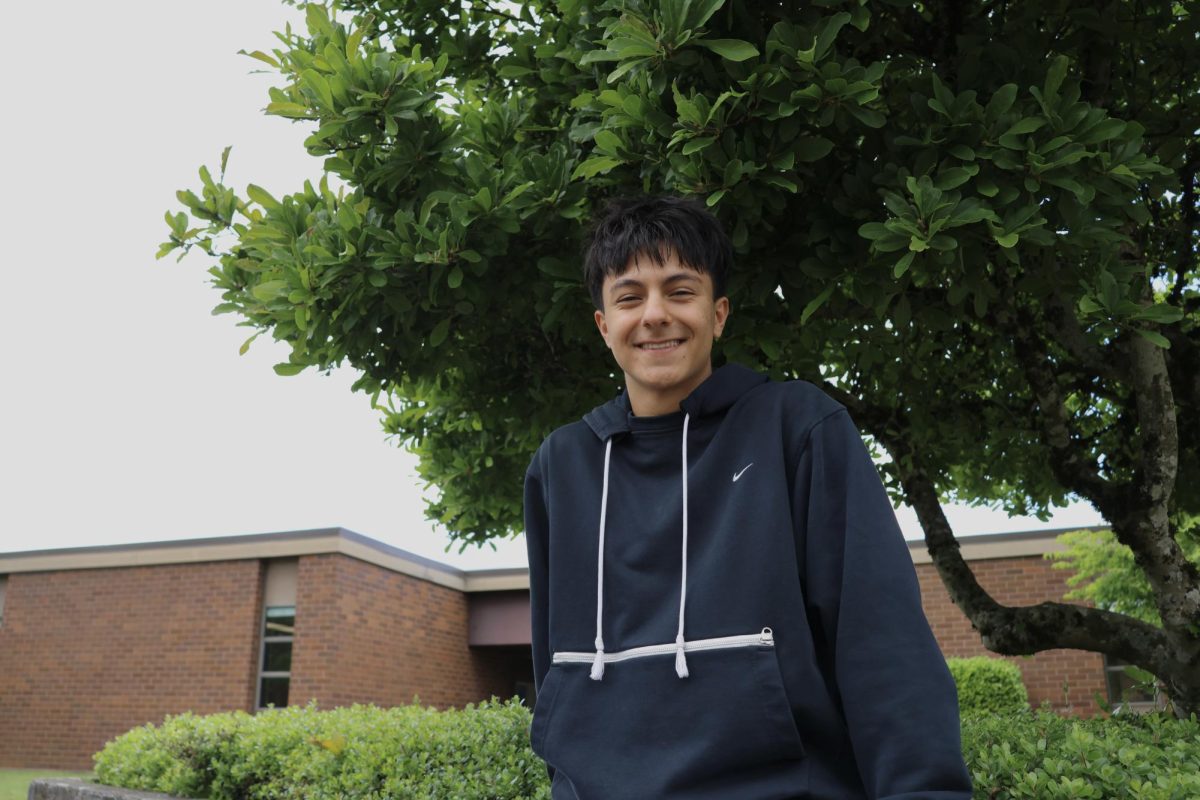
“I love flip-flops,” junior Grayson Phimmasone said.
What once would have been strictly beachwear has suddenly become one of the school’s biggest fashion trends. Students wearing tropical shirts, midi skirts, baggy jeans, and cargo shorts with their flip-flops has become increasingly common, as well as the student creation of unofficial spirit days such as “Flip-Flop Friday” or “Toes Out Tuesday.”
For freshman Ella Howland, her participation started with a little skepticism.
“I actually remember texting my friends, being like, is it socially appropriate to wear flip-flops at school?” she said. “And them saying, ‘very much so.’”
Before wearing flip-flops to school for the first time, her main concern was being judged.
“My biggest fear is just people that are older than me thinking I’m weird,” she said.
Now, she said that she participates in “Flip-Flop Friday” every day.
Howland owns around eight pairs of flip-flops and has just bought a new pair of SKIMS Jelly Kitten Heel flip-flops. She often styles them with denim, looser pants, and skirts and said that, for men, baggy clothes go well with flip-flops. She recently wore an entirely white outfit with a pair of green flip-flops to give her look “a pop of color,” she said.
With her mom being a stylist — and former model for children and family brand, Hanna Andersson — she’s always had an interest in fashion.
However, flip-flops go beyond just a trend for Howland.
“I just grew up in them,” she said.
Other students said that the trend spread quickly once people realized it was socially acceptable to wear flip-flops at school.
Although she doesn’t personally like them, Bennett said it used to feel “weird” to wear open-toed shoes at school but “now everyone’s doing it, and it’s fine.”
Phimmasone believes that confidence, hacky sack, and comfortability play a major role in the popularity of flip-flops.
“I feel like school trends, when it comes to fashion … they decide if it is acceptable or not,” he said. “More people started to just go on and wear flip-flops because they saw everyone else doing it.”
He has also connected the trend to a larger shift toward comfort-focused fashion.
According to Phimmasone, clothing like surfwear, baggy basketball shorts, and slides have all become more popular lately. He occasionally sells clothing and has gotten more requests for casual, summery, or comfort-first clothing.
He has also linked the popularity of flip-flops to the increase of hacky sacking on campus because he’s observed that people like to be barefoot when they hacky sack.
As most new fashion items go, there is a level of confidence required to wear something new.
“I think they’re comfortable in general, but you have to have enough confidence to rock them,” he said.
Because wearing open-toed shoes at school is controversial, students have mentioned that it has been normalized for other students to make comments when people choose to wear flip-flops, whether positive or not.
Freshman Beni Nduwayezu described the sudden fashion trend as being “a jumpscare.”
This is a common perspective as some students dislike seeing bare feet exposed.
“One day it was cold and then everyone came to school and were like, ‘Hey, do you like my toes and my flip-flops?’” she said.
Although Nduwayezu said that flip-flops make sense in warmer weather sometimes, she also questioned how practical they are in some school settings. In classes like P.E. or Weight Training, flip-flops are not allowed, and Nduwayezu specifically had concerns about flip-flops in art class.
“What if you drop resin on your feet?” she said.
Concerns about hygiene and etiquette were common factors students also said to consider.
In a confined space “keep them on the ground,” Phimmasone said. In an outside space “I could care less what you do with your feet,” he said in regard to the time and place for flip-flops.
Despite mixed feelings, many students have seen this trend reflecting something bigger than shoes.
Howland said that wearing flip-flops has helped her connect with people.
“It’s brought me closer to people,” she said. “I’ve gotten lots of compliments.”
Science teacher Ms. Alayna Enos sees the trend as a comeback of the ‘90s and Y2K fashion.
“I generally like that a lot of ‘90s and Y2K things are coming back because it’s just fun to see my childhood come back to life,” Ms. Enos said.
Ms. Enos described fashion as being a cycle.
“I imagine it as a spiral that retreats itself, but as it does, it expands and becomes more complex,” she said. “If flip-flops are on the rise, I’m very curious to see how people are gonna give it their own spin.”
Enos also believes that fashion choices can reveal facts about identity and social culture at school.
“The way we dress every day is a choice, and that reflects a lot about what we like and who we are and what image we want to convey to the rest of the world,” Ms. Enos said.
Similarly, Howland shared her view on flip-flops as a way of expression.
To people who don’t like flip-flops, she said, “Why would you hate on somebody else’s fashion.”
“Fashion is an expression of somebody’s personality, you don’t need to hate,” Howland said.
For now, students remain unsure of how long the trend will survive.
Bennett thinks that “people are going to get grossed out by toes again,” while Howland fears that flip-flops may get replaced with a newer shoe trend later in the summer.
Still, others believe it will last.
“I’d be surprised if it died out, because flip-flops are comfortable,” Phimmasone said.
Ms. Enos offered the simplest explanation of the trend’s appeal.
“Maybe symbolically … there’s an element of freedom there, and maybe that’s sort of like a vector by which people can feel more free themselves,” she said. “Uncage the spirits, be yourself.”
![According to junior Katie Liu, Blue days are superior to Red days. “[Because of one lunch], I see that communities come together, there is more time for clubs to meet; I see people hang out with their friends that sometimes they're separated from because [of] A lunch or B lunch, and opportunity for more people to interact that usually wouldn't happen,” she said.](https://lasallefalconer.com/wp-content/uploads/2026/06/405A7815-1200x800.jpg)



Comments are moderated, and won't appear until they are approved. An email address is required, but won't be publicly displayed. The Falconer's complete comment policy can be viewed on our policies page.