


On Jan. 2, 2026, talented quarterback Demond Williams Jr. announced that he was staying home at the University of Washington, signing a new contract to return for his junior year at the college.
The moment came as a huge relief for those involved with the Washington program. Williams, who has emerged as one of college football’s best young quarterbacks, was pursued by schools such as Alabama, LSU, and Oregon in the transfer portal, with reports suggesting that their offers reached up to $6 million annually.
Just four days later, on Jan. 6, 2026, Williams announced that he would be entering the transfer portal.
As crazy as it might sound, Williams’ story isn’t uncommon in college sports these days.
Duke University quarterback Darian Mensah had a nearly identical situation take place last week, entering the portal on the last possible day and not honoring his two-year contract. Mensah and Duke settled a court battle this past Tuesday, allowing him to transfer to the University of Miami and leaving the Blue Devils short at the quarterback position.
Williams himself also entered a court battle with Washington, as the school announced that they would not let him transfer.
Upon consultation with a lawyer, Williams realized that his new contract wouldn’t allow him to switch schools. He announced on Jan. 8, 2026 that he would in fact be remaining with the Huskies.
It’s a problem that is common for college coaches to deal with — having to move heaven and earth to convince their talented players to stay.
And if that player leaves, the school gets nothing in return.
But it isn’t the fault of the players.
They are college athletes being offered life-changing amounts of money in their late teens to early 20s while playing a sport that they have no guarantee of having a long career in. It is easy to see why they would accept the offer with more money.
The problem also isn’t the Name, Image, Likeness (NIL), which allows college athletes to legally earn money. The players put their bodies on the line, bringing in great amounts of revenue to their schools. They should be able to take advantage of this.
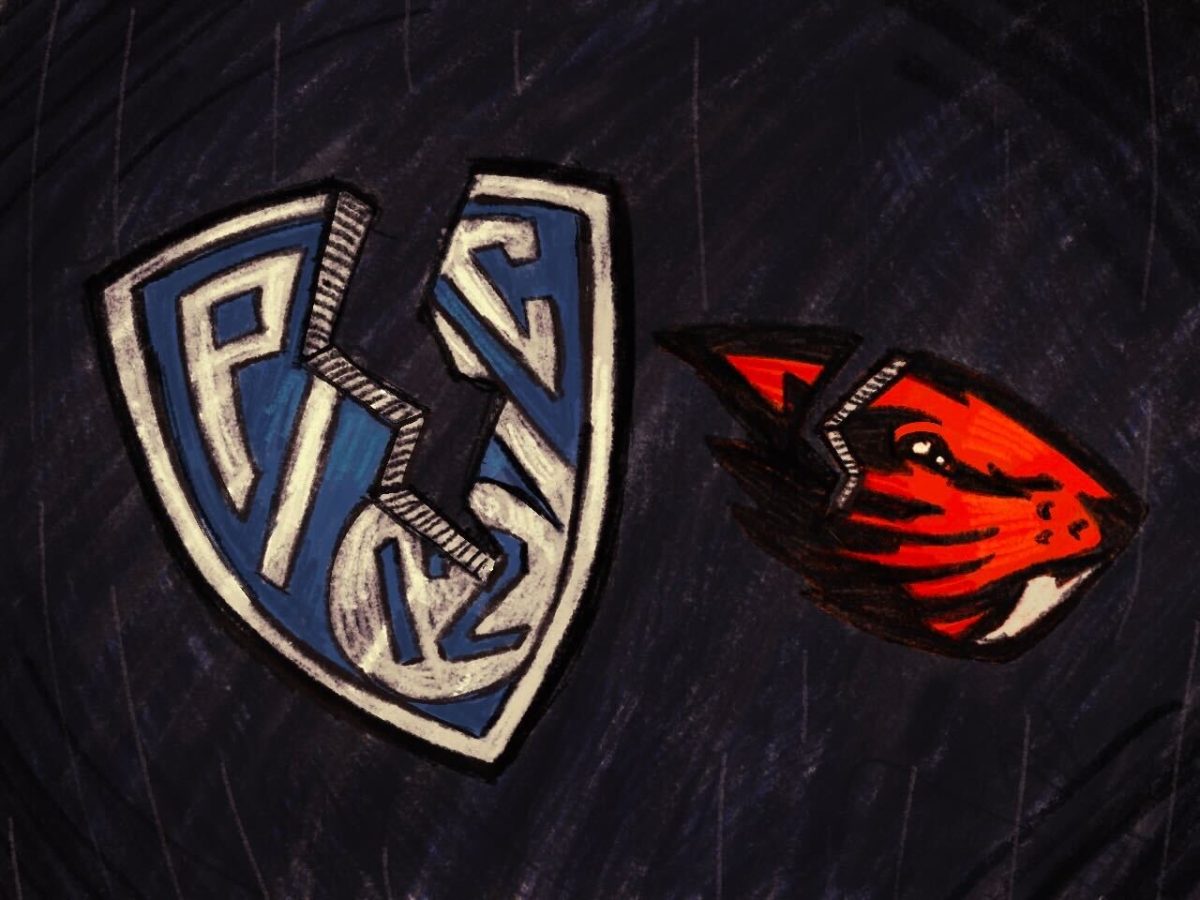
The problem lies with the transfer portal, and the NCAA’s failure to provide any rules or structure to it.
Since the NCAA introduced the transfer portal in 2018, they have gradually allowed for more and more bending of the rules, without clarifying any of the boundaries related to it.
Why is Trinidad Chambliss denied a sixth year of college eligibility, while TJ Finley is playing in his seventh year with seven different schools?
How are players signing with colleges on the opening day of the transfer portal, when their rules state you are not allowed to be in contact with any schools prior to that point?
How is it possible for a player to sign a new contract and enter the transfer portal days later?
The NCAA doesn’t have an answer for any of these questions. It is clear that they are in over their heads.
The current version of the transfer portal allows for players to transfer whenever they want, wherever they want, and however many times they want.
It doesn’t work.
The idea that a player who has a breakout season for a small school can leave to the highest bidder impacts one of the most fun parts about college sports: the Cinderella story, led by a star player who is seen as a hero to their college.
Take Johnny Manziel as an example. After a Heisman trophy-winning season in his freshman year at Texas A&M University in 2012, there would have been big schools offering him a blank check, desperate to get him to sign.
Manziel himself has spoken about this, believing that he would have stayed at A&M amid large offers, but there is no guarantee that he would have stayed loyal.
Even if the small school’s team is successful, just as A&M was during Manziel’s reign, it doesn’t guarantee the return of the player.
Quarterback Nico Iameleava, who led the University of Tennessee to a 10-3 record and their first ever College Football Playoff appearance in 2024, transferred just two months later to the University of California, Los Angeles Bruins, who were coming off of a disastrous 3-9 season, tied for their worst record in 54 years.
Even with the many problems, much of the transfer portal still makes sense as an idea. There are many scenarios that take place at colleges such as a change of coach, lack of playing time, and mental health, where a transfer would benefit all parties involved.
For instance, we would have never seen perhaps the greatest Cinderella story in college football history, the 2026 National Championship-winning University of Indiana Hoosiers, without the transfer of their Heisman trophy-winning quarterback Fernando Mendoza from the University of California.
The issue stems from players being allowed to transfer an unlimited number of times to the highest bidder, causing instability in programs and resulting in fans feeling disconnected from the team.
To fix the problem, the NCAA should establish a one-transfer limit on players, with special circumstances applications available for a second transfer, such as a change of coach.
The NCAA has to make the transfer portal and NIL much more like the NFL, where there is a salary cap, strict multi-year contracts, a players union, and a collective bargaining agreement.
However, for these things to be possible, the players need to be recognized as employees. The NCAA’s long standing amateurism doctrine maintains that college sports are an extension of education, not a profession.
With the current state of the NIL, it is clear that college sports are now a profession. This is drastically impacting smaller schools, causing fans to feel disconnected from their teams, as they know that their star player could leave at any moment.
In order to address this, athletes need to be declared employees, not students, which requires action from Congress to step in and ensure colleges follow through. Until they do, there will be no collective bargaining agreement, no players union, no strict contracts, and therefore no fix to the circus that is the NCAA transfer portal.






Comments are moderated, and won't appear until they are approved. An email address is required, but won't be publicly displayed. The Falconer's complete comment policy can be viewed on our policies page.