

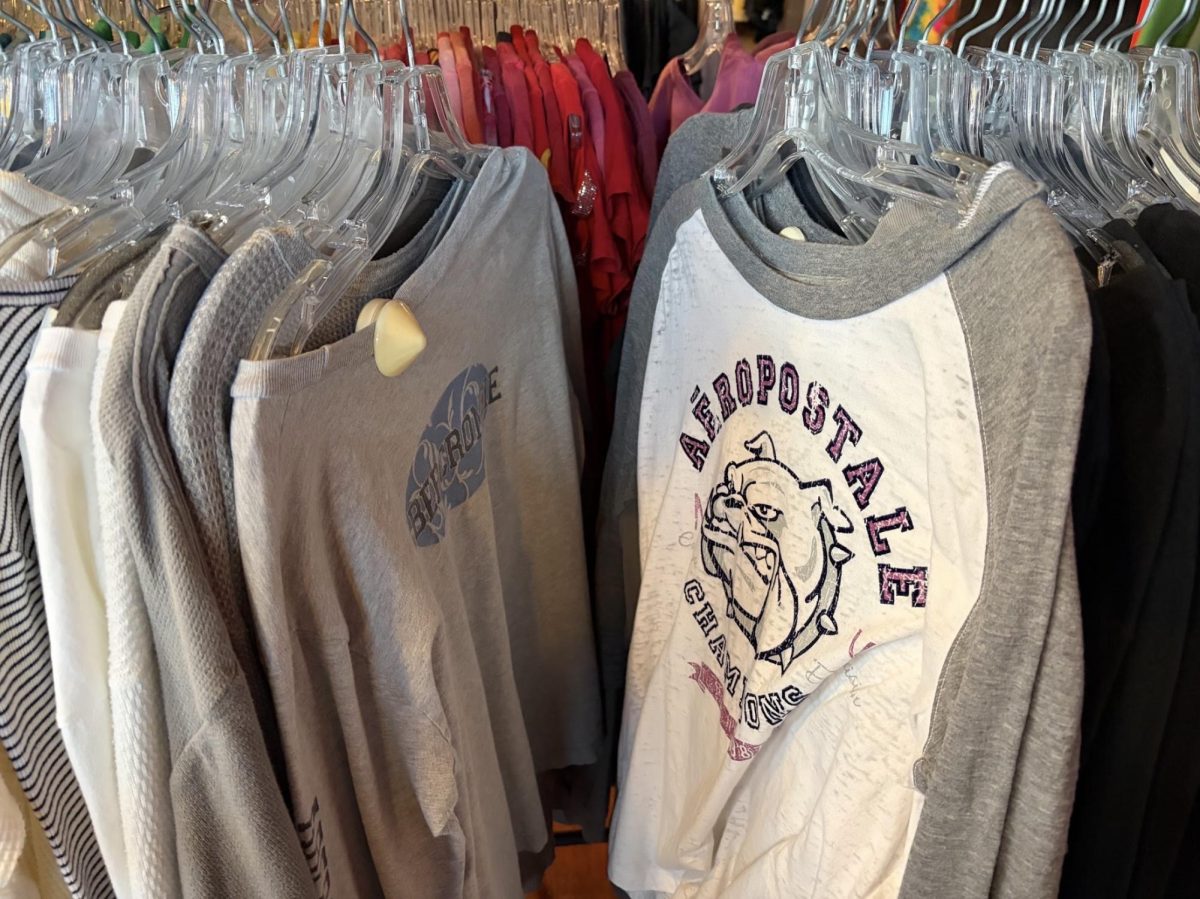
The average pair of jeans uses about 10,000 liters of water to be made — enough liquid to satisfy a person for up to ten years.
But rather than to sustain life, this water is constantly used to fuel the increasing fast fashion phenomenon.
Fast fashion can be defined as creating trending clothes quickly as a means of satisfying customers, and it is often cheaper than most clothing brands due to mass production rates and exploitation. Because of this, production rates go up in direct correlation with customer satisfaction.
However, fast fashion poses many harmful effects to the environment, something consumers don’t always take into consideration when buying.
Clothing stores like Shein, Forever 21, and H&M are among the most damaging, contributing to an increase in waste because of the low clothing quality and shorter lifespan.
While many efforts are in the works, one of the best alternatives to this widespread issue is thrifting, an option that provides trendiness and affordability without the same negative effects in place.
When clothes are done with their use, there are three common approaches to dealing with them: selling, trashing, or donating.
None of these methods require much effort, and yet a majority of people chose to throw their clothes away.
So rather than simply throwing away items you no longer have a use for, drop them off at your local thrift store, sell them online for profit, or donate them to a community in need.
By choosing the donation route, the clothes will find their way to places like Goodwill, which strives to help limit ecological impact.
While the idea behind donating is a much better alternative than just throwing out the clothes, it still isn’t enough since a portion of these clothes will still end up being thrown out after sitting too long on the shelves, another motivator to visit a thrift store over a chain clothing store.
Most commonly, before the clothes at Goodwill reach the point of being discarded, they make their way to the bins for one final chance at purchase, a means to make best use out of clothes that would be thrown out.
Because the thrift industry often uses resale options and markdowns, as not all clothes may sell in their first round, it is less likely that clothes will be wasted, since they have the opportunity to circulate.
Despite the fact that clothes are often a powerful factor in this waste crisis, thrifting is an excellent opportunity, especially when done at places that help lessen the environmental impact.
In fact, buying things like furniture or bags secondhand while thrifting also helps limit resource consumption and consumerism, a trend often found in fast fashion that also holds true for other corporations.
The possibilities of thrifting are endless. As a consumer, you don’t really ever know what you may discover, and that’s the beauty of it.
Additionally, in cases like the current rise in vintage fashion — as seen with teens across social media — a quick trip to a thrift store can easily satisfy clothing and accessory wants.
While the typical thrift stores are often a quick drive away, below are some of my personal favorite places and virtual shops to help you lessen your negative impact on the environment.
Apps like Depop and Vinted:
With the modern age has come an increase in online purchasing, and this form of shopping shows no sign of disappearing in the coming years. Knowing this, rather than shun it, I think it’s better to navigate your attention towards sites like Depop and Vinted rather than common fast fashion sites.
Both these sources are filled to the brim with vintage goodies, and by making a purchase, you extend the clothing life. While they are not perfect, they are a hopeful alternative to seeking out a consumerist-catered site.
Now, I encourage you to reflect on all the clothes in your closets, online shopping carts, Pinterest pins, and more, as you start to realize the effect these pieces have on our world. So, the next time you have a desire to dive into some new clothes, you may consider trying a sustainable, cheaper option at your local thrift store.





Chris Babinec • Mar 19, 2026 at 10:28 am
Thank you for covering such an important topic! The water waste, the chemicals used to dye clothes that enter our ground and waterways, the fossil fuels used in transporting fast fashion- all spell trouble for current and future generations. Fast fashion is a fairly recent development, considering the entire history of humanity. We can and will shape healthier consumer culture by using some of the suggestions in this article!