

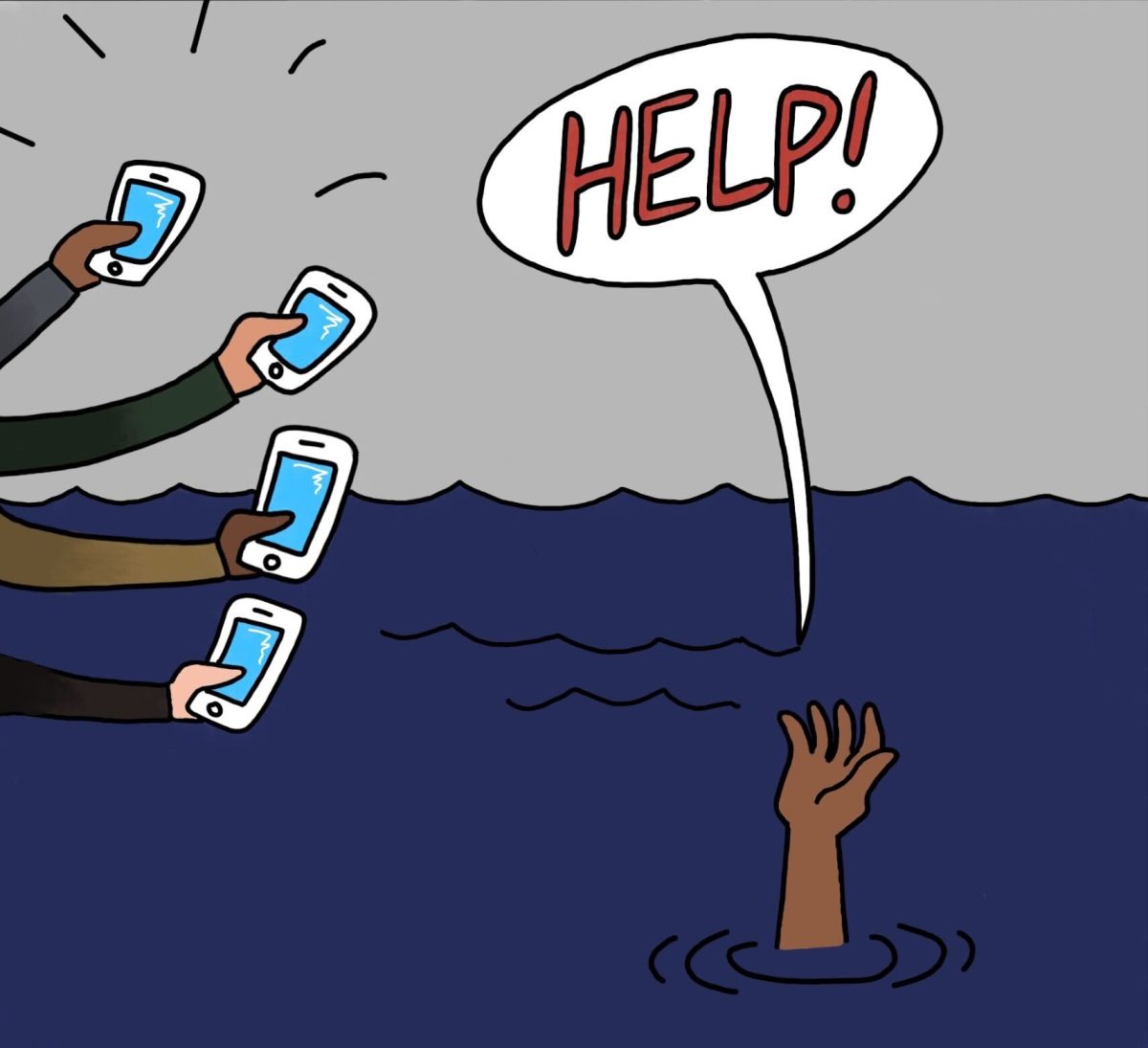
Witnessing the death of a stranger online while casually scrolling isn’t considered to be anything unusual, as graphic videos like these cross the feeds of many — sometimes receiving millions of likes, shares, and comments.
However, this is anything but normal.
With the existence of so many online platforms, violent media is easier to consume now more than ever. Our feeds have become laced with videos of differing degrees of brutality, from police body camera footage to raw and intentional murder.
We are becoming desensitized to tragedy, yet we continue consuming it through our screens.
The issue isn’t just a matter of exposure; it translates to how we respond to others in distress firsthand. Many of us fall victim to the bystander effect, watching chaos unfold in hopes that someone else will play hero.
This was demonstrated in the recent incident that took place in the basement of Le Constellation bar in Crans-Montana, Switzerland on New Year’s Eve, where the ceiling caught fire and the rest of the building went up in flames, leaving 40 people dead and 119 injured, according to the BBC.
While footage reveals some in panic as they attempt to break and jump out of windows, others remain stagnant, with phones angled toward the scene — prioritizing recording rather than getting involved.
Much like the witnesses to this tragedy, we often spectate tragedies online, which in turn desensitizes us to their gravity. We don’t realize the severity of these situations, nor do we recognize that the people involved are real.
As we watch graphic video after graphic video, we begin to dehumanize the individuals on our screens.
Exposure to violent content can decrease empathy, cause increased aggressive thoughts and behaviors, and induce anger, according to the National Library of Medicine.
The audience for this type of content isn’t limited to just a few.
It’s extensive.
In a study performed by the Youth Endowment Fund, 70% of teenage children have encountered real-life violent content online. Of this population, 25% said they found it because it appeared on their social media platforms, while only 6% intentionally searched for it.
This tells us that with the current regulations set by social media platforms, trying to avoid violent content on our pages by simply refusing to engage isn’t practical, as witnessing vulgar media is, in most cases, unpredictable.
In order to face this dilemma, we have to collectively hold these platforms accountable.
Ranked as the most common hub for violence by the youth was TikTok, with 30% of all 13-17 year olds and 44% of TikTok users reporting exposure to violence on the app, according to the Youth Endowment Fund.
X, despite being ranked under TikTok, is still one of the most guilty platforms in terms of graphic content.
According to X, the platform offers adjustable media settings that allow content containing violence or nudity to be marked as sensitive. If you intend to post media fitting this description, they ask that you please adjust your media settings so that others will be warned before viewing, depending on their own settings.
For those who have opted in to seeing possibly sensitive content, they will be able to see your account and the content you post without the message.
While the gesture is nice, there is more that needs to be done than just placing a safeguard on violent content that can be easily bypassed. The real issue is the mere existence of the content and the disturbing extent to which it is accessible.
The ideal solution would be for violent imagery to be removed altogether, but this is not feasible. Now that it has infiltrated the media, it would be impossible to dispose of it entirely.
The best we can do is educate the youth on the consequences of absorbing sensitive content online and reshape social media’s current reward system, where videos containing violence are validated with likes and views.
Additionally, our initial reaction to an emergency should never be to take out our phones and press record, and we certainly shouldn’t normalize that behavior. Instead, we must consider such situations for what they are: someone in distress and in need of help, not a 30-second clip to be used as potential clickbait.
While there has been consistent controversy regarding the presence of children online, we should all agree that at the bare minimum, they should not have access to the majority of the violent depictions seen on apps like TikTok, Instagram, and X — whether that means enforcing strict parental controls or avoiding social media altogether.
For example, Australia took such enforcements to the extreme, with the Online Safety Amendment (Social Media Minimum Age) Act 2024 going into effect on Dec. 10, 2025. The act mandatorily bans children under the age of 16 from accessing all social media platforms.
According to UNICEF Australia, the ban was put into place with the goal of limiting the many risks of social media, harmful content being one of them.
While the ban might not immediately solve all problems surrounding youth exposure to media violence, it still has the potential to reduce the damaging ramifications of social media intake.
Ultimately, there must be more of an incentive for social media platforms to set further limitations and restrictions on the content that is filtered through our feeds. With more public backlash and expressed outrage by users, we can unite against these platforms and promote change.
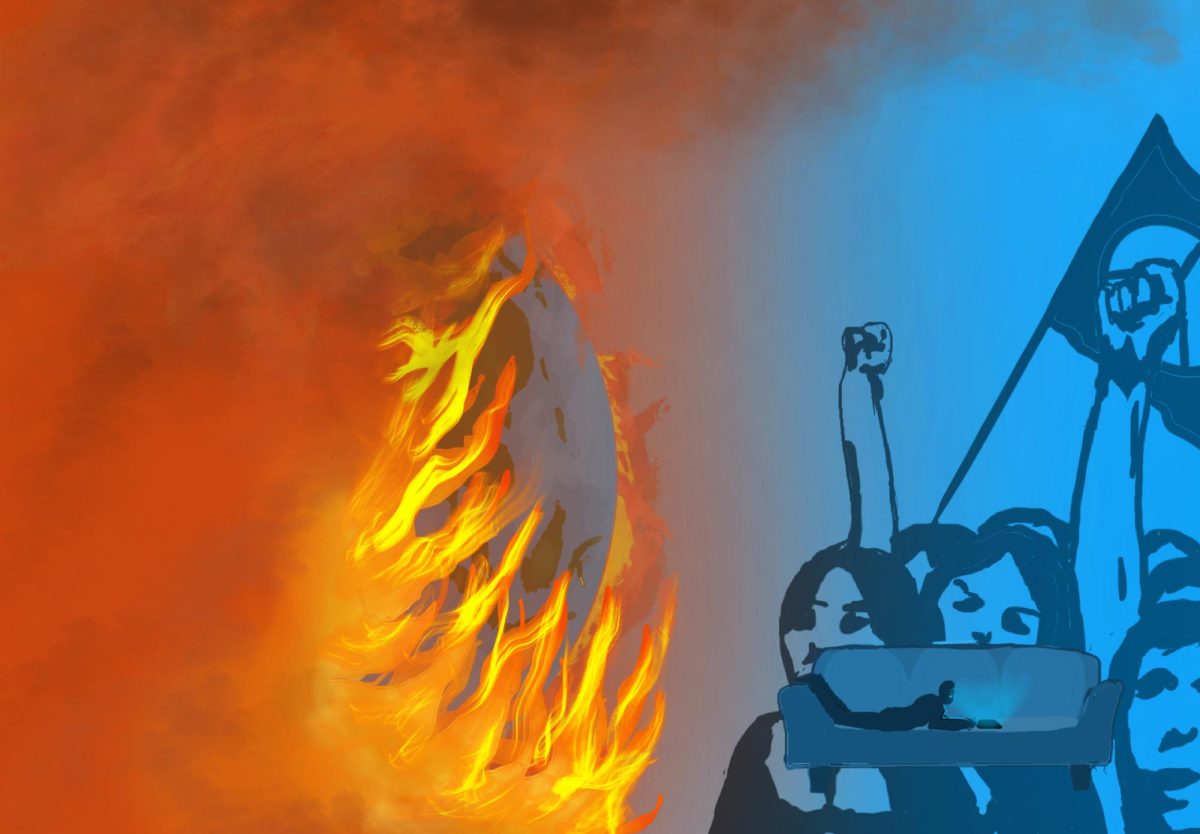
Without such change, we risk succumbing to an epidemic of emotional numbness toward tragedy.
Especially in today’s world, it is crucial that we value the humanity of every individual.
We are people, not content.





Chris Babinec • Mar 19, 2026 at 11:24 am
What a crucial piece. What a thoughtful examination of the rise of dehumanization and its direct and real impacts on us all. It is vital to continue to discuss and analyze the tension between free speech and the responsibility we have to ourselves, our communities, and most important- our children.