

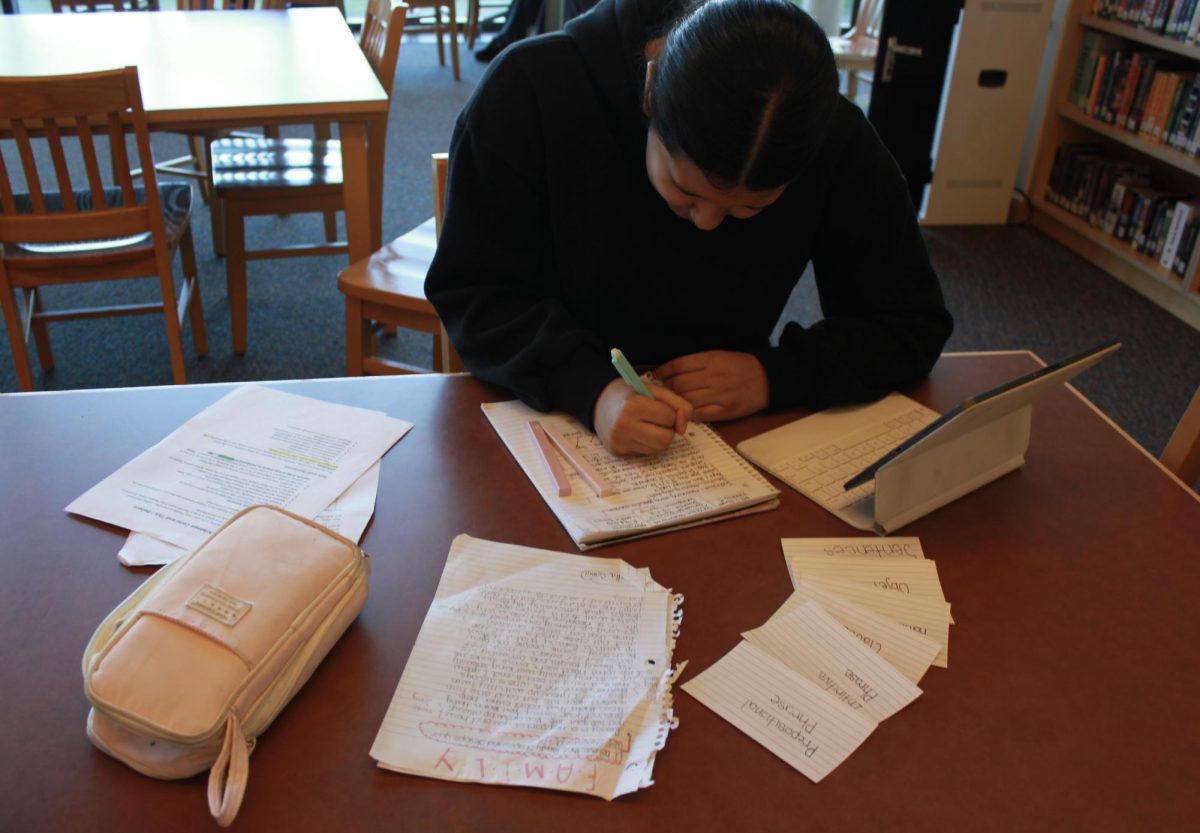
Chronic stress in high school — even if it’s acknowledged as a problem by many teachers and parents — is the norm for many students, and seen as an expected part of daily life.
In fact, if a student is not overwhelmed, exhausted, or behind on sleep, they often seem unmotivated compared to other students who overwork themselves.
Somewhere along the way, stress stopped being a warning sign and started becoming a measure of success.
High school students are told that these years are meant to prepare them for the real world. But instead of being prepared, many are being pushed into burnout before they even graduate.
Between advanced classes, standardized testing, extracurriculars, sports, part-time jobs, and the pressure to plan for college, many students are carrying major responsibilities. Stress is so normalized in high school that many students no longer question whether this amount of stress is healthy for them.
In classrooms, I often hear students bonding over the amount of sleep they got that night or how much homework and assignments they have due. Phrases like “I pulled an all-nighter” or “I’m drowning in school” are expressed with a mix of pride and humor.
This culture turns exhaustion into a badge of honor, sending a message to people that struggling means you are doing something right.
However in reality, constant stress should not be a mark of dedication and hard work.
The education system in high schools plays a huge role in this problem. Many students in high school feel pressure to take harder classes, thinking, “the more difficult the class is, the more I am learning,” which is not always true.
The academic pressure students face also generates anxiety, as many students believe that in order to have an edge in college admissions, they need to take difficult classes.
Instead of encouraging curiosity and learning, this system rewards students overloading themselves, with success often defined by how much pressure you can handle. When prestige is the first priority, education loses its purpose.
Stress doesn’t just disappear once a school day ends. For example, many students go directly from school to practices, jobs, and extracurriculars.
Teenagers are developing emotionally and physically, yet they are expected to function on minimal sleep by teachers.
Anxiety, depression, and burnout have become increasingly common, but many students are hesitant to speak up. I often feel this way and am hesitant to speak up about it because I don’t want to come across as weak, unmotivated, or lazy.
This is exacerbated by social media. Online, students see highlight reels of perfect grades, packed schedules, and college acceptance posts, but what they do not see are the panic attacks, breakdowns, and exhaustion that occurs behind the scenes.
When people are just posting their best moments, it creates an unrealistic expectation that hides the fact most people are completely stressed and overwhelmed.
Many people argue that chronic stress is unavoidable and necessary. This is not true. Challenges can help a student grow, but we need to acknowledge that there is a healthier way to make students learn, where we prioritize homework and focus on collaboration in the classroom.
The mental health of high schoolers must be taken more seriously. It shouldn’t be treated as a weakness.
Students need to stop glorifying stress and start valuing balance. High school should be a place of learning, growth, and self-discovery, not constant survival mode. The fact that we are always in survival mode is a signal that something needs to change.






Chris Babinec • Feb 2, 2026 at 2:10 pm
Yes! Yes! Yes! And so many larger systems at play here- educational, cultural, societal, familial. This is not an issue to be solved by individuals, but by many systems working in concert to create and hold realistic expectations on students of every age. And in the meantime, students suffer. Thank you for sharing your persepctive!