



While cars are meant to take you from point A to B, certain vehicles feel like they are more, jam-packed with nostalgia and influence. Each generation has a car that elevates a daily chore to the experience of driving an extraordinary work of art. These cars carve themselves into the minds of the consumer, impacting their dreams and aspirations in a way that is unexpected coming from a hunk of metal with four wheels and an engine.Since its debut, the Ford Mustang has been one of these icons.
Brief History of the Ford Mustang
The Ford Mustang was first introduced in 1964, with its design attributed to Lee Iacocca and his team. The company’s goal with the Mustang was to create an affordable sporty car intended to attract young buyers. They nailed it, selling over 400,000 units within the first year of its release.
The debut model came with two engine options, a more economical inline six cylinder, and a V8 for those craving more power.
By the late 1960s, performance versions of the Mustang — streamlined models with increased power and better handling — were born with the Shelby GT500, thanks to the legendary Carrol Shelby, which transformed the Mustang into the muscle icon it is today.
The GT500 was paired with a 7.0L V8, producing 355 horsepower and 420ft/lbs of torque.
Due to stricter emission regulations and higher insurance costs exacerbated by the oil crisis of 1973, Ford was forced to make the Mustang II — a more fuel-efficient version of the muscle car.
The Mustang II was equipped with a few options of engines, including a 2.3L Lima inline four-cylinder, a 2.8L Cologne V6, or a 4.9L Windsor V8.
Despite the Mustang II lacking power due to the smaller engines forced by the oil crisis, it was still a commercial success.
By the late 1970s and early 1980s, the economic uncertainty fizzled out, and the higher performance models of the Mustang returned. This is where the legendary Ford 5.0L V8 was born.
During this generation, Ford transitioned to a more boxy design, a common trend for the time period.
In 1994, the Mustang was redesigned, known as the SN95 generation. The goal was to modernize the Mustang while still maintaining its core identity as a muscle car.
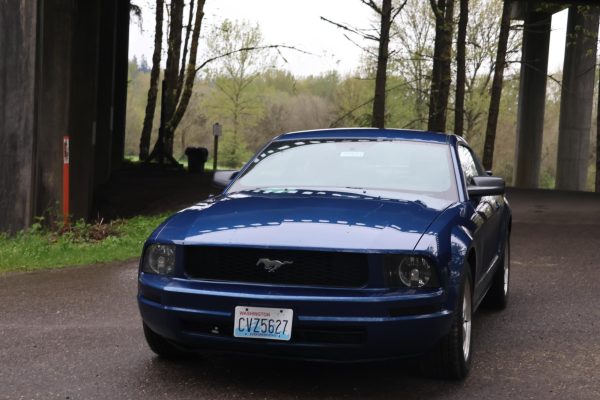
In 2005, Ford made the strategic decision to introduce a more retro-style design, and include more safety features.
2005 also marks the year that the Shelby GT500 returned, bringing the Mustang back into the high-performance world.
In 2015, Ford decided to rethink what the Mustang could be. They started to think about how they could appeal to a broader global audience. To do this, they implemented independent rear suspension and improved the handling.
Ford also wanted to branch into the electric car market by creating the Mustang Mach-E. This new innovation branched the Mustang name into the world of SUVs, further broadening their audience.
Why Is the Mustang So Iconic?
Since its creation, the Mustang has been a staple within the American automotive community. Ford created an iconic design and created an entire community around the muscle car. Additionally, credit must be given to the Ford marketing team, which advertised the Mustang which made it the dream car of many children.
Its rich history also created a community around vintage Mustangs, and the abundance of parts made restoration and modification projects easy. The different generations and options allow for all different price ranges
In the past few decades, the Ford Mustang has become a performance icon around the world, and its audience is only growing.






Comments are moderated, and won't appear until they are approved. An email address is required, but won't be publicly displayed. The Falconer's complete comment policy can be viewed on our policies page.